







 Georgian Law Enforcement Busts Scammers Posing as Real Estate Brokers
 World’s Largest Economies in 2026: GDP and Purchasing Power Rankings
 Turkish Airlines Cancel Flights to Moscow
 Escalation in the Middle East: New US and Iranian Strikes
 Hong Kong Property Rebounds as Momentum Slows
 Bulgaria’s Property Market Enters a More Mature Phase
Northern Ireland Gains From Brexit
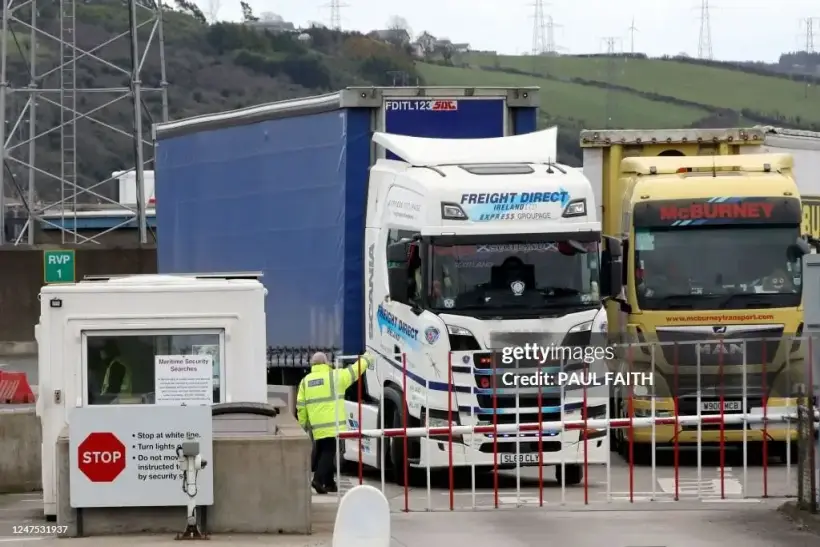
Ten years after the UK voted to leave the European Union, Northern Ireland has become the rare part of the country enjoying a trade advantage from the post-Brexit settlement: local companies retain access to the UK market while following EU goods rules that keep trade with Ireland and Europe comparatively open.
Northern Ireland becomes the post-Brexit exception
A decade after the 2016 referendum, Brexit remains a source of economic costs, political disputes and complex relations with the European Union for the United Kingdom. But one part of the country has gained an unexpected trade advantage. Northern Ireland now sits between two markets: it remains inside the UK, while for much of goods trade it continues to follow EU single-market rules.
Bloomberg highlighted the region as the part of the UK receiving a visible post-Brexit boost. The reason is not that Brexit has benefited the whole country, but that Northern Ireland became an exception to the broader settlement. Special rules were created to avoid a hard border with the Republic of Ireland and protect the conditions of the 1998 Belfast Agreement, the foundation of the peace process after decades of conflict.
The economic result is mixed. For some businesses, the regime has created new opportunities: access to EU consumers, fewer barriers at the land border, growing trade with Ireland and appeal to investors seeking a production base between the UK and the European Union. For others, it has brought extra bureaucracy on supplies from Great Britain, political frustration and a sense of separation from the rest of the UK market.
How Northern Ireland’s special regime works
After Brexit, the Irish border became the central problem. The UK left the EU single market and customs union, but Northern Ireland borders the Republic of Ireland, which remains in the bloc. Restoring physical customs posts on the island could have undermined the political balance and the principle of an open border.
To manage that problem, the Protocol on Ireland/Northern Ireland was created and later amended by the Windsor Framework. The Windsor Framework is the 2023 UK-EU agreement that revised post-Brexit trade rules for Northern Ireland, reduced some checks and introduced a system separating goods by risk.
The core of the regime is that Northern Ireland remains aligned with many EU single-market rules for goods. That allows goods to cross the border with the Republic of Ireland without normal customs checks. At the same time, the region remains part of the UK customs territory, so internal UK trade is supposed to continue, but goods that could enter the EU face additional procedures.
Why this became a trade advantage
For many Northern Irish manufacturers, the unique status has become a competitive asset. A company producing goods in Belfast, Derry or elsewhere in the region can sell into the British market and also into Ireland and the wider EU with fewer barriers than a producer in England, Scotland or Wales.
After Brexit, British exporters faced certificates, customs declarations, sanitary checks, rules of origin and delays. For Northern Ireland, access to the EU has been easier than for the rest of the UK. That matters particularly for food, agriculture, processing, engineering, packaging, pharmaceuticals and logistics.
In business terms, Northern Ireland has become a rare dual-access jurisdiction. It is not an EU member, but its goods can often move toward European markets more easily than goods from the rest of Britain. For a small region, that is a substantial market asset.
Trade data show stronger external sales
Official Northern Ireland data confirm the scale of the shift. According to NISRA, total business sales in Northern Ireland reached £109.3 billion in 2024. Sales within the region amounted to £69.5 billion, or 63.6% of the total. The rest came from sales outside Northern Ireland.
External sales by Northern Irish companies were estimated at £39.8 billion in 2024, up 14.4%, or £5 billion, over the year. Exports, meaning sales outside the UK, reached £19.6 billion and increased by 14.5%. Sales to Great Britain stood at £20.1 billion.
Trade with Ireland is especially significant. Northern Ireland’s exports to the Republic of Ireland reached £10.5 billion in 2024, more than sales to the rest of the EU and the rest of the world combined. That shows how important the southern trade channel has become after Brexit.
Ireland has become the key external market
The Republic of Ireland has effectively become Northern Ireland’s main export destination. Geography and rules now work together: short distances, shared supply chains, historic ties, no hard land border and access to the EU single market all support trade.
For producers of food, drink, agricultural goods, packaging and components, that is especially important. Before Brexit, many supply chains on the island of Ireland functioned as one economic space. Northern Ireland’s special regime has preserved much of that logic, while trade between Great Britain and the EU has become more complicated.
But the rise in trade with Ireland carries a political cost. For unionist parties seeking the closest possible link between Northern Ireland and Great Britain, the strengthening southern trade channel looks like a gradual economic shift from London toward Dublin and Brussels.
Great Britain faces new barriers inside its own country
The central paradox of the post-Brexit system is that the open land border on the island of Ireland was preserved by creating new procedures in the Irish Sea. Goods moving from England, Scotland and Wales into Northern Ireland may face checks, labelling and forms if they are at risk of entering the EU.
This frustrates some British suppliers and Northern Irish retailers. For them, the UK internal market is no longer fully seamless. Supplies that used to be ordinary movements within one country now contain elements of external trade control.
The Windsor Framework tried to reduce this problem. It introduced an internal market scheme, often described as a green lane, for goods staying in Northern Ireland, and a red lane for goods that may move onward into the EU. But even the simplified system has not removed all costs or political complaints.
The political dispute remains unresolved
The economic upside does not mean political consensus. Northern Ireland is a region where trade rules are directly tied to identity, constitutional status and the balance between British and Irish orientations. For nationalists and supporters of closer ties with Ireland, the special regime looks practical. For many unionists, it remains a symbol of a border inside the United Kingdom.
In 2024, the Northern Ireland Assembly voted to continue the special trading rules for another four years. That gave businesses more predictability, but it did not end the political divide. Support was uneven: nationalist and centrist parties saw economic stability, while unionists criticized the continued application of elements of EU regulation without full regional influence over how those rules are made.
That “democratic deficit” remains one of the main arguments against the system. Northern Ireland applies some EU goods rules, but it has no representatives in the EU institutions that adopt them.
Brexit remains unpopular with many in the region
Northern Ireland voted against leaving the EU in 2016, with a majority supporting continued membership. Ten years later, attitudes toward Brexit remain critical. Polling published by researchers at Queen’s University Belfast has shown that a clear majority of people in the region see Brexit more as a failure than a success for Northern Ireland.
That public mood matters. The economic gains of some companies do not erase the broader perception that Brexit created political and administrative problems for the region. For many residents, the issue is not only export growth. It concerns the peace settlement, free movement, identity and institutional stability.
That is why the claim that Northern Ireland has benefited from Brexit needs caution. The gain is not universal across the political system or society. It is concentrated among businesses able to use dual market access. For the region as a whole, it remains an advantage built into a contested political structure.
Business uses dual access as an investment pitch
For investors, Northern Ireland offers a rare combination. Production in the region can serve customers in Britain and the EU, while the legal environment remains British. For companies seeking an English-speaking platform close to the European market, that can be attractive.
The sectors with the most potential are those where goods standards, geography and logistics matter. These include food processing, beverages, medical devices, packaging, industrial components, pharmaceutical supply chains, agri-technology and parts of light manufacturing. For them, the ability to work with Ireland and the EU without the full post-Brexit burden is a meaningful advantage.
But investors also have to price risks. Northern Ireland’s rules depend on agreements between London and Brussels, political votes, the reaction of unionist parties and future changes in UK-EU relations. This is not a normal stable tax incentive. It is an advantage based on a complex international compromise.
A UK-EU food deal could narrow the contrast
In 2026, London and Brussels made progress toward a new agreement on sanitary and phytosanitary rules, which govern food safety, animals and plants. If implemented, the deal should reduce paperwork and physical checks for dairy, fish, cheese, eggs and fresh meat moving between the UK and EU.
For Northern Ireland, the effect would be mixed. On one hand, easier UK-EU trade could reduce part of the advantage Northern Ireland gained from its unique status. If all British exporters find it easier to work with the EU, Northern Ireland’s exception becomes less distinctive.
On the other hand, a new deal could simplify supplies from Great Britain to Northern Ireland and ease tensions around the “sausage wars” — disputes over whether British meat products could reach Northern Irish shops without disruption. That could make the regime less politically toxic and more useful for business.
Trade growth is not a full economic victory
Despite strong trade figures, Northern Ireland remains one of the less affluent parts of the UK. Its economy faces low productivity, limited investment, dependence on the public sector, infrastructure problems and political instability.
Dual market access is an important advantage, but it does not solve all structural weaknesses. To turn it into durable growth, the region needs investment in skills, transport, energy, industrial policy, universities, logistics and companies with higher value added.
Otherwise, Northern Ireland risks remaining a trade and transit platform that benefits from rules without converting that advantage into deeper economic modernization. The long-term goal is not only to sell more to Ireland, but to create more sophisticated goods, services and jobs.
London and Brussels seek a new balance
The 10th anniversary of the referendum comes as the UK and EU are trying to improve relations after years of disputes. London is not seeking to rejoin the EU, but it wants to reduce trade costs, especially in food, industry, science and defense cooperation.
For Northern Ireland, any UK-EU reset matters. The closer overall UK rules move toward EU rules, the less friction there is between Great Britain and Northern Ireland. The further London diverges from EU norms, the greater the burden on the Windsor Framework and the stronger the sense of Northern Ireland’s special status.
The future of Northern Ireland’s advantage therefore depends not only on Belfast, Dublin or Brussels. It depends on the broader path of British policy. If the UK moves closer to the EU in selected sectors, Northern Ireland will retain its bridge role, but its exception will become less sharp. If divergence increases again, the advantage may grow, but political conflict will intensify.
Why the effect matters for Europe
Northern Ireland has become a practical experiment in the post-Brexit economy. It shows that access to the EU single market has measurable value, especially for small open regions. At the same time, it shows that such access is difficult to combine with political sovereignty if the region has no direct role in making the rules.
For European policymakers, the case is an argument for close ties. For British supporters of a hard Brexit, it is an example of unwelcome compromise. For business, it is evidence that regulatory proximity to the EU can matter more than political slogans.
The lesson extends beyond Northern Ireland. It matters for Scotland, Wales, English industrial regions, Ireland and all countries trading with the EU from outside the single market. The deeper the supply chains, the more expensive borders become.
What happens next
In the coming years, Northern Ireland will retain its special regime after the Assembly supported continuation of key trading rules. Businesses will get more time to adapt, invest and expand links with Ireland and the EU. But the political dispute over the region’s place inside the UK will not disappear.
The central question now is whether Northern Ireland can use its post-Brexit bonus without deepening internal division. To do that, London, Brussels, Dublin and Belfast will need to keep the regime flexible enough for business and sensitive enough that it is not seen as an imposed border in the Irish Sea.
As experts at International Investment report, the Northern Irish case shows the main economic irony of Brexit: the only part of the United Kingdom with a clear trade upside gained it not from breaking with the EU, but from preserving partial access to the European market. The critical conclusion is that dual access can become an investment asset for Northern Ireland, but only under political stability and clear rules. If sovereignty disputes again paralyze the region’s institutions, the trade advantage could quickly turn into a source of uncertainty.
FAQ
Why has Northern Ireland benefited from Brexit?
Northern Ireland received a special trade regime that keeps access to the UK market while allowing many goods to move freely into the EU through Ireland. That created an advantage for some producers and exporters.
What is the Windsor Framework?
The Windsor Framework is a 2023 UK-EU agreement that amended the Northern Ireland Protocol. It reduced some checks and created simplified procedures for goods staying in Northern Ireland.
Why is the Irish border so important?
The open border between Northern Ireland and the Republic of Ireland is a key part of the political balance created by the 1998 Belfast Agreement. A hard border could create risks for peace, trade and daily life on the island.
What data show stronger trade?
NISRA estimates that Northern Ireland’s external sales reached £39.8 billion in 2024, up 14.4% over the year. Exports reached £19.6 billion, while sales to Ireland amounted to £10.5 billion.
Why do unionists criticize the special regime?
Unionists argue that checks and rules on goods from Great Britain create an effective border in the Irish Sea and weaken Northern Ireland’s place inside the United Kingdom.
Could a new UK-EU deal reduce Northern Ireland’s advantage?
Yes. If UK-EU trade becomes easier, part of Northern Ireland’s unique advantage could narrow. But it could also reduce tensions over goods moving from Great Britain into Northern Ireland.
Does this mean Brexit was a success for Northern Ireland?
Not entirely. Some businesses gained trade advantages, but the region also faced political conflict, extra bureaucracy and sovereignty disputes. The overall effect remains mixed.