







 Slovakia Reforms Building Rules as Housing Starts Slide
 EU Proposes New Restrictions on Short-Term Housing Rentals
 Canada Fast-Tracks Tax Rulings for C$1 Billion Investments
 China Nears a Decision on Fresh Stimulus
 Fines for Illegal Rentals in Spain Reach €800,000
 Australia’s Spring Auctions Rise but Remain Well Below 2025
Israel Housing Market Eyes a Reset in 2026
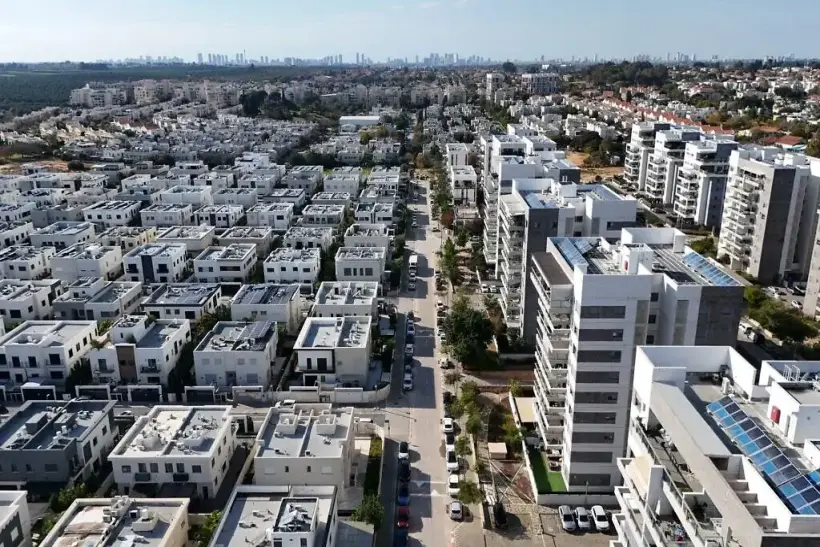
A post-war slowdown sets the stage for a new cycle
After years of relentless momentum, Israel’s housing market cooled through much of 2025 as war-related uncertainty, high interest rates, elevated price levels and a swelling pipeline of unsold new homes reduced urgency among buyers. Entering 2026, real estate agents describe a cautious shift in sentiment: the market is still negotiable, but expectations are turning toward a gradual recovery as the economy looks for a post-ceasefire lift and borrowing costs begin to ease.
National figures look flat, while city splits deepen
Official data cited by market professionals indicates that home prices fell in 8 out of 12 months in 2025, and the annual change was close to flat at about 0.4%. Beneath that headline, the geography matters: Jerusalem recorded a 9.6% rise over the past 12 months, while Tel Aviv saw a 1.9% decline, reinforcing a city-by-city divergence that agents expect to persist into 2026.
Record unsold inventory reshapes bargaining power
Supply conditions are central to the reset narrative. Market reporting tied to Central Bureau of Statistics figures points to a record level of unsold new homes surpassing 86,000 units. In practical terms, that inventory gives buyers more leverage in several areas, encourages quiet discounting by developers, and dampens the kind of rapid price acceleration that characterized prior cycles.
Interest rates begin to turn, but mortgages still bite
Financing remains a constraint, yet the direction has changed. The Bank of Israel cut its benchmark rate to 4% in January 2026, citing easing inflation conditions and improved risk sentiment compared with earlier stages of the war. That pivot supports expectations of a measured recovery, though affordability will depend on how quickly further easing filters into mortgage terms and bank underwriting.
A strong shekel limits overseas demand
One headwind to a broader rebound is currency strength. With USD/ILS around 3.11, buying in Israel is more expensive for dollar-based purchasers, and agents report that overseas demand is becoming more selective. Some buyers who previously treated Israel as a second-home market now approach it as a primary relocation purchase, often funded by selling property abroad.
Jerusalem’s scarcity premium contrasts with Tel Aviv’s luxury glut
Jerusalem is described as structurally undersupplied, with demand that often includes emotional, religious and diaspora-driven motivations, reinforcing expectations of price growth above inflation over time. Tel Aviv faces the opposite pressure in several submarkets: a large volume of high-end construction and a buyer mindset that has shifted from fear of missing out to fear of overpaying. Agents say that optimism improved after an autumn 2025 ceasefire agreement, with early signs of demand returning and prices turning up in at least one month after a prolonged soft patch.
What a “reset” could mean in 2026
The market’s likely path is a recovery guided by realism rather than a rapid boom. High inventory will keep some areas competitive, while places with persistent supply constraints may continue to outperform. For buyers and investors, the center of gravity is shifting toward micro-location selection, project quality, transport-driven uplift and financing availability, with less tolerance for average assets priced at peak-cycle levels.
As experts at International Investment report, Israel’s 2026 housing outlook is defined by an unusual mix of record unsold supply, the start of a rate-cutting cycle, and weaker foreign-buyer momentum due to a strong shekel. The result is a reset that may favor disciplined buyers and well-located, high-quality assets, while keeping price growth uneven across cities and segments.