







 Covivio Hotels Revenue Grows 4.7% as European Markets Split
 Lithuanian Apartment Prices Accelerate Across Major Cities
 Georgia's Tourism Revenue Hits Record High
 Norway's Sovereign Fund Commits €1.5bn to European Warehouses
 Market Rout of October 2026: Can Branded Hotels Protect Capital?
 Residential Property Prices in Tbilisi Rise by 5.9% Year-on-Year
Israel Home Prices Rise for a Second Month
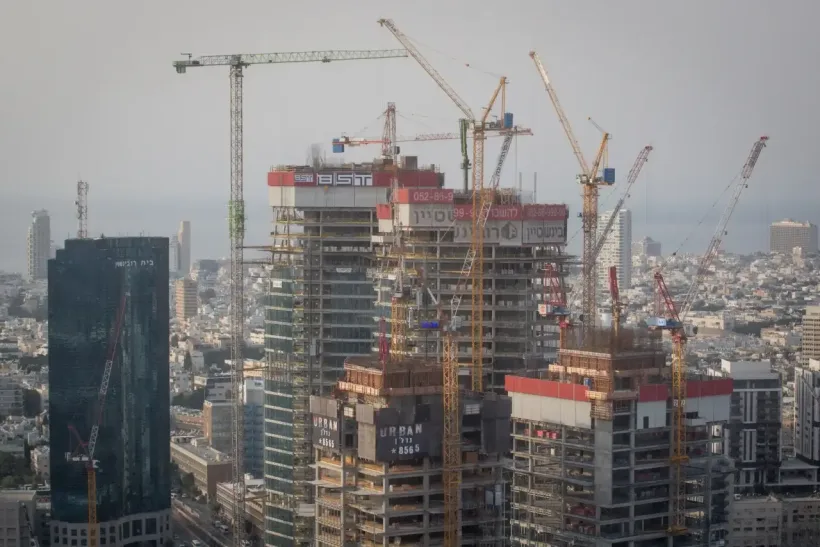
Israeli home prices increased for a second consecutive reporting period after a sharp spring decline, but they remain below their year-earlier level. Transactions in June-July 2026 were priced 0.2% above those in May-June and 1.2% below the same period in 2025. The latest gains were concentrated in Tel Aviv and the Central District. At the same time, transaction volumes fell again in July, second-hand property continued to lose value, and the stock of unsold new homes remains high.
Home prices rise for a second consecutive period
The market still looked weaker at the beginning of September. The Times of Israel reported that prices rose only 0.1% in May-June after a 1% decline in April-May, the steepest drop in roughly eight years. At that point prices were 1.5% lower year on year, with declines recorded in eight of the previous 12 reporting periods.
Data released by Israel’s Central Bureau of Statistics on September 15 confirmed another small increase. The Home Price Index rose 0.2% in June-July compared with May-June while remaining 1.2% below its level a year earlier.
Regional trends are moving in different directions. Prices increased 0.7% in the Tel Aviv District, 0.3% in the Central District and 0.1% in the South. Jerusalem fell 0.4%, Haifa declined 0.3%, and the North slipped 0.1%. On a year-on-year basis, the Central District recorded the largest decline at 3.2%, followed by Haifa at 2.4%, Tel Aviv at 0.9% and the South at 0.6%. Jerusalem remained 1.1% above its year-earlier level and the North was up 1%.
The two consecutive increases have recovered only a small part of the earlier decline. The market has moved from rapid price falls toward stabilization, but the nationwide index remains below last year.
New homes are outperforming the resale market
New-home prices increased 0.5% in June-July compared with the previous two-month period. Excluding government-subsidized transactions, the increase was 0.4%.
Government programs are taking a larger share of the primary market. Subsidized units represented 41.2% of new-home transactions included in the latest data, up from 37.8% in the previous reporting period. Even so, the new-home index remained 0.8% lower than a year earlier.
The resale market is considerably weaker. The CBS has begun publishing a separate quarterly second-hand home index, which fell 1.2% in the second quarter compared with the first. Jerusalem recorded a 2.9% decline, Tel Aviv 2% and the Central District 1.1%, while the South, North and Haifa posted small gains.
The divergence matters when interpreting the headline index. Developers can support official new-home prices through payment structures, subsidized transactions and other sales incentives, while owners of completed homes tend to respond more directly to current buyer demand.
Housing sales fell again in July
June’s improvement in transactions did not last.
A total of 8,757 homes were sold in June, 6% more than in May and 50% more than a year earlier. The annual increase, however, was amplified by an exceptionally weak comparison base in June 2025.
Transactions fell to 7,692 in July, down 12% from June and 4% from a year earlier. Excluding government-subsidized units, 6,582 homes were sold on the open market, a decline of 9% year on year and roughly 13% month on month.
Developers sold 2,968 homes including subsidized units, 9% more than in July 2025, but the entire annual increase came from government-supported transactions. Open-market new-home sales fell to 1,858, down 22% from June. Second-hand transactions totaled 4,724 and declined by roughly 9% from the previous month. The Finance Ministry described July activity as weak by historical standards, with open-market transaction levels among the lowest recorded for the month since the early 2000s.
The recent increase in the price index therefore has not yet been accompanied by a sustained expansion in buyer demand.
Lower rates meet a large supply overhang
The Bank of Israel cut its policy rate by 25 basis points to 3.25% on September 1. Lower financing costs should gradually ease pressure on mortgage borrowers and developers.
The central bank nevertheless says the stock of unsold homes remains high, even though it has stabilized. It also noted that the moderate increase in transactions during May and June was concentrated mainly in new housing. Seasonally adjusted mortgage borrowing totaled about NIS 10 billion in July.
Mortgage lending has remained strong despite weak property transactions. Banks issued NIS 10.9 billion of mortgages in August, bringing the monthly average for the first eight months of 2026 to around NIS 10 billion, compared with NIS 8.8 billion in 2025. Part of that lending relates to transactions signed earlier and financed closer to completion, meaning strong mortgage volumes do not necessarily signal an equivalent increase in new home purchases.
The rate cut supports demand, but the large supply of available new homes limits sellers’ ability to push prices rapidly higher.
Cancellations of new-home purchases are increasing
Contract cancellations have become another sign of stress.
By August 2026, Israel’s tax authorities had recorded 1,821 cancellations among new-home purchases originally signed between 2023 and 2025. In January, 1,294 such cancellations were known, meaning the recorded total increased by 41%.
Contracts signed in 2024 stand out. Recorded cancellations rose from 495 to 738, pushing the cancellation rate from 1.5% to 2.3% of transactions signed that year.
Many apartments were sold using deferred-payment structures under which buyers paid a relatively small amount when signing and were required to provide most of the purchase price closer to completion. Some buyers later found themselves unable to secure sufficient financing or complete their original financial plan.
The Finance Ministry has warned that cancellations could continue to increase because many homes purchased in 2024 have not yet been delivered.
That means previously reported developer sales do not always translate into completed purchases.
Rents continue to rise
The rental market is moving differently from home-purchase prices.
Tenants renewing existing leases faced an approximate annual increase of 2.6% in August. Where a new tenant replaced the previous one, rents rose around 4.4%. The corresponding figure for new tenants was 4.7% in July.
The difference reflects the structure of rental contracts. Most existing leases fix the monthly payment for a defined period, while landlords can adjust prices more quickly when a property changes tenants.
As a result, home-purchase prices remain below last year’s level even as rental costs continue to rise. Higher rents support landlords’ cash flow but also increase costs for households that remain outside the ownership market.
Two months of gains have not established a reversal
The latest figures are more stable than those recorded in the spring. After a 1% decline, the index increased 0.1% and then another 0.2%, while the annual fall narrowed to 1.2%.
Other indicators remain weak. Transactions declined in July, second-hand home prices fell 1.2% quarter on quarter, unsold new-home inventory remains high, and subsidized transactions now account for more than 40% of new-home deals included in the index.
Regional trends are also mixed. Tel Aviv gained 0.7% in the latest period, while Jerusalem and Haifa continued to decline. On an annual basis, the Central District still shows the largest fall.
As International Investment experts report, the two small price increases following the spring decline are better viewed as stabilization than the start of a new rapid-growth cycle. The reduction in the Bank of Israel rate to 3.25% is gradually improving financing conditions, but a large stock of unsold housing and weak open-market sales continue to constrain demand. The gap between new and second-hand property is particularly important: subsidized transactions and developer sales structures are supporting the primary market, while the separate resale-price index continues to decline. A more convincing recovery would require price and transaction growth to strengthen together without increasing reliance on government programs or deferred-payment incentives.
FAQ
Are Israeli home prices rising?
Yes. The Home Price Index increased 0.2% in June-July 2026 compared with May-June. It was the second consecutive increase after a 0.1% rise in the previous reporting period.
How far are prices below last year?
Nationwide home prices were 1.2% lower than in June-July 2025.
Where are prices rising fastest?
The Tel Aviv District led the latest increase at 0.7%, followed by the Central District at 0.3% and the South at 0.1%.
Where are prices still falling?
Prices fell 0.4% in Jerusalem, 0.3% in Haifa and 0.1% in the North in the latest reporting period.
What is happening to new-home prices?
New-home prices increased 0.5% in the latest period, or 0.4% when government-subsidized transactions are excluded. They remained 0.8% lower year on year.
What is happening in the second-hand market?
The new quarterly second-hand home index fell 1.2% in the second quarter of 2026 compared with the first quarter.
How many homes were sold in July?
A total of 7,692 homes were purchased, 12% fewer than in June and 4% fewer than in July 2025.
What is the Bank of Israel interest rate?
The policy rate has stood at 3.25% since September 1, 2026.
Why are buyers cancelling new-home purchases?
Some buyers signed deferred-payment deals that required only a limited initial payment, with most of the purchase price due closer to completion. Some later struggled to obtain the financing needed to complete the purchase.
Are rents falling with home prices?
No. Rents increased by around 2.6% for renewed leases and 4.4% where a new tenant replaced the previous one.