







 Turkey Is Losing Its Cheap-Holiday Advantage
 Development Is Rewriting Southeast Asia’s Historic Districts
 How Ukraine’s New-Build Housing Market Has Changed Over Four Years
 European Prime Rents Rise as Property Yields Turn Higher
 The Most Expensive Airlines in Europe in 2026
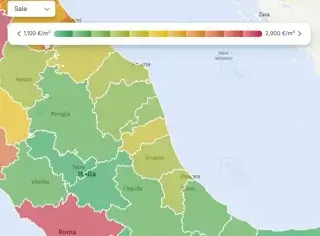 Housing Prices in Italy Reach a Two-Year High
Japan office market expands amid tight supply
Investment momentum strengthens
Japan’s office market continues to show resilient investment dynamics despite supply constraints and rising construction costs. According to Savills, office investment volumes reached JPY2.1 trillion during the first three quarters of 2025, marking a 7% increase year on year. Investor appetite remains strong, with prime office cap rates holding firm at approximately 2.6%, reflecting sustained demand for high-quality assets.
Major transactions underline this trend, including Mitsubishi UFJ Financial Group’s acquisition of Osaka Dojimahama Tower for more than JPY100 billion, one of the largest office deals of the year.
Tokyo vacancies approach pre-pandemic lows
The tightest conditions are observed in Tokyo’s Central 5 Wards, where vacancy rates in Grade A buildings have fallen close to pre-pandemic levels. Meanwhile, bay area submarkets are recording large-scale absorption. Although average rents in central Tokyo have yet to fully recover to pre-COVID peaks, limited availability of large floor plates enables landlords to push rents aggressively when space becomes available.
Corporate demand drives rental growth
Strong corporate performance and expansion across Japan are supporting demand for modern office space. Amid a tight labour market, companies increasingly prioritise premium offices with advanced amenities as a strategic tool to attract and retain talent.
This pattern extends beyond Tokyo. In Osaka, JP Tower Osaka has achieved top rents of JPY50,000 per tsubo, matching levels seen in Tokyo’s core districts. In Nagoya, The Landmark Nagoya Sakae, scheduled to open in March 2026, is setting record-high rents of up to JPY40,000 per tsubo for the city.
Constrained development pipeline
New office supply remains limited due to labour shortages, elevated construction costs, and restricted land availability. In Tokyo, delays to major projects such as TOFROM Yaesu Tower, now expected in early 2026, have helped smooth absorption. Beyond 2026, new supply in Osaka and Nagoya is also projected to remain modest.
Several regional developments, including the Meitetsu Nagoya Station District Redevelopment and Hakata Station Sky City in Fukuoka, have been paused amid rising costs, further tightening the supply of modern office space.
Widening gap between prime and secondary assets
Savills notes that modern office buildings located near major transport hubs continue to outperform, while older properties in less accessible locations face increasing competitive pressure. The performance gap between prime and secondary offices is expected to widen, with constrained supply underpinning further rental growth in both Tokyo and regional markets.
As reported by experts at International Investment, Japan’s office sector is entering a phase of selective expansion, where limited new supply, strong corporate demand, and a focus on modern, well-located assets continue to reinforce investor confidence and rental growth.