







 Latvia’s Residence Permits for Real Estate to Be Abolished from September 15
 Egypt Prepares New Law for Property Developers
 Young Japanese Buyers Turn to 50-Year Mortgages
 Argentina Narrows Tourism Gap as Arrivals Rise
 Seattle Luxury Housing Loses Its Former Momentum
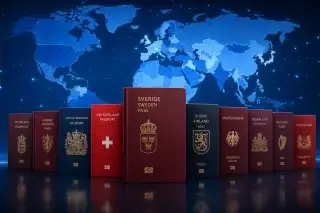 The World’s Strongest Passports for Travel, Living and Investment
Visa for Digital Nomads: 13 Countries for Remote Work

A digital nomad visa is used as a legal format for long-term residence abroad for professionals working remotely. It allows individuals to stay outside their country of citizenship beyond tourist limits, open bank accounts, rent housing on a long-term basis and, in some cases, benefit from tax incentives. Such programs are currently available in 66 countries, reports the Get Golden Visa platform.
Key requirements Digital nomad programs
Digital nomad programs across jurisdictions are built on a similar model. The main requirement is confirmed remote work and income from abroad. Applicants must prove that they work for a foreign employer, run a business registered outside the host country or provide services to international clients. Access to the local labour market under this type of visa is generally prohibited.
The second key criterion is financial stability. Most programs set a minimum income threshold, which on average ranges from $2,000 to $5,000 per month or from $24,000 to $80,000 per year. In some cases, applicants are allowed to подтверждать not only regular income but also savings held in a bank account.
In addition, most programs require a clean criminal record, a valid passport and health insurance covering the entire period of stay. Some schemes also request proof of education or professional experience, especially if they are focused on specific sectors such as IT, fintech, consulting or creative industries.
Required documents Digital nomad Visa
In most cases, the document package for a digital nomad visa is standardised and differs only in details. The core includes a valid passport and a completed application form. These are accompanied by a police clearance certificate from the country of citizenship or permanent residence.
Remote work status is confirmed by an employment contract with a foreign company, a letter from the employer or contracts with overseas clients. Freelancers and business owners may additionally need company registration documents, tax statements or a portfolio of completed projects.
Financial stability is proven through bank statements for the last three to six months, income certificates or payslips. Almost all programs require health insurance valid for the entire visa period and covering major risks. In some cases, proof of accommodation is also requested — a rental contract or housing booking for the first months.
Taxes and financial status for Digital nomad
The tax regime is one of the key factors when choosing a destination for relocation. Despite the unified name of the visa, financial rules differ significantly between jurisdictions. In some cases, digital nomads are fully exempt from local income tax; in others they receive preferential treatment; and in third cases they may be treated as tax residents after a prolonged stay.
The most favourable models operate in the UAE, Croatia, Costa Rica, Barbados, Dominica, Ecuador, El Salvador, the Seychelles and Georgia. There, income earned outside the country of residence is not subject to local taxes throughout the validity of the visa. Georgia also offers a particularly flexible entry and stay regime.
In Europe, the situation is more complex. In Portugal, Spain, Italy and Greece, it is possible to reduce tax rates or exempt part of income from taxation, but under certain conditions a digital nomad may still become a tax resident. The key criterion is usually the length of stay — most often 183 days per year.
It is important to note that tax exemptions in the country of residence do not automatically mean exemptions in the country of citizenship. The United States, for example, requires tax payments regardless of where the taxpayer lives. Therefore, when choosing a jurisdiction, digital nomads increasingly focus not only on visa conditions but also on double taxation treaties and their personal tax status.
European programs Digital nomad Visa
Europe remains one of the most popular destinations for digital nomads due to its developed infrastructure, stable legal systems and high quality of life. Most programs target specialists from non-EU countries and offer a stay of one year with the possibility of extension.
Portugal is considered one of the market leaders. The D8 visa allows legal residence in the country with confirmed remote income of at least €3,480 per month. The status can be extended for up to five years, with the possibility of transitioning to permanent residence and citizenship. Additional advantages include special tax regimes for new residents and one of the strongest digital nomad communities in Europe.
Spain offers a telework visa with a minimum income of €2,760 per month. The program allows limited cooperation with Spanish companies and extension of the status for up to five years. The country attracts applicants with fast internet, a mild climate and relatively affordable living costs compared to Northern Europe.
Greece remains one of the simplest jurisdictions in terms of requirements. The minimum income is €3,500 per month, the initial term is one year with extension up to three years. The program is aimed at specialists fully working for foreign markets and does not provide integration into the local economy.
Italy launched its own remote work visa in 2024. The required income is around €25,000 per year. The visa is issued for one year with the possibility of extension and allows free movement within the Schengen area. Some regions offer tax incentives for new residents.
Croatia stands out among European destinations due to its full tax neutrality for digital nomads. The minimum income is €3,295 per month. Since 2025, the visa duration has been extended to 18 months with the possibility of prolongation up to three years. The program is actively supported by the government and aimed at long-term foreign presence without pressure on the labour market.
Other popular destinations for Digital nomad
Outside Europe, digital nomad programs often look even more attractive in terms of taxes and length of stay. Many countries use such visas as an economic stimulus tool and are willing to offer more flexible conditions than the EU.
Japan launched its digital nomad visa in 2024, targeting highly qualified specialists. The program is designed for six months without extension and requires an annual income of at least 10 million yen (around $63,000). This is more a long-stay format than a classic residence permit, but it allows legal stay and remote work for foreign companies without tax residency.
In the UAE, the minimum income is $3,500 per month, and the visa is issued for one year with renewal. The key advantage is the complete absence of income tax and a developed financial infrastructure, making the Emirates especially popular among IT specialists, entrepreneurs and high-income freelancers.
Panama offers a nine-month remote worker visa with the possibility of extension. The minimum income is $3,000. Foreign income is not taxed locally, and the application process is considered one of the fastest in Latin America.
Costa Rica positions digital nomads as long-term residents. The visa is issued for one year with extension for another year, with a minimum income of $3,000 per month. The country exempts nomads from local taxes and promotes a mix of ecology, climate and relatively low living costs.
Thailand has taken a different approach by integrating digital nomads into its long-term migration model. The LTR visa is issued for 10 years but requires income of at least $80,000 per year and confirmed professional experience. The tax regime depends on the length of stay and the timing of income transfer into the country, making Thailand mainly attractive for high-income specialists with long-term plans.
Malaysia is developing the DE Rantau program focused on IT, creative and digital professions. The minimum income is about $24,000 per year, and the duration is up to two years. Authorities actively support the remote work ecosystem through coworking spaces and special services.
South Korea has launched its own digital nomad visa with a required income of $70,000 per year. The program allows residence for up to two years and may be seen as a pilot stage for future resident statuses.
The Philippines offer one of the most accessible programs with a minimum income of around $2,000 per month and full exemption from local taxes. The visa is issued for one year with extension and targets the mass segment of remote specialists.
Application process for Digital nomad Visa
In most countries, the application procedure follows a similar structure. First, compliance with basic requirements is checked — remote work format, income level, citizenship and health insurance. Then a document package is prepared, including passport, police clearance certificate, proof of employment and bank statements. In some cases, proof of accommodation is also required.
Applications are submitted through a consulate, visa centre or online portal. Processing time usually ranges from 10 days to 1–2 months. In some destinations, after approval it is necessary to obtain a residence card locally.
Most programs allow applications together with a spouse and children. In this case, family relationship documents and separate insurance for each family member are required, and the minimum income threshold increases. At the same time, accompanying persons do not always receive the right to work or study without additional permits.
The main reasons for refusals are unconfirmed income, unsuitable work format, document errors, lack of insurance or issues related to criminal history.
Cost of a digital nomad visa
The cost of obtaining a visa varies significantly depending on the chosen jurisdiction and does not always correlate with income requirements. In some cases, the visa is almost free; in others, the total amount may reach several thousand dollars.
In Europe, basic fees are relatively moderate. In Spain, the average cost is $70–80; in Germany about $105; in Hungary around $116; in Cyprus about $78. The most expensive European programs operate in Norway, where the visa fee exceeds $600.
Outside Europe, the range is even wider. In Panama, the application costs about $300; in the Bahamas around $25; in Barbados up to $2,000; in Grenada about $1,500. In Georgia and Mauritius, there are no government fees for a digital nomad visa.
Additional costs often include notarised translations, medical certificates, insurance and residence card issuance.
Advantages and limitations for Digital nomad
A digital nomad visa allows people to legally build their lives abroad without changing their country of employment or entering the local labour market. This format provides access to full resident status with long-term rentals, banking services and healthcare, and also expands geographical freedom when choosing where to live.
At the same time, this status remains temporary and is not suitable for all professions. It requires stable remote income, readiness to handle legal and everyday issues independently, and the ability to adapt to life outside a familiar environment. In most cases, the visa does not directly lead to permanent residence, and after its expiration it is necessary either to change immigration status or leave the chosen jurisdiction. Exceptions exist in certain destinations such as Portugal and Spain, where long-term residence under a digital nomad visa can become a basis for transitioning to more stable legal statuses.
Analysts at International Investment note that the digital nomad visa reflects structural changes in the global labour market. States are increasingly competing for mobile professionals by offering simplified residence regimes instead of classic labour immigration. For digital nomads themselves, this means a shift from spontaneous relocation to managed mobility, where the choice is increasingly determined not only by climate and living costs, but also by tax models, infrastructure quality and long-term legal prospects.