







 Turkey Is Losing Its Cheap-Holiday Advantage
 Development Is Rewriting Southeast Asia’s Historic Districts
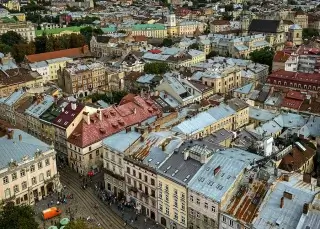 How Ukraine’s New-Build Housing Market Has Changed Over Four Years
 European Prime Rents Rise as Property Yields Turn Higher
 The Most Expensive Airlines in Europe in 2026
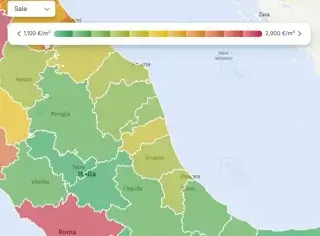 Housing Prices in Italy Reach a Two-Year High

Iceland’s government is preparing legislative amendments that would change the long-term residency prospects of Ukrainian nationals granted protection under emergency measures introduced after the start of the Russia–Ukraine conflict in February 2022. The announcement was made by Minister of Justice Þorbjörg Sigríður Gunnlaugsdóttir and reported by RÚV.
The proposed bill would prevent Ukrainians who arrived under the Mass Migration Act from automatically qualifying for permanent residence permits after five years of stay.
Temporary Protection and Rising Ukrainian Population in Iceland
Since February 2022, nearly 6,400 Ukrainians have applied for asylum in Iceland. In 2025, applications from Ukrainian nationals accounted for just over 60 percent of all asylum requests, with approximately 1,100 out of more than 1,700 cases.
Over the past four years, the Ukrainian population in Iceland has increased from around 470 individuals to more than 4,200. Applications have been processed under a simplified framework designed for mass displacement, rather than through the standard asylum procedure.
Under current legislation, eligibility for indefinite residence would be triggered next year for the earliest arrivals, marking five years since their entry into Iceland.
Legislative Reform and Policy Alignment with Europe
According to the Minister of Justice, the proposed amendments aim to harmonize Iceland’s approach with common practices in Nordic countries and across the European Union. While Iceland maintains its supportive stance toward Ukrainians under temporary protection, the government argues that emergency protection status should not automatically translate into permanent residency.
If adopted, the bill would require Ukrainians wishing to remain in Iceland after the conflict ends to apply through the regular residence permit system. This would shift the framework from collective temporary protection to individual assessment under standard immigration law.
The minister indicated that the underlying principle is that temporary displacement measures are tied to extraordinary circumstances and that, once conditions allow, return to the country of origin may become possible.
Implications for Iceland’s Migration Policy
The reform could reshape Iceland’s migration landscape, where Ukrainians have become the largest group of asylum applicants. The rapid increase in population has had measurable effects on social services, labor markets, and integration systems.
Requiring applications through the standard residence framework would allow authorities to evaluate long-term settlement on a case-by-case basis, aligning humanitarian commitments with domestic policy considerations.
As reported by experts at International Investment, the proposed legislative changes demonstrate Iceland’s effort to balance humanitarian protection with long-term migration sustainability, ensuring that permanent residence status is granted through individualized legal assessment rather than automatic entitlement.