







 European Prime Rents Rise as Property Yields Turn Higher
 The Most Expensive Airlines in Europe in 2026
 Housing Prices in Italy Reach a Two-Year High
 Travellers Increasingly Choose Cooler Scandinavia
 Serbia Property Sales Decline as Transaction Value Rises
 Thailand Rethinks Tourism as Arrivals Lose Momentum
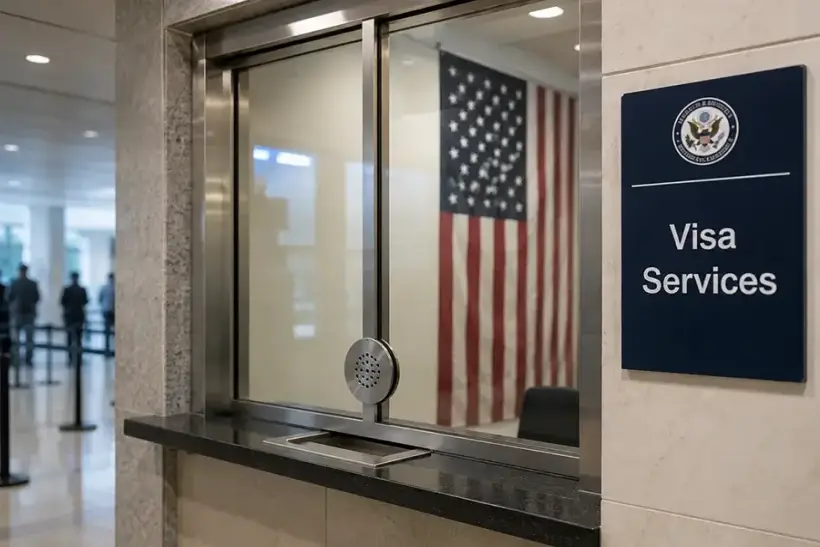
The administration of US President Donald Trump has temporarily paused immigrant visa interviews for applicants worldwide. The State Department said the changes were linked to a global training program for consular officers at US embassies and consulates, Reuters reports.
Interviews Are Being Rescheduled
The US State Department has launched a training program for employees at all American embassies and consulates. Visa service schedules are being adjusted during the training period, affecting interviews for immigrant visa applicants. The department has not specified how long the program or the resulting restrictions will last. The Financial Times previously reported that applicants who already had interviews scheduled at US diplomatic missions had begun receiving notices that their appointments were being rescheduled. New dates are expected to be announced later.
Reuters separately clarified that the pause applies specifically to immigrant visa interviews, not to all visa categories. The State Department said the program is intended to help consular officers conduct more thorough assessments of applicants. In particular, attention will be paid to the risk that an applicant may later become dependent on public benefits or other forms of government assistance in the US. The department said the new training is designed to ensure applicants are evaluated “comprehensively and consistently.”
Court Strikes Down Restrictions on Applicants From 75 Countries
The new pause came just days after a federal court overturned another State Department restriction involving immigrant visas. Starting January 21, 2026, the department suspended their issuance to citizens of 75 countries, including Russia, Georgia, Armenia, Azerbaijan, Belarus, Kazakhstan, Uzbekistan, Iran, Iraq, Egypt, Brazil and Thailand. Together, the list covered nearly 40% of the world’s countries.
Interviews themselves were not canceled. Consular officers were instructed to continue interviewing applicants and reviewing each case under the usual criteria, including assessing the likelihood that an immigrant could become dependent on public assistance. However, even if an individual review found no grounds for refusal, a citizen of one of the 75 countries would still not be issued an immigrant visa. The restriction was to remain in force until further notice from the State Department.
To compile the list, the authorities used data from the US Council of Economic Advisers on the use of social assistance by immigrant households according to country of origin. The restrictions primarily covered countries where the share of such households exceeded 30%. Some countries were exempted for foreign-policy reasons.
On August 21, US District Judge Jeannette Vargas of the Southern District of New York ruled that the policy violated the law and exceeded Secretary of State Marco Rubio’s authority. The court said the law requires an individual assessment of grounds for refusal and prohibits discrimination in the issuance of immigrant visas, including on the basis of nationality. The ruling also vacated refusals issued solely under this policy and ordered those cases to be reconsidered.
State Department Prepares to Revoke Up to 200,000 B1 and B2 Visas
The Trump administration is preparing another major measure as part of its immigration policy. The State Department is considering revoking business and tourist B1 and B2 visas held by tens of thousands of foreign nationals who applied for asylum after entering the US or are currently awaiting decisions on their claims. According to the Associated Press, up to 200,000 visas issued between 2016 and 2026 could be reviewed. If implemented, the initiative would become the largest mass visa revocation in US history.
B1 and B2 visas are intended for business trips, tourism, visits to relatives and medical treatment. When applying, individuals must demonstrate that they intend to return to their country of permanent residence. The State Department, together with the US Department of Homeland Security, is reviewing cases in which foreign nationals entered the country on such visas and later applied for asylum.
Deputy Secretary of State Christopher Landau said on August 24 that the authorities view such practices as a way of circumventing immigration law. State Department spokesperson Tommy Pigott confirmed coordination with the Department of Homeland Security but said the final number of visas that could be revoked had not yet been determined. The process is expected to be carried out in stages.
Revocation of a B1 or B2 visa does not in itself mean automatic deportation. Foreign nationals whose asylum applications are already under review would lose their status as business or tourist visitors, but their cases would continue to be considered under a different immigration procedure. According to AP, the initiative has not yet received final approval and, if implemented, is likely to face legal challenges.
Legal Immigration Is Becoming More Difficult
Analysts at International Investment note that the Trump administration’s immigration policy now extends far beyond efforts to combat illegal entry. New restrictions are affecting various channels of legal migration. The main consequence of this approach is growing uncertainty for foreign nationals who plan to enter the US or are already going through the required procedures.
Authorities are increasingly revising conditions after applications have been submitted or visas issued, while some measures have had to be adjusted following court intervention. For applicants, this raises the risk of delays, changes in status and additional scrutiny. Further developments will depend both on the actions of the White House and the State Department and on court rulings that define the limits of the administration’s authority in immigration matters. Those planning to move to the US are advised to check the latest requirements before making arrangements.