







read also
 Vietnam Mortgage Surge Pushes Homes Out of Reach
 Lithuanian Apartment Prices Accelerate Across Major Cities
 London Flats Lose Value Ahead of Leasehold Reform
 Construction of the Batumi–Sarpi Highway Begins in Georgia
 Baltic Property Investment Accelerates in 2026
 Hong Kong and Singapore Renew Their Expat Rivalry
“Winter in Moscow”: How New Year Holidays Are Celebrated in Russia’s Capital
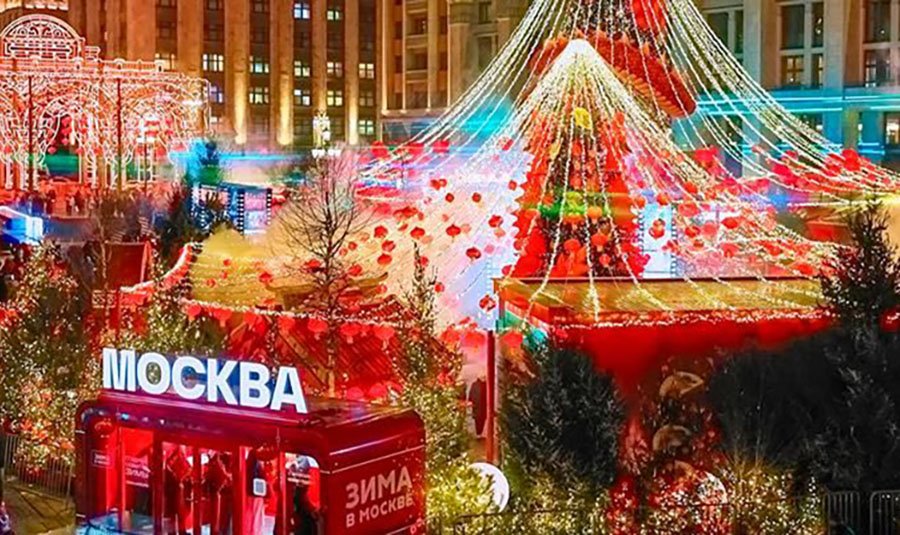
Photo: Mos.ru
Moscow traditionally places a strong emphasis on visual effects and rich cultural content during the winter season. One of the key highlights of the 2025–2026 season is the Journey to Christmas festival, which runs from December 12 to January 11, writes Travel and Tour World. The programme includes outdoor events, festive markets, theatrical performances, and concerts designed for both residents and tourists.
New Year events are held as part of the large-scale city project Winter in Moscow. During the 2024–2025 season, the programme included around 53,000 events across streets, squares, parks, and cultural venues, attracting nearly 30 million visitors. In the current season, the project has been expanded: the total number of events has exceeded 55,000, spread across more than 400 locations. This has helped distribute activity beyond the central districts, Izvestia notes.
“The City of Christmas Ornaments”
The festive infrastructure covers a significant part of the city. Central streets, squares, and public spaces are decorated with light installations, decorative elements, and themed venues, forming a unified winter events route. Each district offers its own interpretation of the festive season, ranging from references to pre-revolutionary and Soviet traditions to contemporary visual concepts.
One of the festival’s core elements remains the Christmas markets located at key city sites. In 2025, Manezhnaya Square hosts the “City of Christmas Ornaments” venue, dedicated to early 20th-century Russian New Year traditions. Visitors can see vintage cotton ornaments, iconic winter characters such as Ded Moroz and Snegurochka, theatrical performances, and dishes associated with Soviet festive culture.
The main visual centerpiece of the site is a natural fir tree standing 22 metres tall. It is decorated with more than 10,000 ornaments and around 5 km of garlands. The hand-painted designs were created by Moscow artists and feature winter landscapes and fairy-tale motifs. At Tverskaya Square, the festive décor references Moscow’s architectural landmarks. An eight-metre tree is complemented by decorative elements inspired by the Bolshoi Theatre, the Kremlin, and other iconic city sites, highlighting the festival’s connection to Moscow’s identity and cultural heritage.
“Journey for the Gift of Dreams”
The festival targets a broad audience, including families with children. The programme features workshops in traditional crafts such as metal embossing, glass painting, and making Christmas ornaments and candles. These formats combine entertainment and education, alongside classical ballets like Swan Lake and performances for family audiences. The programme is complemented by sports zones offering various winter activities, including curling.
The interactive quest “Journey for the Gift of Dreams” introduces visitors to Russia’s regional traditions through a game format. Participants collect stamps at themed venues and exchange them for prizes, encouraging movement around the city and deeper engagement with the cultural programme. Festive markets offer traditional Russian cuisine, baked goods, hot drinks, and seasonal grilled dishes. Craft pavilions selling handmade products and decorative ceramics operate in parallel. The charitable initiative “Kind Christmas Tree” allows visitors to choose wishes and support various projects through QR-code donations.
The Economics of Celebration and Tourism
The economic efficiency of winter festivals is confirmed by retrospective assessments. In one of the previous Journey to Christmas seasons, the additional turnover generated for hotels, restaurants, and retail venues was estimated at 56 billion rubles (around $600 million), the Moscow government website reports. City authorities view tourism as a sector with a strong multiplier effect. According to official data, every ruble invested in tourism generates more than three rubles in total economic return. Winter festivals are used as a tool to support demand during the low season, particularly for hotels, restaurants, cafés, retail, and small businesses.
By the end of 2024, Moscow’s budget revenues linked to the tourism sector amounted to around 235 billion rubles ($2.5 billion), while total tourism and excursion spending exceeded 1.5 trillion rubles ($16 billion). Authorities expect further growth.
In 2024, Moscow was visited by 26 million tourists, 3% above the 2019 level. The majority of the flow consisted of domestic travel, while the number of foreign tourists was only about 2.7 million. In the first half of 2025, around 500,000 international visitors came to the Russian capital, a 10% increase year on year, Interfax reports. China ranked first by number of visits, with India taking second place, overtaking Turkey. According to the Times of India, in January–June 2025, 40,800 tourists from India visited Moscow, 40% more than a year earlier and equal to 96% of the pre-Covid level. Tourist arrivals from Vietnam grew by 20%, reaching 62% of 2019 levels.
The number of visitors from Saudi Arabia increased 1.3 times year on year and almost tenfold over six years. In total, more than 126,000 visits from Middle Eastern countries were recorded in the first half of 2025.
According to Rosstat, in the first seven months of 2025, the number of foreign tourists staying in Moscow hotels increased by 14% year on year. At the same time, 94% of rooms in high-quality hotels booked by foreigners during the summer were taken by tourists from non-CIS countries. More than half of the demand came from visitors from Saudi Arabia, the UAE, India, and Oman.
Analysts at International Investment note that winter festivals and a large-scale events programme help Moscow maintain stable tourism and consumer activity. With ongoing restrictions on many international routes and a decline in foreign tourist flows, the city is focusing on a combination of domestic demand and selectively growing inbound tourism, using cultural and seasonal formats as a tool for stabilisation and long-term sector development.