












Tourism Crisis in Germany, Iceland and Ireland
Decline in International Tourist Flows in Europe and Hamburg’s Growth
Germany, Iceland and Ireland have entered a period that industry media describe as the tourism crisis of the decade. A decline in international tourist flows has been recorded amid economic pressure, rising costs and geopolitical instability. At the same time, several cities and regions have demonstrated the opposite trend, reshaping the map of European tourism, Travel And Tour World reports.
Tourism in Germany: Record Overnight Stays and Falling Foreign Demand
In 2025, Germany recorded nearly 497.5 million overnight stays — a historic high. Growth amounted to just 0.3% compared to the previous year, reflecting effective market stagnation. The key concern was the decline in international tourism: overnight stays by foreign guests fell by 1.8% to 83.8 million. The share of international visitors decreased from 17.2% to 16.8%, indicating a structural shift in demand.
Growth in domestic travel partially offset the decline, yet it increased the sector’s dependence on the national market. International travelers became more cautious due to rising costs. Inflationary pressure and higher energy prices pushed service costs upward. Airlines increased fuel surcharges, making flights more expensive. A higher VAT rate for the hospitality sector further affected accommodation prices. Geopolitical tensions in Eastern Europe added to the caution of travelers from the United States and the United Kingdom — key source markets.
Berlin confirmed the nationwide trend. Between January and November 2025, the capital recorded 11.37 million overnight stays, down 3% year-on-year. In November, guest numbers fell by 0.1%, while overnight stays declined by 2.4%. Decreases were reported from the United Kingdom, the Netherlands and Spain. High prices and sensitivity to safety concerns added further pressure on demand.
Hamburg in 2025: Tourism Growth Despite the National Slowdown
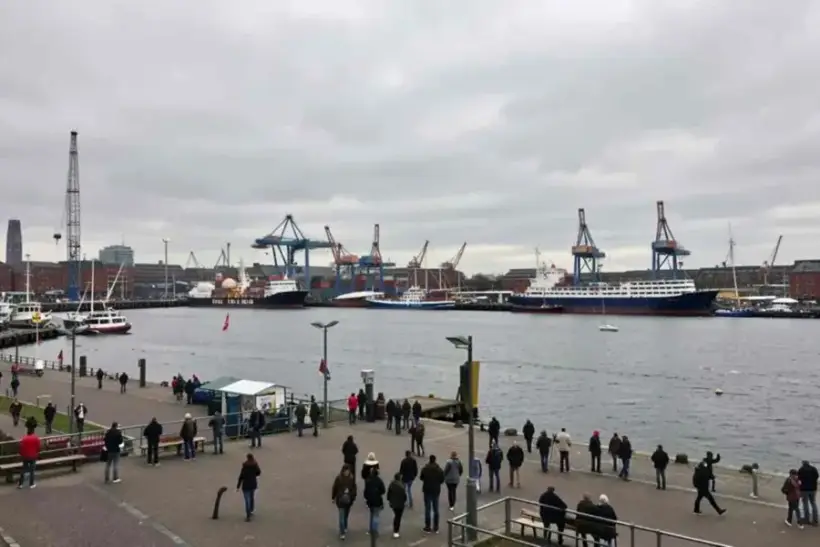
While international tourism declined across Germany, Hamburg showed the opposite trend. In November 2025, accommodation establishments in the city welcomed 652,504 guests, up 4.4% year-on-year. Overnight stays increased by 0.4%, confirming stable demand even amid broader market deceleration.
Hamburg’s visitor structure differs from the national picture. Overnight stays by German tourists slipped by 0.3%, yet the international segment grew by 3.1%. Foreign guests accounted for nearly 20% of total overnight stays, significantly above the national average. The city strengthened its position specifically in the international segment, which declined elsewhere.
Hamburg’s resilience is linked to its diversified tourism model. Its port status, business events, exhibitions, cultural festivals and developed infrastructure generate balanced demand throughout the year. The city focuses not only on mass sightseeing tourism but also on the MICE segment, event-driven travel and short-term business trips. This structure reduces reliance on a single market and enables a flexible response to external risks.
Hamburg’s experience demonstrates that in the context of the 2025 tourism crisis, overall market volume is less decisive than product quality, pricing strategy and the ability to retain international audiences. This combination allowed the city to maintain positive dynamics despite declines in most other German regions.
Iceland 2025: Slowdown and Regional Imbalance
Iceland, which had experienced rapid tourism growth in recent years, faced a slowdown in 2025. Keflavík International Airport handled 8.1 million passengers, 2% fewer than in 2024. Departures by foreign tourists decreased by 0.4%. A period of rapid expansion gave way to stagnation.
The most significant decline was recorded in the capital. In December 2025, hotel overnight stays in Reykjavik dropped by 16.4%, well above the national average decline of 11.4%. Hotel occupancy in the capital fell by 12.4 percentage points. High dependence on international demand increased the city’s sensitivity to global travel fluctuations.
At the same time, regional performance was uneven. Northern Iceland recorded an 11.2% increase in hotel overnight stays in December, while the southwest region saw growth of 9.6%. Natural attractions, winter tourism and local events supported these gains. Akureyri strengthened its position through sports events and festivals, partially offsetting the capital’s decline.
In 2025, Iceland’s tourism market showed a structural shift: visitor flows are being redistributed from overloaded centers to regions with more diversified offerings. This model reduces risk concentration and creates new growth points even amid slower international arrivals.
Tourism Dynamics in Ireland: Fewer Visits and Lower Revenues
Ireland, where tourism plays a key economic role, experienced a noticeable decline in international demand in 2025. In March, the number of foreign visitors fell by 15% compared to the previous year. Visitor spending dropped by 22%, and overnight stays decreased by 8%. The decline affected markets in Great Britain, continental Europe and North America.
Inflation and rising transport costs influenced performance. Operational challenges at Dublin Airport and adverse weather conditions early in the year added further pressure. For a country highly dependent on international visitors, these factors increased volatility in tourist flows.
Signs of stabilization emerged in the second half of 2025. October saw a 4% year-on-year increase in foreign arrivals, November recorded growth of 13%, and December rose by 34%. However, the cumulative figure for January–October remained 6.4% below 2024 levels, and the full-year total was about 3% lower.
Ireland’s market demonstrated partial recovery capacity, yet the year closed with lower international indicators. Demand remains sensitive to external economic and infrastructure factors, highlighting the need to revise tourism attraction strategies in 2026.
European Tourism Market: A New Demand Structure
The situation in Germany, Iceland and Ireland reflects a broader European trend. International arrivals in 2025 grew only marginally, and several destinations recorded declines. Cities highly dependent on foreign visitors proved more vulnerable.
Berlin, Reykjavik and Barcelona experienced weakening performance driven by international segments. In December 2025, Catalonia recorded a 7.3% decline in foreign arrivals compared to the previous year. Negative growth was reported from France, the United Kingdom and the United States. Stricter short-term rental regulation, cruise restrictions and higher tourist taxes increased price sensitivity.
Regions with diversified offerings or strong domestic demand showed greater resilience. Hamburg and northern Iceland achieved growth thanks to event calendars, specialized tourism niches and balanced visitor structures.
Analysts at International Investment note that 2025 confirmed a structural shift in European tourism. Large-scale international flows are no longer a guarantee of stability. Competitiveness increasingly depends on flexible pricing, infrastructure quality and the ability to attract diverse traveler segments. The new market model is forming around resilience and diversification rather than solely around the volume of international arrivals.