













Widespread Flight Delays Hit Major Middle East Hubs
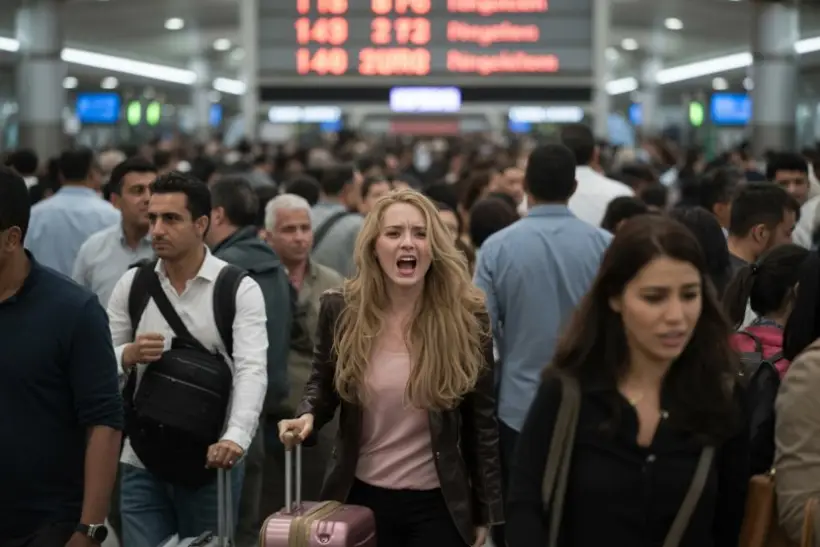
1,370 delays and 16 cancellations disrupt regional corridors
On February 10, 2026, passengers across the UAE, Egypt, Türkiye, Saudi Arabia, Qatar, Kuwait, and Bahrain faced a broad operational breakdown in air travel. The day’s disruption was defined by delay-heavy operations rather than mass cancellations, with a reported total of 1,370 delays and 16 cancellations across multiple major airports. For a region built around high-frequency hub-and-spoke connections, this pattern tends to be especially damaging, because even moderate schedule slippage can cascade into missed transfers, rebooking bottlenecks, and knock-on delays across continents.
Dubai, Cairo and Doha emerge as the key pressure points
Dubai International was cited as the most affected airport, with 252 delays and 4 cancellations reported in the disruption snapshot. Airports such as DXB provide live flight status tools to help travellers track real-time changes as operational conditions evolve.
Cairo International followed with 229 delays and 1 cancellation, affecting both regional services and long-haul corridors. Doha’s Hamad International was reported with 204 delays and no cancellations, a profile that indicates operational continuity but significant timetable instability for connecting passengers. Airports and airlines consistently direct travellers to official flight status portals and apps, as published schedules become unreliable during high-disruption days.
Jeddah and Istanbul add strain to Saudi and Turkish networks
Jeddah was reported with 194 delays and 3 cancellations, while Riyadh appeared as a high-delay hub without cancellations, signalling congestion rather than shutdown. In Türkiye, Istanbul Sabiha Gökçen recorded 173 delays and 2 cancellations, with disruption concentrated around carriers operating dense short-haul and regional networks. When a single airport absorbs a large share of network turbulence, the ripple effect tends to spread quickly into Europe–Middle East and Gulf–Mediterranean flows.
Kuwait, Bahrain and Dammam extend the disruption footprint
Although reported delay and cancellation volumes in Kuwait, Bahrain and Dammam were smaller than the top hubs, the passenger impact can still be severe due to the Gulf’s transfer-driven geography. In practice, tighter connection windows and heavy reliance on hub banks amplify delays into missed onward sectors, longer terminal dwell times and constrained re-accommodation options.
Airline disruption concentrates around key hub carriers
The disruption report highlighted Qatar Airways, Pegasus Airlines, Emirates, EgyptAir and Saudia as the most affected by volume at specific hubs. In practical terms, hub concentration matters: when a dominant carrier in a single airport is delayed at scale, network recovery becomes harder, because aircraft rotations, crew duty limits and slot constraints tighten simultaneously. Major airlines maintain dedicated flight status pages, and airports publish real-time flight information as conditions change.
Why delay-heavy days can be worse than cancellation spikes
A day dominated by delays can be more disruptive than one dominated by cancellations, particularly for transit passengers. Flights still operate, but arrival and departure waves shift, short connections collapse, and service desks become overwhelmed by rebooking demand. This is especially relevant for global corridors that run through Dubai and Doha, linking Europe, Africa and South Asia. Travel advisories and international travel reporting frequently note that elevated regional risk can translate into short-notice schedule changes, including delays and cancellations, reinforcing the need to monitor official updates.
Conclusion
As experts at International Investment report, the February 10, 2026 disruption pattern underscores how sensitive Middle East aviation corridors are to congestion and network stress. For trips routed via Dubai, Doha, Cairo, Jeddah and Istanbul in 2026, travellers should treat real-time status checks as essential and build additional connection buffers to reduce the risk of missed onward flights.