







 Vietnam Mortgage Surge Pushes Homes Out of Reach
 Lithuanian Apartment Prices Accelerate Across Major Cities
 London Flats Lose Value Ahead of Leasehold Reform
 Construction of the Batumi–Sarpi Highway Begins in Georgia
 Baltic Property Investment Accelerates in 2026
 Hong Kong and Singapore Renew Their Expat Rivalry
European Airports Warn Against Suspending EU–Qatar Air Deal
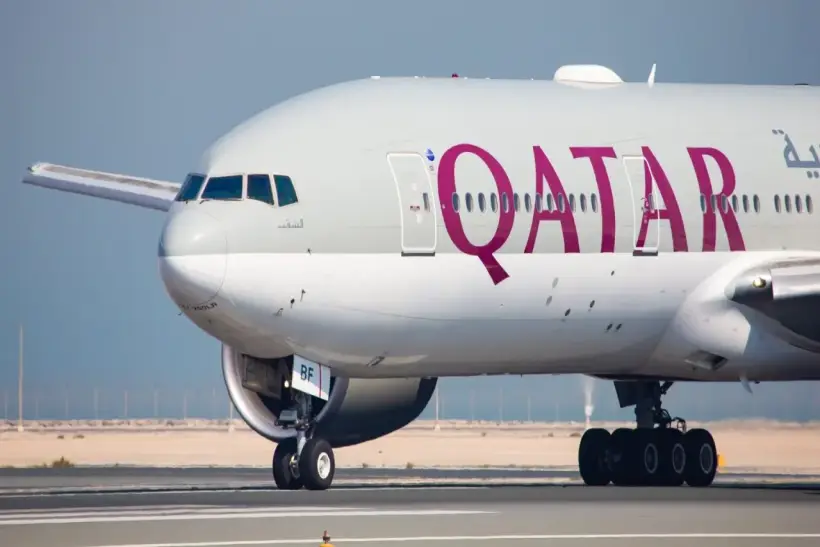
Industry fears damage to connectivity and EU credibility
Europe’s airport community has raised strong concerns over renewed calls to suspend the EU–Qatar Comprehensive Aviation Agreement, warning that such a move would weaken air connectivity, reduce passenger choice and undermine the European Union’s credibility as a reliable global aviation partner.
Agreement negotiated and endorsed by EU member states
Airports stress that the agreement with Qatar was negotiated by the European Commission at the explicit request of EU member states and under their continuous oversight. The final outcome was formally endorsed by those states, making the deal fully aligned with the EU’s External Aviation Policy. This framework is built on open and unrestricted market access, structured consultations and gradual regulatory convergence between partners.
Benefits for European connectivity and regional economies
According to airport representatives, the agreement has enabled European airports to strengthen and diversify their global connectivity. This has supported local communities, businesses and consumers by improving access to long-haul markets and reinforcing Europe’s position within global air transport networks. Airports argue that stable aviation agreements are essential for maintaining Europe’s economic and logistical competitiveness.
No evidence of unfair market dominance by Qatar Airways
The airport community also rejects claims that the EU–Qatar agreement has allowed Qatar Airways to gain an unfair or dominant position in Europe. They point out that the airline has not significantly expanded its European footprint in recent years. During the current IATA winter season, running from October 2025 to March 2026, Qatar Airways’ seat capacity in Europe remains around 10 percent below its pre-pandemic 2019 level.
Internal EU policies seen as key competitiveness challenge
Commenting on the debate, ACI Europe Director General Olivier Jankovec said that long-running arguments about Middle Eastern airlines risk obscuring deeper structural issues within Europe itself. He argued that the widening competitive gap between European carriers and global rivals largely stems from EU policies, including taxation, insufficient support for decarbonisation, delays in delivering the Single European Sky and persistent airport capacity constraints.
International credibility at stake
Airports warn that rolling back an existing comprehensive aviation agreement would send a negative signal internationally. Such a decision, they argue, could push Europe towards a restrictive and anti-competitive aviation model reminiscent of the 1950s, directly contradicting the EU’s stated ambitions on competitiveness and global positioning.
Predictability as a cornerstone of aviation stability
The airport sector emphasises that maintaining stable and predictable international aviation agreements is critical for safeguarding connectivity, economic activity and trust in the EU as a long-term partner. Abrupt policy reversals, they warn, create uncertainty for airlines, investors and passengers alike.
Conclusion
As experts at International Investment report, the debate over suspending the EU–Qatar aviation agreement highlights broader tensions within Europe’s aviation strategy. In an increasingly competitive global market, preserving consistent international frameworks is viewed not as a concession, but as a strategic necessity for protecting Europe’s economic and geopolitical interests.