











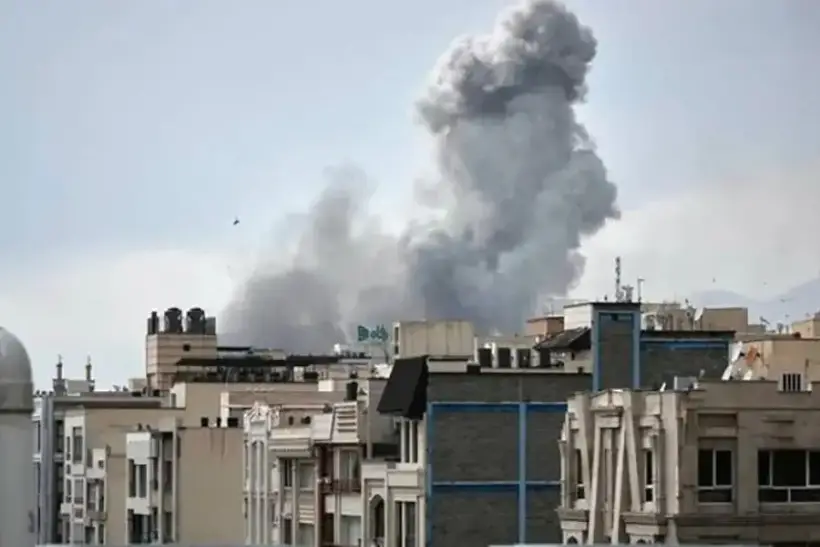
Energy disruption could reshape the global economy
The escalating conflict between the United States and Iran could trigger a new wave of global inflation, adding pressure to a world economy already coping with trade tensions and fragile growth.
Economists warn that sustained high oil prices could accelerate inflation while simultaneously slowing economic activity across major economies.
According to Bloomberg Economics, prolonged disruption in energy markets could significantly complicate monetary policy decisions and reshape the global economic outlook.
Energy infrastructure disruptions push prices higher
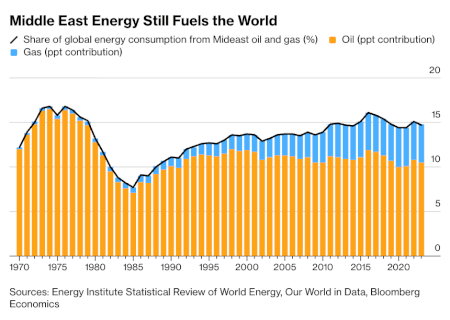
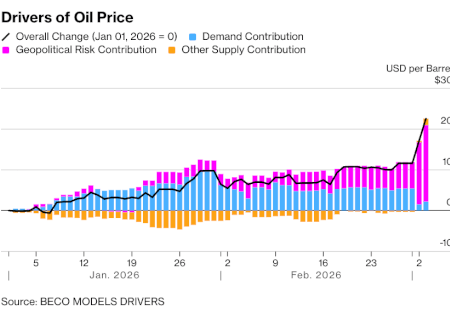
Energy markets reacted quickly in the first days of the conflict. Saudi Arabia’s largest oil refinery has been shut down, while Qatar has closed the world’s largest liquefied natural gas export facility.
The Strait of Hormuz — one of the most critical oil shipping routes in the world — has also become a major concern. Around 20% of global oil supply passes through the strait, making it a strategic chokepoint for global energy markets.
Bloomberg Economics estimates that a 1% reduction in global oil supply can increase prices by roughly 4%.
Oil prices could climb above $100 per barrel
If the conflict escalates and causes major damage to energy infrastructure, oil prices could surge significantly. One modeled scenario suggests prices rising to around $108 per barrel — about 80% higher than the pre-conflict average of roughly $65.
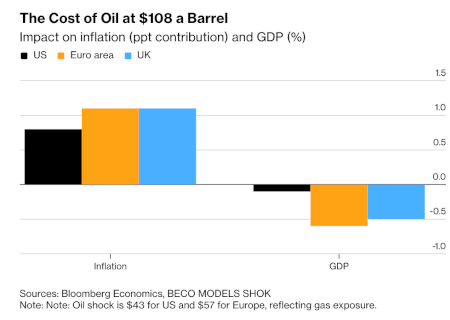
In this scenario, prices could remain elevated through the fourth quarter of the year if supply disruptions persist.
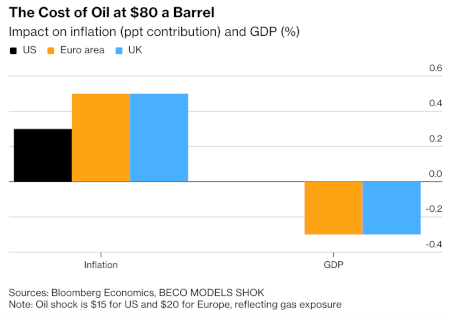
A less severe scenario would see oil stabilizing closer to $80 per barrel if damage to infrastructure remains limited and shipping routes remain partially operational.
Central banks face a difficult policy dilemma
Rising oil prices affect the economy through multiple channels. Higher energy costs increase production expenses and reduce household purchasing power, slowing economic growth.
At the same time, transportation costs rise and petrochemical inputs become more expensive, pushing inflation higher.
Central banks will closely monitor whether inflation expectations remain stable. If they do, policymakers such as the US Federal Reserve, the European Central Bank, and the Bank of England may focus on supporting growth.
However, if inflation expectations become unanchored and wages begin to rise sharply, central banks may be forced to raise interest rates even as growth weakens.
Different impacts for the US, Europe and China
The United States may experience mixed economic effects from an oil shock. Higher gasoline prices hurt consumers, but domestic energy producers benefit, potentially offsetting the impact on overall growth.
For inflation, however, the effect could be significant. Oil at around $108 per barrel could add roughly 0.8 percentage points to US inflation, pushing it above 3% and well above the Federal Reserve’s 2% target.
Europe and the United Kingdom may face more severe economic consequences due to their heavier reliance on imported energy. Gas prices have already surged following disruptions to Qatari production.
Bloomberg Economics estimates the energy shock could reduce GDP by about 0.6% in the euro area and 0.5% in the UK.
China and other oil importers face additional pressure
China, one of the world’s largest oil importers, could also face rising inflation. Previously, the country imported discounted crude from Iran and Venezuela.
If global oil prices climb to around $108 per barrel, inflation in China could rise by approximately 0.8 percentage points.
This would add further pressure on the Chinese economy, which is already dealing with US tariffs and a prolonged downturn in the property sector.
Some exporters could benefit from higher prices
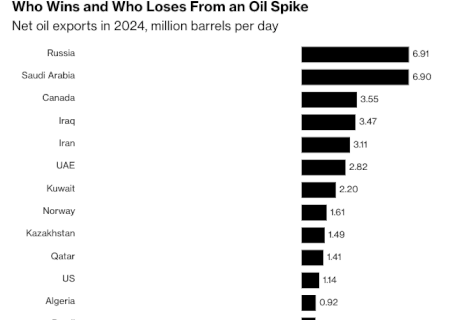
While oil-importing economies face challenges, energy exporters could benefit from higher prices.
Russia, for example, could see higher oil revenues significantly reduce its budget deficit and increase available resources for government spending.
As a result, the energy shock could reshape global financial flows between importing and exporting nations.
Historical parallels with past oil crises
Geopolitical conflicts in the Middle East have previously triggered major disruptions in global energy markets.
The oil embargo of 1973 caused a sharp surge in energy prices and fueled global inflation. Later, the Iranian revolution in 1979 pushed prices higher again, leading to double-digit inflation in the United States.
Today’s global economy is less energy-intensive thanks to the expansion of service industries, diversification of energy supplies and the growth of renewable energy sources.
Nevertheless, a major oil shock could still have significant implications for inflation, economic growth and financial stability.
As experts at International Investment note, the conflict in the Middle East could become a key driver of a new global inflation cycle. If oil prices remain above $100 per barrel due to prolonged supply disruptions, central banks may face a difficult trade-off between controlling inflation and supporting economic growth. In such a scenario, global markets are likely to experience increased volatility, with energy once again becoming a central force shaping the world economy.