







 Vietnam Mortgage Surge Pushes Homes Out of Reach
 Lithuanian Apartment Prices Accelerate Across Major Cities
 London Flats Lose Value Ahead of Leasehold Reform
 Construction of the Batumi–Sarpi Highway Begins in Georgia
 Baltic Property Investment Accelerates in 2026
 Hong Kong and Singapore Renew Their Expat Rivalry
Middle East War Hits Formula One Market Value
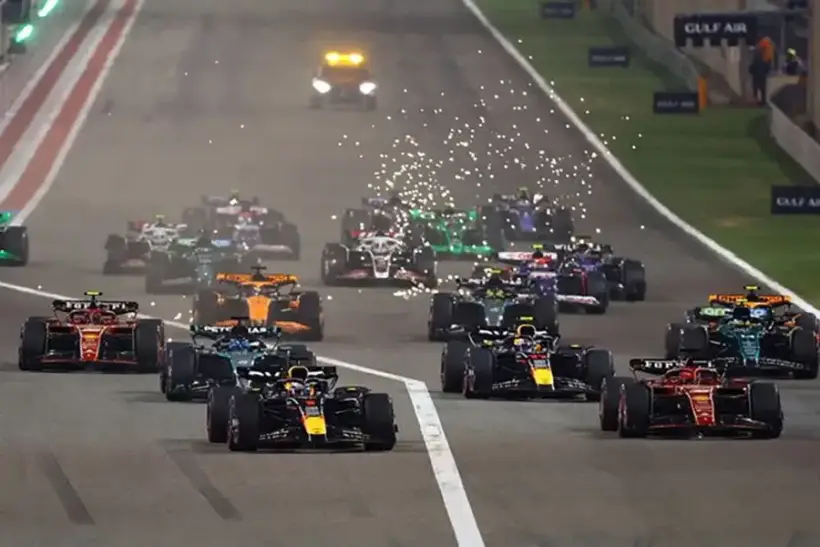
F1 owner loses nearly $2 billion in market value
Liberty Media Corp., the owner of the commercial rights to Formula One, has lost roughly $1.9 billion in market value since the war in Iran began, as concerns over races in the Middle East weigh on one of the world’s most popular sports.
Shares of Liberty Formula One, the tracking stock representing the championship, have fallen more than 7% in New York during the week following the outbreak of the conflict. Investors fear that rising geopolitical tensions could disrupt races and create logistical challenges for teams and organizers.
Middle East races face uncertainty
The 2026 Formula One season begins in Melbourne, Australia, and includes a total of 24 races. However, the upcoming Middle East events scheduled for next month are now under increased scrutiny.
Races in Bahrain and Saudi Arabia may face potential disruption if tensions in the region escalate further. Later in the season, Qatar and Abu Dhabi are scheduled to host the final rounds of the championship.
The Fédération Internationale de l’Automobile (FIA) has already postponed the Qatar 1812km race, which was originally planned as the opening round of the 2026 FIA World Endurance Championship in late March. The decision has intensified investor concerns about possible changes to racing calendars across motorsport series.
Middle East becomes central to F1 expansion
Over the past two decades the Middle East has become a strategic region for Formula One. Bahrain hosted the first Grand Prix in the region in 2004, and since then the sport has steadily expanded its presence there.
Today the Formula One calendar includes four races in the region: Bahrain, Saudi Arabia, Qatar and the United Arab Emirates. These events represent important commercial partnerships and a growing fan base.
Investment from Gulf sovereign wealth funds is also deeply integrated into the sport. Saudi Arabia’s Public Investment Fund holds a minority stake in the Aston Martin Formula One team, while Bahrain’s sovereign wealth fund Mumtalakat and Abu Dhabi-based CYVN Holdings are linked to the McLaren team.
Formula One’s booming popularity
The potential disruption comes at a time when the Formula One business is experiencing rapid global growth. Audience numbers in the United States have surged in recent years, significantly expanding the sport’s international appeal.
One major factor behind this growth is the success of Netflix’s documentary series Formula 1: Drive to Survive, which has introduced the sport to new audiences worldwide. The release of the film F1: The Movie has also contributed to the sport’s expanding cultural influence.
As a result, the overall market value of the Formula One business remains above $21 billion. Liberty Media originally acquired the sport in 2017 for about $4.4 billion.
Political risks have disrupted races before
This would not be the first time geopolitical tensions have affected Formula One events in the region. In 2011 the Bahrain Grand Prix, which was scheduled to open the season, was canceled due to civil unrest in the country just weeks before the race.
Such precedents highlight how political instability can quickly disrupt global sporting events that rely heavily on international logistics and security planning.
New rules and competition in the 2026 season
The 2026 season begins with major technical rule changes, particularly regarding power unit regulations, which are expected to reshape competition across the grid.
McLaren has dominated the past two seasons, but Mercedes-Benz is widely seen as a strong contender to reclaim the team championship this year. British driver George Russell is considered one of the leading candidates for the drivers’ title.
Other teams continue to struggle with adapting to the regulatory changes. Aston Martin, controlled by Canadian billionaire Lawrence Stroll, is reportedly dealing with severe vibration issues in its cars, which engineers say could potentially cause long-term strain for drivers.
As International Investment experts report, the recent market reaction illustrates how closely global sports businesses are tied to geopolitical stability. Even as Formula One continues to expand commercially and culturally, conflicts in key regions can influence race calendars, investor sentiment and the valuation of major sports assets.