











Oman Becomes an Exit Route from the UAE
Regional conflict disrupts the Gulf’s main air hub
By March 14, 2026, the war around Iran had already triggered a major aviation shock across the Middle East, with the UAE, including Dubai and Abu Dhabi, falling under updated travel warnings and emergency guidance from several governments. The Associated Press reported widespread flight disruptions and mass cancellations, while the United States, Canada, Australia and the United Kingdom all updated official advice for citizens and government personnel in or around the Emirates.
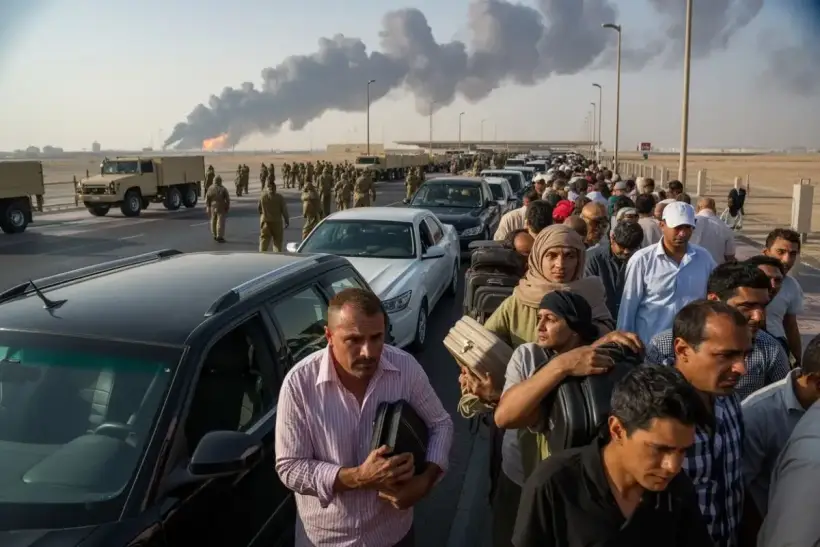
In that environment, Oman emerged less as a pristine safe haven and more as a functioning transit corridor for people trying to leave the UAE while air links remained unstable. Claims of a full-scale “mass escape” through Hatta, as well as some highly specific reports about strikes on landmark sites in Dubai, should be treated carefully. What is solidly confirmed is the broader pattern: attacks affecting the UAE, damage and disruption inside the country, flight instability, and the growing use of overland routes toward Oman.
The Hatta crossing entered official evacuation planning
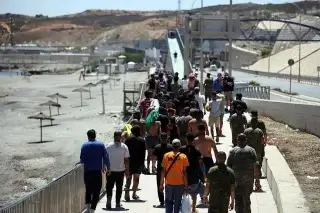
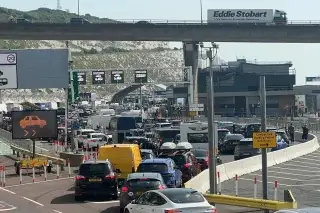
Canada’s official travel advisory explicitly states that travelers leaving the UAE, if they judge it safe to do so, can use land crossings into Oman, including Hatta/Al Wajajah, Khatma Malaha and Khatm Al Shikla. That is one of the clearest official confirmations that the Hatta route became part of real-world departure planning when airspace closures and erratic airline schedules made direct exits harder.
The role of Oman as an evacuation channel was reinforced by government actions in Europe. Slovenia said on March 3 that four buses carrying its citizens, including families with children, had left Dubai for Muscat Airport. The British government said on March 5 that its first charter flight from Oman had already departed, while thousands more had returned to the UK on commercial services from the UAE.
Muscat absorbed part of the region’s emergency transit demand
As the Gulf’s normal flight architecture broke down, Muscat began functioning as a fallback exit point. AP reported that some stranded passengers were making their way to Oman in order to continue onward journeys from Muscat, while Oman Air separately promoted connections from the UAE via Muscat and highlighted an integrated bus transfer from Sharjah to Muscat International Airport.
Still, Oman cannot be described as fully insulated from regional risk. In March, the United States also raised its Oman warning level and authorized the departure of some non-emergency personnel, while Australia advised travelers to reconsider the need to visit the sultanate. In practical terms, Oman’s advantage was relative rather than absolute: it remained a more workable logistics node than heavily constrained airports in the UAE, not a risk-free island outside the crisis.
Exit costs surged as commercial capacity collapsed
As demand for emergency departures climbed, so did the cost of leaving. The Financial Times reported that evacuation expenses for families leaving Dubai had jumped sharply, with private jet options reaching hundreds of thousands of dollars. The paper also noted a steep rise in the cost of road transfers to Muscat and Riyadh, while Muscat International Airport faced intense operational pressure and began prioritizing scheduled commercial and government traffic.
Airlines, meanwhile, were rewriting schedules well beyond the immediate crisis window. AP first cited roughly 13,000 canceled flights in the region, then more than 19,000 as the conflict widened. That means even when limited services resumed, travelers were still navigating an environment where departure options could vanish within hours depending on new airspace restrictions or security assessments.
Tourism in the UAE faces an abrupt confidence shock
For tourism, the damage was immediate. The UAE had long sold itself as the region’s most efficient global transit and leisure platform, with Dubai standing as a symbol of predictability and high-connectivity travel. AP wrote that the strikes shook Dubai’s image as a safe haven for foreigners, while Le Monde described damage to infrastructure, rising anxiety and official efforts to preserve the country’s reputation as a stable commercial and tourism hub.
Oman may have gained temporary relevance as a transit platform, but not as a true long-term winner. With risk alerts rising across the region and air links remaining vulnerable, Middle East tourism now appears more likely to contract overall than to simply shift from one Gulf destination to another.
As International Investment experts note, the movement of travelers through Oman shows how quickly even the region’s most resilient hubs can shift from seamless global mobility to crisis logistics. For investors, airlines, hotel operators and travelers alike, the central issue is no longer just service quality or pricing, but whether states can maintain evacuation corridors, flexible entry rules and transport continuity under geopolitical stress.