







 Vietnam Mortgage Surge Pushes Homes Out of Reach
 Lithuanian Apartment Prices Accelerate Across Major Cities
 London Flats Lose Value Ahead of Leasehold Reform
 Construction of the Batumi–Sarpi Highway Begins in Georgia
 Baltic Property Investment Accelerates in 2026
 Hong Kong and Singapore Renew Their Expat Rivalry
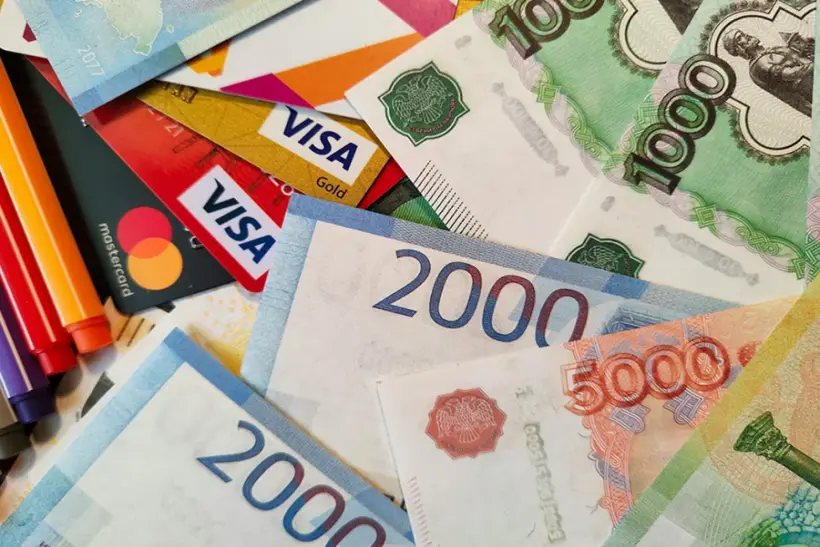
Banks hold trillion-ruble reserves
In 2025, the volume of hopeless debts of Russians exceeded 2.4 trillion rubles (about $32 billion), growing by a third, according to Izvestia. The main reason is a combination of high interest rates, slow income growth, and multiple borrowing. Repaying expensive loans is becoming more difficult, while financial institutions impose stricter requirements for obtaining new sums.
Growth of problem loans in Russia: scale and causes
A year ago, the share of problem loans was 5.7% of the retail banking portfolio; now it has risen to 7%. The greatest difficulties are in the unsecured consumer loan segment, where the figure increased from 9% at the beginning of 2025 to 13% by early 2026. The mortgage segment remains relatively stable: potential defaults are about 1.7%, and these loans do not yet create significant pressure on banks.
Freedom Finance Global analyst Vladimir Chernov notes that for many borrowers, expenses are growing faster than income. In this case, servicing loans becomes significantly harder, especially when a person has multiple loans simultaneously. The National Association of Professional Collection Agencies clarifies that each additional loan increases the likelihood of default by 20–25% at an average household income level. Thus, multiple borrowing directly increases the risk of problem debts.
Safety cushion and bankruptcies
Banks are forced to form significant reserves: the "safety cushion" increased from 1.8 trillion in 2025 to 2.3 trillion at the beginning of 2026. These funds are effectively frozen and cannot be used for issuing new loans, which slows processes and raises the cost of risk for borrowers.
The growth of problem loans is also reflected in personal bankruptcy statistics. In 2025, almost 568,000 citizens were declared insolvent, which is 31.5% more than the previous year and became a record for the history of the institute. In 97% of cases, the procedure is initiated by the borrowers themselves, although law firms often offer accelerated debt write-off procedures. Such schemes do not create over-indebtedness but accelerate the conversion of debts into defaults, worsening overall statistics.
Key rate cut: impact on financial markets
On March 20, 2026, the Bank of Russia reduced the key rate by 50 bps — to 15%. This is the seventh consecutive easing of monetary policy. After this, interest rates on loans and mortgages may decrease, but requirements for borrowers remain strict. For depositors, the yield on deposits decreases.
Consumer demand in Russia, after an abnormally high pace at the end of 2025, is gradually cooling. In February, seasonally adjusted price growth reached 10.2%, and annual inflation by mid-March was 5.9%. It is expected that by December it will decrease to 4.5–5.5% and then approach the target level of around 4%.
The Russian economy’s overall growth is slowing. GDP growth fell from 4.9% in 2024 to 1% in 2025. In January 2026, business activity decreased by 2.1%. High rates and ruble appreciation curb inflation but limit investment and consumer activity. Manufacturing has already gone negative, while domestic demand remains positive but moderate. Fedor Sidorov, founder of the School of Practical Investing, notes that the growth of problem loans indicates a deterioration in households’ financial situation.
Forecasts and consequences for Russia’s lending market
Experts predict that in 2026–2027, the share of problematic consumer loans may rise to 15–16% if household incomes do not outpace inflation and rates remain high. In the mortgage segment, a gradual increase in non-performing loans to 2–2.2% is expected, linked to the “maturing” of loans issued in 2023–2024. The formation of reserves by banks will continue to limit the issuance of new loans and keep borrowing costs high.
Ilya Fedorin from Expert RA believes that banks will be more cautious in changing lending conditions and slower to reduce rates until the share of hopeless debts stabilizes. For households, this means that debt servicing costs will remain a significant part of the budget, and access to favorable loans will be limited.
Analysts at International Investment note that the growth of problem debt signals systemic stress in the economy and banking system. Without timely monitoring and proper credit policy, the situation may worsen, increasing pressure on households and limiting the capabilities of financial institutions.