







 Vietnam Mortgage Surge Pushes Homes Out of Reach
 Lithuanian Apartment Prices Accelerate Across Major Cities
 London Flats Lose Value Ahead of Leasehold Reform
 Construction of the Batumi–Sarpi Highway Begins in Georgia
 Baltic Property Investment Accelerates in 2026
 Hong Kong and Singapore Renew Their Expat Rivalry
Israel Extends Flight Restrictions Until April 16: War in the Middle East
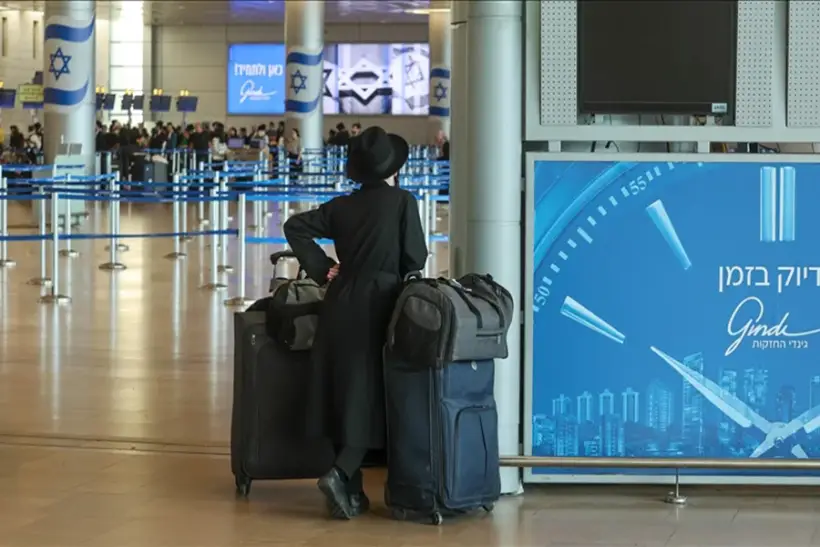
Anadolu Agency
The Israel Airports Authority has extended restrictions on the use of the country’s airspace until mid-April. The decision is linked to the ongoing military operation in the Middle East. Foreign carriers are effectively prohibited from operating flights. The country continues to face numerous missile and drone attacks from Iran, including attacks targeting airports.
Israeli authorities emphasize that the extension of the restrictions does not introduce new prohibitions, but simply formalizes the status quo that has existed since the beginning of the current escalation. Rules may change at any time depending on developments.
Commercial Air Traffic in Israel
Israel’s airspace was effectively closed to regular commercial flights on February 28, 2026. This followed the start of joint Israeli and U.S. attacks on Iranian territory, which sharply escalated regional tensions.
At the beginning of March, airspace was partially reopened, but with significant restrictions. Flights were allowed only for Israeli airlines and according to a limited schedule. The main purpose of these flights was the repatriation of citizens and the fulfillment of critically important state tasks.
By March 8, some flights operated with a limited number of passengers—between 70 and 100—requiring electronic check-in and minimal time spent in terminals.
Attack on Tel Aviv Railway Station and Airport
On March 18, Iran carried out a combined missile strike on the Savidor railway station in Tel Aviv and surrounding areas near Ben Gurion Airport. Cluster munitions were used, causing severe damage to platforms, tracks, and station facilities. Two people were killed in Ramat Gan, and dozens were injured. Train traffic was completely halted, with partial restoration taking several hours.
Major international carriers—American Airlines, Lufthansa, Air France, and Delta Air Lines—suspended flights to Tel Aviv for periods ranging from a few days to two weeks. The Israeli airline El Al maintained a limited schedule, facing increased operational costs. Terminal occupancy fell by more than 60%.
Tightening Flight Rules at Ben Gurion Airport
On March 23, 2026, Ben Gurion Airport implemented stricter operating rules: only one departure per hour is allowed, with a maximum of 50 passengers on board, and arrivals are also limited. The main load is carried by Israeli airlines—El Al, Arkia, Israir, and Air Haifa. Foreign carriers have not yet resumed regular service. Arkia is planning routes via Egypt (Taba) and Jordan (Aqaba), while El Al has proposed using Ramon Airport as an alternative hub.
On March 25, Ben Gurion recorded 53 flight cancellations, affecting carriers such as El Al, United Airlines, American Airlines, British Airways, Lufthansa, Air France, and Turkish Airlines. The national carrier El Al is operating at roughly 5% of its normal capacity.
Foreign Carriers Remain Restricted
For foreign airlines, the situation remains unchanged. The active NOTAM effectively prohibits foreign carriers from operating flights to the country’s main gateway—the Ben Gurion International Airport (Tel Aviv).
Additionally, European (EASA) and U.S. (FAA) aviation safety agencies continue issuing advisories urging airlines not to operate in the conflict zone. This further suppresses the resumption of international flights to Israel. Experts believe that a full restoration of passenger traffic to pre-crisis levels could take at least six months.
Passengers planning trips to Israel or transits through its territory are advised to closely monitor updates on the official websites of the Airports Authority and consular services. Restrictions may be lifted early in the event of de-escalation or extended for a longer period.
Long-Term Consequences
The extension of flight restrictions until April 16 reflects ongoing instability in the region and maintains a high level of risk. Israel’s tourism industry is facing an unprecedented crisis: hotels, restaurants, and tourist attractions remain nearly empty, and spring bookings are being canceled. Overall, the tourism sector in the Middle East is losing at least $600 million daily due to the conflict. In 2026, regional tourist traffic may decrease by 11–27%, resulting in losses of $34–56 billion.
The limitation of air travel reduces business activity, complicates transportation, and the decline in tourist traffic affects employment and service sector income. Travelers are already choosing safer destinations, including Southern Europe and Georgia, where conditions remain stable and infrastructure is well-developed. Flight restrictions and the high level of threats are creating a long-term negative effect on Israel’s image, as well as that of Middle Eastern countries, as safe tourist destinations.