







 Vietnam Mortgage Surge Pushes Homes Out of Reach
 Lithuanian Apartment Prices Accelerate Across Major Cities
 London Flats Lose Value Ahead of Leasehold Reform
 Construction of the Batumi–Sarpi Highway Begins in Georgia
 Baltic Property Investment Accelerates in 2026
 Hong Kong and Singapore Renew Their Expat Rivalry
Rocket Attacks on Israel Disrupt Air Travel and Devastate Tourism
Travel and Tour World
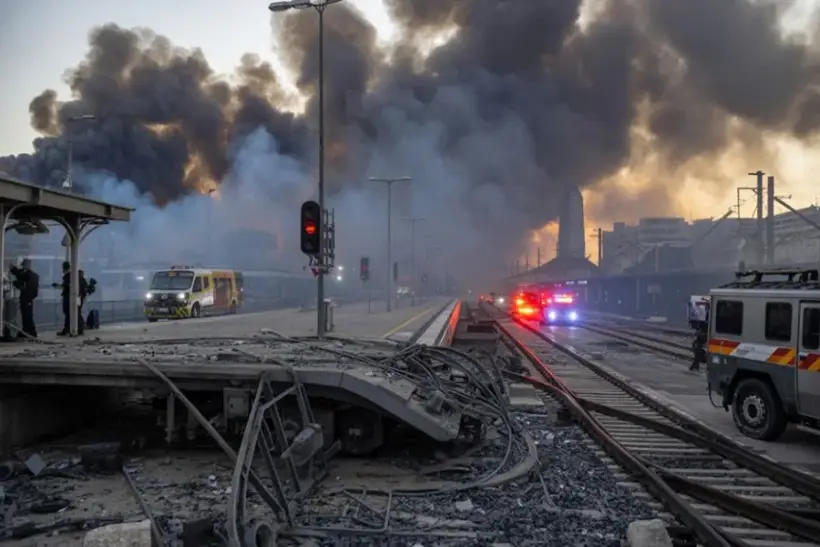
Iranian attacks on the Central Savidor Railway Station in Tel Aviv and areas near Ben Gurion Airport have caused immediate disruption to the country’s key transport arteries, reports Travel and Tour World. Airlines are massively canceling flights, record levels of service refusals are being recorded, and international experts predict a prolonged decline in tourist flow in Israel and neighboring countries.
What Happened in Israel
Start of the War with Iran
Ben Gurion Airport was completely closed to civil aviation on February 28 — following the start of the military conflict with Iran. Air traffic was gradually restored: by March 8, some flights were already operating with a limited number of passengers — between 70 and 100 — with mandatory electronic check-in and minimized time spent in terminals.
Missile Strike on March 18
On the morning of March 18, 2026, Iran launched a combined missile strike on central Israel. The main targets were transport infrastructure facilities critical to the functioning of the tourism industry: the Central Savidor Railway Station in Tel Aviv and areas adjacent to Ben Gurion Airport. According to local authorities, cluster munitions were used during the attack, causing extensive shrapnel damage to platforms, tracks, and station buildings.
Damage and Casualties
Ben Gurion Airport temporarily suspended arrivals and departures again. Debris from intercepted missiles damaged service buildings and aircraft parking areas. Two people were killed in Ramat Gan, and dozens were injured. Train services were completely halted, and partial restoration of traffic took several hours under strict limitations.
Suspension of Flights
Major international airlines, including American Airlines, Lufthansa, Air France, and Delta Air Lines, announced the suspension of flights to Tel Aviv for periods ranging from several days to two weeks, followed by reassessment of the situation. Israeli carrier El Al, which maintained a limited schedule, faced a sharp rise in operational costs due to longer routes and increased insurance expenses for crews and aircraft. Terminal occupancy fell by more than 60% compared to the beginning of the month.
New Restrictions at Ben Gurion Airport
One Flight Per Hour from March 23
From March 23, Israel again tightened regulations at its main international airport — Ben Gurion. Only one departure per hour is allowed, with no more than 50 passengers on board. Arrivals are also limited. Authorities explain the measures as safety precautions. The main goal is to minimize crowding at the airport, which continues to be considered a potential missile target.
Israeli airlines — El Al, Arkia, Israir, and Air Haifa — bear the main burden of the limited flights. Foreign carriers have not yet fully resumed operations in Israel. Arkia is preparing to expand flights via Egypt (Taba) and Jordan (Aqaba), while El Al is calling for Ramon Airport to be opened as a backup international hub. Travel for tourists and foreigners is only possible under these restrictions and via alternative routes.
53 Flights Cancelled on March 25
On March 25, Ben Gurion Airport recorded 53 flight cancellations. Disruptions affected major international carriers, including El Al, United Airlines, American Airlines, British Airways, Lufthansa, Air France, and Turkish Airlines. According to the Israel Airports Authority, full restoration of passenger flow to pre-crisis levels, barring further escalation, could take at least six months.
Damage to Israel’s Tourism Industry and the Region
Israel’s national carrier El Al was forced to reduce operational capacity to about 5% of its usual load due to airport restrictions and the lack of regular international routes, cutting its revenue by tens of percent. International airlines extended their suspension of flights to Israel for several months, reducing the number of foreign visitors able to enter the country and causing additional financial losses for airports dependent on passenger traffic.
As a result of the conflict escalation, tourism in Israel has effectively stopped: major tourist sites remain empty, hotels and restaurants experience a drop in demand, and bookings for the spring season are being canceled.
Overall, the tourism industry in Middle Eastern countries is losing at least $600 million daily due to the war, according to WTTC. The greatest losses are observed in Israel, Jordan, and Lebanon. Analysts predict that in 2026, tourist flows in the region could decrease by 11–27%, with total revenue losses reaching $34–56 billion. Flight restrictions and a high level of threat create a long-term negative effect on the region’s image as a safe destination.
Conclusion
Analysts at International Investment note that rocket attacks on Israel have caused severe damage to transport infrastructure and the country’s tourism industry. Similar trends are observed in the UAE and other regional states. Restrictions on air travel and the suspension of international flights are causing significant economic losses, and restoring tourist flows will require a long time.
The consequences of the conflict may have a long-term impact on the region’s image as a safe destination and slow the recovery of the tourism industry in Israel and neighboring countries. Travelers and businesspeople are already opting for safer destinations, including Southern Europe and Georgia.