







 How Ukraine’s New-Build Housing Market Has Changed Over Four Years
 European Prime Rents Rise as Property Yields Turn Higher
 The Most Expensive Airlines in Europe in 2026
 Housing Prices in Italy Reach a Two-Year High
 Travellers Increasingly Choose Cooler Scandinavia
 Serbia Property Sales Decline as Transaction Value Rises
The U.S. and Iran Agree on a Two-Week Ceasefire
The Guardian
Implications for the Global Market and Regional Security
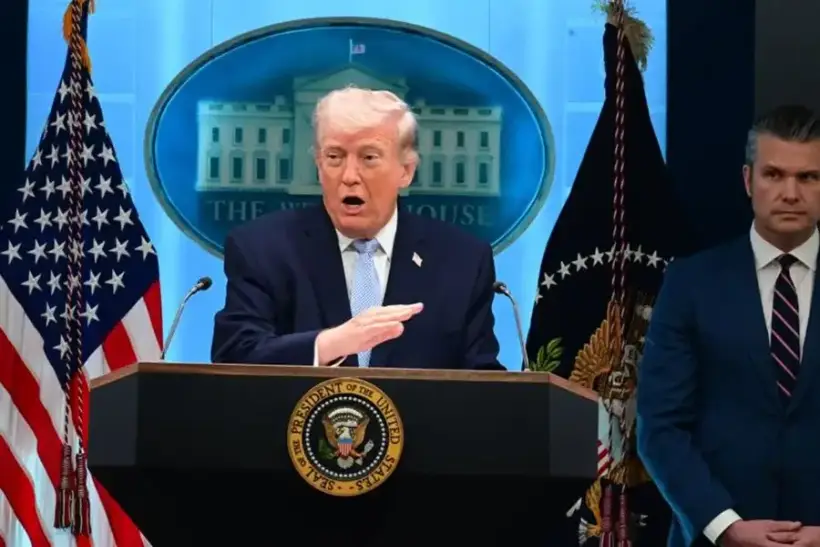
The U.S. and Iran agreed on a conditional two-week ceasefire on the evening of April 7. The agreement includes the temporary reopening of the Strait of Hormuz and cancels U.S. President Donald Trump’s ultimatum threatening large-scale strikes. Negotiations based on Iran’s 10-point plan are scheduled for April 10 in Islamabad, reports The Guardian.
Iran and the U.S. Declare Total Victory
The ceasefire was announced less than two hours before the deadline set by Trump for bombing Iranian targets, including power plants and bridges. U.S. B-52 bombers had already been dispatched toward Iran, and the president himself posted on social media that “civilization could perish” if the strikes took place.
Pakistani Prime Minister Shehbaz Sharif acted as a mediator, proposing a two-week pause “to allow diplomacy to take its course.” Donald Trump stated that, provided the Strait of Hormuz is fully, immediately, and safely reopened, the U.S. will suspend strikes for two weeks.
Iran proposed a ceasefire plan consisting of 10 points. AP reports that the U.S. president initially called it realistic, then fraudulent, but in any case, it could serve as a foundation for further work. Trump promised to assist in restoring navigation and economic activity through the strait, emphasizing that this constitutes a total victory. Iranian authorities, in turn, declared they had inflicted an “undeniable, historic, and crushing defeat” on the U.S., according to Tasnim News Agency.
Iran’s 10-Point Plan: What It Means
Iran has developed two versions of the 10-point plan: the Persian version includes a point recognizing Iran’s right to uranium enrichment, while the English version does not. The proposals were submitted to the White House via intermediaries from Pakistan.
The plan provides for:
- the lifting of all primary and secondary sanctions against Iran;
- maintaining Iran’s control over the Strait of Hormuz;
- withdrawal of U.S. troops from the Middle East;
- cessation of attacks on Iran and its allies;
- return of frozen Iranian assets;
- a UN Security Council resolution granting the agreement binding force.
Foreign Minister Abbas Araghchi stated that safe passage through the strait will be allowed under the supervision of Iranian military forces. Experts estimate that the plan would allow Iran and Oman to charge up to $2 million per vessel passing through the strait, which lies in their territorial waters. Funds collected would be used for Iran’s reconstruction. Previously, the passage was considered an international waterway with no fees. U.S. Senator Chris Murphy warned that granting Iran control over the strait could be catastrophic for the world.
Trump has not yet commented on this issue. He suggested that China persuaded Iran to negotiate and added that enriched uranium in Tehran “will be fine,” without providing further details.
Negotiations in Islamabad are expected to determine how the plan will be implemented in practice and allow both sides to discuss ending regional conflicts, Iran’s control over the strait, withdrawal of foreign troops, and potential lifting of sanctions. Neither Iran nor the U.S. specified when the ceasefire would begin.
Reactions from Israel and Other Countries
On April 8, Israel supported U.S. President Donald Trump’s decision and suspended strikes on Iran but warned that the ceasefire does not extend to Lebanon, reports Reuters. The Prime Minister’s office also stated that Tehran must immediately reopen the strait and cease attacks on the U.S., Israel, and regional countries. Containing Iran to prevent further nuclear, missile, or terrorist threats remains a priority. Israeli authorities noted that Washington confirmed these objectives would be addressed in upcoming negotiations.
Iraq’s Ministry of Foreign Affairs called for a “serious and sustainable dialogue” between the U.S. and Iran “to address the root causes of disagreements.” German Foreign Minister Johann Wadephul said the deal “should serve as the most important first step toward lasting peace, as the consequences of continuing the war would be unpredictable.”
Australian Energy Minister Chris Bowen warned that the ceasefire does not necessarily mean the fuel crisis is over: “Do not expect prices to drop immediately following today’s developments.” New Zealand authorities described the news as “encouraging” but noted that “much important work remains to secure a lasting ceasefire.”
The Japanese government expressed hope that this step will lead to a “final agreement” after negotiations between Washington and Tehran commence. The temporary cessation of hostilities is particularly important for Japan, which imports about 90% of its oil from the Middle East, most of which passes through the Strait of Hormuz.
Financial Markets React to the Ceasefire
Oil Drop and Stock Rally
The announcement of a ceasefire between Iran and the U.S. caused sharp movements in global financial markets. Brent crude fell nearly 15% on Tuesday to $93.48 per barrel, and U.S. crude futures dropped 14.7% to $96.27, although prices remain above pre-conflict levels. The decline reflects Iran’s commitment to allow vessel passage through the Strait of Hormuz during the ceasefire, easing pressure on global energy supply.
Stock markets responded with significant gains: Japan’s Nikkei 225 rose over 5%, Australia’s S+P/ASX 200 gained 2.55%, and South Korea’s Kospi jumped 7.5%. Hong Kong’s Hang Seng and China’s CSI300 rose 3.1% and 3.2%, respectively. European indices also showed positive expectations: Germany’s Dax futures increased 5.3%, and the UK’s FTSE 100 gained 2.9%.
Bond and financial markets also experienced positive fluctuations: the yield on 10-year U.S. Treasury bonds fell from 4.30% to 4.24%, gold rose 2% to $4,812 per ounce, and cryptocurrencies saw gains — Bitcoin rose 2.9% to $71,327, and Ether increased 5.6% to $2,234.
Implications for Investors
Jim Reid of Deutsche Bank emphasized that investors will “breathe a sigh of relief, but questions remain over whether de-escalation will persist.” Saul Kavonic, head of energy research at MST Financial, noted that the two-week ceasefire creates “an opportunity for partial crisis relief,” but oil and LNG production are unlikely to resume until confidence in a lasting ceasefire emerges.
Experts Charu Chanana of Saxo and Prashant Newnaha of TD Securities warned that the key factor will be the success of further negotiations and the restoration of confidence among insurers and tanker operators for normal passage through the Strait of Hormuz. For now, markets treat the ceasefire as a “real deal,” but any new escalation could again affect price dynamics.
Conclusion
Within hours of Trump’s announcement, attacks continued across the region. Before the ceasefire took effect, airstrikes targeted two bridges and a railway station in Iran, and the U.S. struck military infrastructure on Kharg Island, a key center of Iranian oil production.
Analysts at International Investment note that the sudden 180-degree reversal allows Trump to retreat without real achievements. The U.S.-Iran conflict has lasted five weeks, and there are no signs that Tehran is ready to surrender or reduce control over the Strait of Hormuz, through which one-fifth of global energy shipments pass.
The two-week ceasefire between the U.S. and Iran is a temporary and conditional step, providing space for negotiations and restoration of shipping. It does not guarantee an end to the conflict but opens the way for further diplomatic resolution. Negotiations in Islamabad will be key to determining long-term conditions that could affect regional security and the global energy market.