







 How Ukraine’s New-Build Housing Market Has Changed Over Four Years
 European Prime Rents Rise as Property Yields Turn Higher
 The Most Expensive Airlines in Europe in 2026
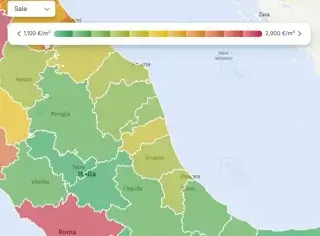 Housing Prices in Italy Reach a Two-Year High
 Travellers Increasingly Choose Cooler Scandinavia
 Serbia Property Sales Decline as Transaction Value Rises
Indonesia reserves fall as rupiah defence deepens

Bank Indonesia is spending reserves to steady the currency
Indonesia entered April with visibly weaker external buffers after several weeks of active support for the rupiah. Bloomberg reported on April 8 that the country’s foreign-exchange reserves had fallen to nearly a two-year low as Bank Indonesia used dollar liquidity to restrain the currency’s slide. The move reflects a shift in priorities at the central bank: in an environment shaped by an oil shock and a broader flight from risk, the immediate task is no longer to support growth but to stabilize the exchange rate and prevent a sharper loss of confidence in the rupiah.
BI’s official messaging supports that interpretation. In a Bloomberg-cited statement on April 7, the central bank said stability was its “top priority” after the rupiah’s three-day slide to a series of record lows against the dollar. As early as March, BI had already stated that it would continue to stay active in the market to keep the exchange rate aligned with fundamentals and to prevent the Middle East shock from turning into a broader confidence problem.
Why Indonesia’s reserve position is under pressure again
The fall in reserves is a direct consequence of intervention. Bloomberg reported in early March that Bank Indonesia had been selling US dollars from its reserves, buying rupiah and using the non-deliverable forward market to shape expectations and reduce speculative pressure. The same reporting noted that defending the currency could become harder to sustain if global volatility persisted and the oil shock continued to weigh on emerging-market assets.
Official BI data already showed that deterioration before the latest Bloomberg story. At the end of February 2026, Indonesia’s foreign-exchange reserves had declined to $151.9 billion from $154.6 billion a month earlier. BI said the drop reflected not only government external payments but also rupiah stabilization policy in response to continued uncertainty in global financial markets. Even so, that level still covered 6.1 months of imports, or 5.9 months of imports plus government external debt service, which remained comfortably above the conventional international adequacy benchmark of about three months of imports.
The weak rupiah has become the central policy risk
For Indonesia, the reserve story cannot be separated from the path of the rupiah itself. Bloomberg reported on April 7 that the currency had gone through a three-day slide to a succession of record lows, forcing the central bank to intensify intervention and elevate exchange-rate stability to the center of policy. That matters especially for an economy sensitive to commodity prices, imported inflation and swings in the dollar.
The rupiah remains one of the more vulnerable regional currencies when external stress intensifies. It is simultaneously exposed to expensive oil, a stronger dollar and weaker appetite for emerging-market assets. That is why the drawdown in reserves cannot be read as a routine technical adjustment. Markets see it as the price BI is paying to preserve a more orderly currency trajectory. That conclusion follows from Bloomberg’s reporting on the rupiah’s record lows and BI’s own explanation that reserve use has been tied to exchange-rate stabilization.
Bank Indonesia is not cutting rates for now
Amid that currency pressure, BI is not rushing to ease policy further. At its March 16–17, 2026 meeting, Bank Indonesia kept the BI Rate unchanged at 4.75%, while the Deposit Facility and Lending Facility rates remained at 3.75% and 5.50%. In its official release, the central bank said the decision was consistent with keeping inflation within the 2.5±1% target range while also preserving rupiah stability against a worsening global backdrop.
That makes Indonesia look increasingly similar to other emerging markets where central banks have not formally returned to aggressive tightening but are already operating in currency-defence mode. Even without a rate hike, defending the exchange rate through intervention, debt-market operations and expectation management can materially tighten financial conditions. For investors, that means BI is balancing growth and currency credibility far more carefully than a few months ago.
Reserves are still adequate, but room for comfort is narrowing
In absolute terms, Indonesia’s reserves are still far from crisis levels. BI continues to stress that the current reserve stock is sufficient to support external-sector resilience and macro-financial stability. But that is also where the new concern lies: the headline level remains relatively high, while the pace and persistence of the decline is becoming more important to markets because it signals a prolonged defence of the rupiah.
If pressure on the currency continues, investors will focus not only on the reserve stock itself but also on the speed at which it is being used. The longer BI must keep supplying dollar liquidity, the greater the chance that markets will eventually demand either a tighter interest-rate stance or more exchange-rate flexibility. In that sense, Bloomberg’s description of reserves approaching a near two-year low is most important as a sign that Indonesia’s room for comfortable intervention is shrinking.
Oil and the Middle East are amplifying Indonesia’s vulnerability
Pressure on Indonesia’s currency intensified after the conflict in the Middle East pushed oil prices higher and weakened sentiment toward emerging-market assets. Bloomberg reported on March 4 that BI intervened to support the rupiah precisely because the Iran war had hit EM currencies and markets. For Indonesia, as a commodity-linked but still oil-sensitive economy, that creates a double burden: higher energy prices raise inflation risks, while global risk aversion makes defending the currency more expensive.
This external context matters because it shows that the pressure on reserves is not being driven primarily by domestic structural weakness, but by a sharp global shock. Until markets see a durable easing in oil-related stress and a more stable dollar environment, Indonesia will likely have to keep using reserves as its first line of defence.
As International Investment experts note, Indonesia’s reserve drawdown does not yet look crisis-like in itself, but it clearly shows that Bank Indonesia has moved into a more costly mode of currency defence. If pressure on the rupiah eases, the current reserve level should still allow the country to remain stable without an abrupt rate response. But if oil stays elevated and the global dollar remains firm, markets will increasingly judge Indonesian policy not just by the size of reserves, but by the speed at which those reserves are being spent.
FAQ on Indonesia’s reserves and the rupiah
Why are Indonesia’s reserves falling
Because Bank Indonesia has been using dollar liquidity to stabilize the rupiah amid external volatility and rising global risks. BI had already officially linked February’s reserve decline to exchange-rate stabilization policy, and Bloomberg reported a further weakening in the reserve position on April 8.
What reserve level has BI officially confirmed
The officially confirmed level in the accessible BI release was $151.9 billion at the end of February 2026, down from $154.6 billion in January.
Are Indonesia’s reserves still adequate
According to BI, yes. At the end of February they covered 6.1 months of imports, or 5.9 months of imports plus government external debt payments, which is above the international adequacy benchmark of about three months of imports.
Why does the weak rupiah matter so much for BI
Because a weaker rupiah raises imported inflation, worsens financial conditions and undermines investor confidence in Indonesian assets. That is why BI has made stability its top priority.
Is BI cutting rates to support growth
Not for now. In March 2026, BI kept its policy rate unchanged at 4.75% and emphasized exchange-rate stability and inflation control.