













Sberbank Downgrades Forecast for Key Rate and Inflation in Russia for 2026
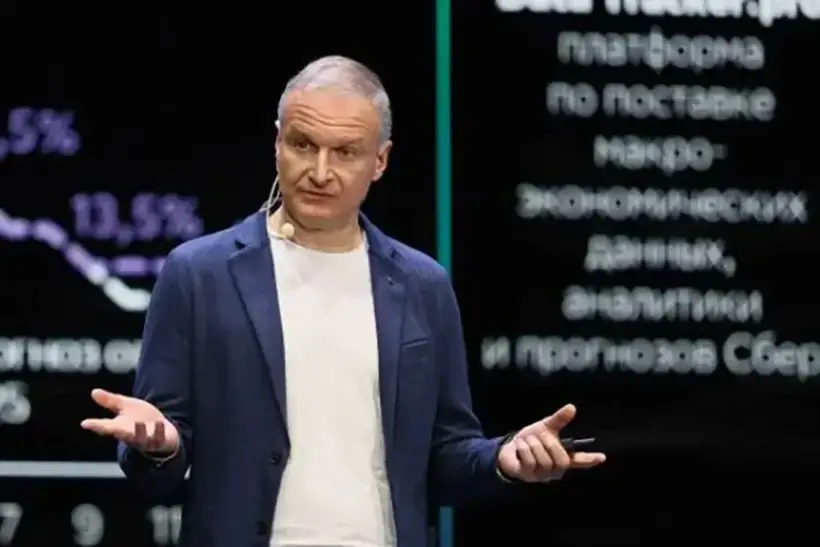
Sberbank has revised downward its expectations for Russia’s macroeconomic indicators for the end of 2026. The forecast has been adjusted both for the key interest rate and inflation amid ongoing economic uncertainty and mixed signals from the market, said Senior Managing Director and Head of the Financial Analytics Center Mikhail Matovnikov.
New expectations for Russia’s economy
Earlier, Sberbank projected that the key rate would fall to 12%, but now it expects it to remain around 13% by the end of 2026. The revision is linked to changing macroeconomic conditions. A few months ago, expectations were more optimistic; however, recent inflation dynamics and economic activity trends have forced analysts to adjust their outlook.
Further rate cuts could partially support the economy and ease financial conditions, but Matovnikov emphasized that this would not be enough to reverse current macroeconomic trends.
At present, the key rate stands at 15%. The latest decision by the Bank of Russia included a 0.5 percentage point cut, marking the seventh consecutive easing of monetary policy. Inflation forecasts have also been revised: instead of slowing to 5.7% by December, the new projection is around 6.5%.
Business calls for looser monetary policy
Expectations regarding the key rate are also being voiced by the business community. Head of the Russian Union of Industrialists and Entrepreneurs Alexander Shokhin believes that at the upcoming meeting, the Bank of Russia will likely cut the rate again by 0.5 percentage points, from 15% to 14.5%.
He noted that the regulator is expected to proceed gradually, signaling a consistent path toward monetary easing while still taking into account persistent uncertainty and inflation risks. This cautious approach is expected to continue going forward.
A 13% rate is not enough for the economy
Shokhin argues that, with steps of 50 basis points, the key rate may reach around 13% by the end of 2026 — broadly in line with Sberbank’s updated forecast. However, he believes this level is insufficient for a full recovery of investment activity.
He adds that investment stimulation would require a rate closer to 10%. Current economic dynamics, including slowing GDP growth, suggest a risk of economic cooling, making future recovery more difficult.
Earlier, Bank of Russia Governor Elvira Nabiullina emphasized that overly aggressive rate cuts could provide only a short-term boost while ultimately accelerating inflation and causing greater long-term losses.
Mortgage market expects rate cuts to 10–12%
A decline in the key rate remains an important condition for a full recovery of Russia’s market-based mortgage lending. Director of the Domclick division at Sberbank Aleksei Leipii said that a full return of mortgage lending under market conditions would only be possible if the key rate falls to the 10–12% range.
A broad consensus among experts suggests that the market could begin to recover more actively once rates reach around 12–13%. However, conditions remain challenging due to a prolonged period of high borrowing costs, even though signs of recovery are already visible.
According to Sberbank data, mortgage issuance more than quintupled throughout 2025 — from 51.4 billion rubles in Q1 to over 262 billion rubles in Q4. The share of market-based mortgage products also continues to grow, reaching 37% in February 2026, up by around 20 percentage points since the beginning of the year. This is the highest level since October 2024.
Additional support came from mortgage rate cuts announced by Sberbank and VTB on April 1. However, according to Leipii, a meaningful recovery in demand is still unlikely at the projected 13% rate without additional measures.
Conclusion
Analysts at International Investment note that current projections from major market players and business expectations form a relatively narrow corridor, with a 13% key rate by the end of 2026 serving as the baseline scenario. However, the stability of this outlook remains questionable given inflation dynamics and previous policy decisions.
For instance, in 2025, when inflation was around 5.6%, the Bank of Russia maintained a significantly higher key rate. This makes current expectations of a decline to 13% amid higher inflation of around 6.5% a subject of debate.
In practice, the regulator has already shifted toward cautious monetary easing despite ongoing inflation risks, suggesting an attempt to balance economic pressure with price stability concerns. Even under the baseline scenario, the impact of rate cuts appears limited: levels of 12–13% may partially support lending and investment, but are unlikely to generate sustained economic growth. Further monetary easing, as expected by businesses, remains constrained by structural economic factors.