








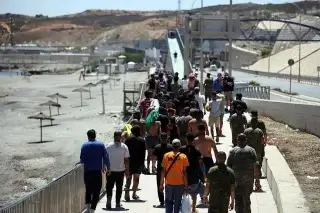

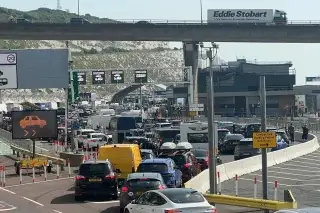

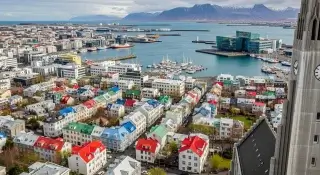
Russians are looking for relocation options: interest in Belarus is growing
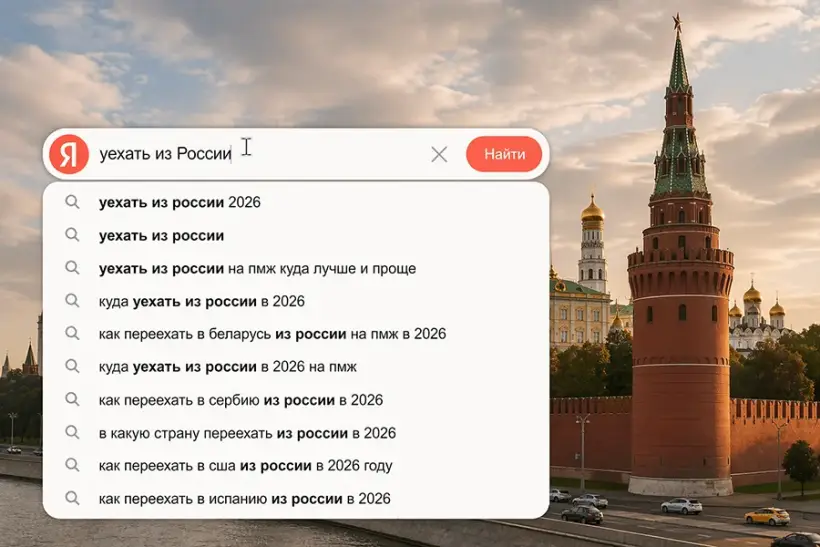
In Russia, a sharp increase in interest in moving abroad has been recorded, according to Vedomosti, citing Yandex Wordstat data. Experts link this shift in sentiment to a range of domestic restrictions, including internet and app blocks. Among search queries, Belarus is appearing more and more frequently.
How many Russians have considered relocation
In March 2022, the query “how to leave Russia” appeared in the Yandex browser about 56,000 times. After the start of partial mobilization in September, there were 43,000 relocation-related queries, and by early 2023 — nearly 234,000.
By 2025, the figures declined: 16,200 in January, 12,400 in February, and 12,900 in March. In September, a rise began — up to 44,000 queries. In the following months, growth continued, and by early 2026 there were already 59,900 searches.
Google Trends analysts note that in January 2023 the index reached 100 points, while in February 2025 it hit a minimum of 31. After that, a sharp rise was recorded in early 2026 — up to 75 points in February and 88 in March.
At the same time, VCIOM surveys show that emigration intentions are declining: in 2020, 16% of respondents expressed a desire to move abroad, compared to only 6% in 2025. It should also be noted that search interest does not necessarily translate into actual relocation decisions.
Digital restrictions in Russia: a factor behind rising relocation interest
The growth in search queries about moving abroad largely coincides with tightening digital restrictions inside Russia. Kommersant reported on the potential blocking of Telegram in the country. At the same time, user complaints about unstable messenger performance increased.
In Moscow, mobile internet disruptions have been recorded, and “whitelists” of websites have been introduced — a restricted set of accessible resources under unstable connection conditions. Similar measures and outages have also begun appearing in other regions following the capital.
According to analysts, in 2025 Russia became one of the countries with the longest cumulative internet restrictions in the world — tens of thousands of hours of outages affecting a large share of the population. The economic damage from these disruptions is estimated in billions of dollars.
As a result, interest in alternative options is increasing, but large-scale population movement is not occurring. The focus is shifting away from actual emigration toward searching for a possible “Plan B” scenario in case of further deterioration of the digital and social environment.
Why Russians are interested in Belarus
A separate trend is the surge of interest in relocating to Belarus. Users have searched for related information more than 20,000 times in total. The most common queries include travel costs, pros and cons of living there, required documents, and procedures for obtaining permanent residence.
The popularity of the destination is largely explained by relatively simple legal procedures for Russian citizens. Another factor is linguistic and cultural proximity: Russian has official status alongside Belarusian, reducing adaptation barriers.
The digital environment also plays a significant role. Popular social platforms remain fully accessible in the country, while access to them is partially restricted or limited in Russia. TikTok is the most widely used platform, with 7.64 million users aged 18+. Among younger audiences, Instagram (owned by Meta, designated as extremist and banned in Russia) remains popular with around 3.9 million users. Telegram statistics are not provided separately, but the messenger remains widely used and accessible.
Another important factor is that Belarus is not involved in active military operations, which influences perceptions of safety.
Who actually left Russia
In 2022, between 500,000 and 1 million people left Russia, according to various expert estimates. According to Rosstat, 419,000 left by early September, and 668,000 by the end of the year. This exceeded all annual figures recorded between 1993 and 2021. Forbes also reported that in just the first two weeks after the announcement of partial mobilization in September 2022, around 700,000 people may have left the country.
In 2023, official estimates placed the number of people who left at 450,000, and in 2024 at 423,000. At the same time, a reverse trend was observed. Monitoring by the Institute of Applied Economic Research at RANEPA showed that around 10% of those who left in 2022–2023 later returned to Russia.
Analysts at International Investment note that the rise in search interest regarding relocation from Russia is driven by a combination of informational, social, and technological factors. This appears to reflect an attempt to assess possible scenarios and explore conditions for relocation rather than a readiness for immediate action. There is no comparable increase in actual emigration, although significant relocation figures are still observed during periods of major structural change.