







 China Nears a Decision on Fresh Stimulus
 Fines for Illegal Rentals in Spain Reach €800,000
 Australia’s Spring Auctions Rise but Remain Well Below 2025
 Number of Foreigners Holding Turkish Residence Permits Exceeds 1.27 Million
 Demand from Russian Tourists for Holidays in Georgia Rises by 20–25%
 Montenegro Property Buying Costs in 2026
Dubai real estate gets cheaper: sellers cut housing prices amid Iran war
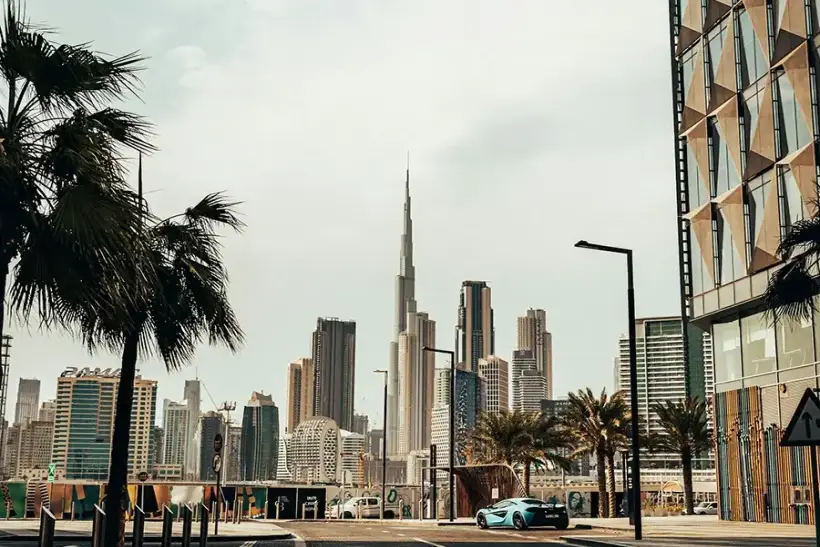
Sales in Dubai’s real estate market slowed in March 2026 by nearly a fifth, to AED 37 billion (around $10 billion), due to the war with Iran, according to AGBI, citing data from the Dubai Land Department. Property sellers are actively reducing prices, while some listings are losing up to half of their initial value.
Dynamics of Dubai real estate sales
Iranian missile strikes on Dubai interrupted a five-year real estate boom, during which housing prices rose by more than 70% since 2020. Most attacks were intercepted, but occasional escalations even during ceasefire periods are raising new concerns.
The decline in March sales to AED 37 billion marked the sharpest monthly drop since the start of the pandemic. In April, the number of transactions increased slightly compared to the previous month, but remained about 20% below 2025 levels. Sellers collectively reduced prices by AED 1.7 billion ($463 million) across more than 2,800 properties.
In some cases, discounts reach 10–50%, while some properties have been repriced multiple times. Repeated adjustments show that sellers’ initial expectations often do not match current demand levels and actual liquidity.
Dubai new-builds: forced sales
The highest level of pressure is concentrated in the off-plan segment, which accounts for a significant share of the market and forms the core of investment transactions. During the boom period, new-build properties were widely used for resale strategies.
Today, this model faces constraints as payment obligations on projects remain fixed, while opportunities for quick resale have significantly decreased. As a result, investors are experiencing both financial and market pressure.
This leads to a large share of forced sales in this segment. Properties enter the market at a discount, and price adjustments occur faster than in other parts of the real estate market.
Secondary market: declining liquidity
Additional pressure is forming in the secondary market, where listing times are increasing and repeated price reductions are becoming more common. Even after adjustments, buyers are not always willing to act quickly, slowing market turnover.
According to analysts, more than 300 properties in the emirate have reduced their prices multiple times since the cooling period began. This reflects a gradual deterioration in liquidity and the need for more flexible pricing strategies from sellers.
Under these conditions, the market is shifting toward a slower pricing model, where adjustments occur gradually rather than in a single step.
Price corrections in major Dubai deals
The market has already seen examples of significant price revisions. One of them is a four-bedroom villa in La Mer, Jumeirah, where the price dropped from AED 110 million to AED 85 million (about $30 million to $23 million). This adjustment reflects a major shift in seller expectations regarding current demand.
In Arabian Ranches, another property owner revised the price five times and ultimately reduced it by 13%, from AED 8.5 million to AED 7.4 million (about $2.3 million to $2.0 million). Even after this, the property remains unsold, highlighting the limited effectiveness of price cuts in a weak demand environment.
Correction momentum is not slowing down
Experts note that most property values have not changed significantly and average discounts remain modest, but weak spots are indicating signs of stress in a market that has long been seen as a safe haven for global capital.
Matias Dorta, co-founder of LuxuryPriceDrops.com, said that the pace of new price reductions is not slowing. Over the past week alone, the platform recorded more than 500 price cuts, indicating sustained pressure on sellers. The service tracks nearly 27,000 active listings across Dubai real estate websites. Emaar Properties has also recorded an increase in requests for payment deferrals during periods of escalation, although these later declined.
New real estate services in Dubai
New tools are emerging in Dubai aimed at speeding up transactions and improving market transparency. These include services that track discounts and below-market deals, as well as auction-based property sales models.
Prop-AI has launched the Dubai Deal Index, which tracks daily price changes and below-market listings. Dubai-based platform YallaValue has introduced a public real estate auction service to speed up sales.
YallaValue founder Jack Sellers notes that in uncertain conditions, delaying sales of overpriced assets is the worst strategy, while auctions help determine fair market value more quickly. The emergence of such tools also signals a structural shift in the market, where transaction speed is becoming nearly as important as price.
Outlook from Dubai market participants
Cooling in Dubai’s real estate market is negatively affecting the emirate’s economic outlook. Citi analysts warn of a slowdown in population growth, lowering forecasts to 1% in 2026 and around 2.5% annually through 2031.
Ronan Arthur of Cavendish Maxwell emphasizes that investor activity driven by discount-seeking remains present. However, a clearer picture of the market will emerge later, once data from subsequent transactions becomes available.
S&P Global notes that some wealthy expatriates may reconsider their decision to live in the UAE. At the same time, long-term visa programs and government policy continue to support interest in the real estate market.
Reassessment of financial risks in the UAE
The UAE is facing a reassessment of risk. Since the start of the war between the United States, Israel, and Iran, stock markets in Dubai and Abu Dhabi have lost around $120 billion in market capitalization, making them among the worst affected globally. For a country that has long built its image as a safe business and financial hub, this represents a serious test of investor confidence.
The reason is not only the military threat. The economies of Dubai and Abu Dhabi are deeply integrated into global flows of capital, tourism, aviation, real estate, trade, and logistics. In stable periods, this model supports rapid growth, but during geopolitical tensions these sectors are particularly sensitive to disruptions in transport, rising insurance costs, reduced travel, and more cautious behavior from international investors and tenants.
Conclusion
Analysts at International Investment note that Dubai’s real estate market is entering a phase of price correction after a period of rapid growth. Many investors purchased multiple properties in the emirate expecting continued price increases and opportunities for resale. This strategy is now becoming less effective.
Payment schedules for projects remain binding, while market conditions are making it harder to exit deals.This is leading to an increase in urgent sales and additional pressure on prices. In this environment, investors are forced to choose between holding assets with high carrying costs or selling at a discount, which increases overall market volatility.
For now, it is too early to speak of a full-scale crisis: most properties are still maintaining their value, and demand has not disappeared entirely. However, the future trajectory of the market will largely depend on geopolitical developments and the willingness of international investors to continue viewing Dubai as a safe investment destination.