







 How Ukraine’s New-Build Housing Market Has Changed Over Four Years
 European Prime Rents Rise as Property Yields Turn Higher
 The Most Expensive Airlines in Europe in 2026
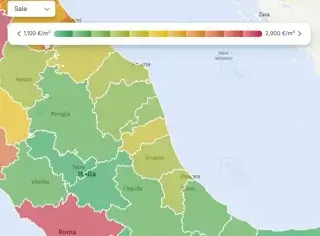 Housing Prices in Italy Reach a Two-Year High
 Travellers Increasingly Choose Cooler Scandinavia
 Serbia Property Sales Decline as Transaction Value Rises
Rupee Slides to Record Low

India’s rupee has fallen to a fresh record low against the US dollar, forcing the Reserve Bank of India back into the market to slow the decline. The move reflects pressure on India’s external accounts rather than a domestic banking crisis: expensive oil, strong dollar demand, portfolio outflows and weaker appetite for emerging-market currencies are all weighing on the exchange rate.
The rupee moves closer to 97 per dollar
India’s currency extended its run of record lows in May 2026. Bloomberg reported that the Reserve Bank of India intervened after the rupee dropped to a new all-time low; the full article is access-restricted, but its central point is consistent with market dаta: the central bank is again trying to smooth a sharp currency move rather than defend a fixed level.
Times of India reported that on 19 May the rupee weakened for an eighth straight trading session and closed around 96.70 per dollar, a fresh record low. The decline was linked to high crude oil prices, foreign investment outflows and a stronger dollar as global investors moved away from risk.
For India, the rupee is not just a market price. The country imports large volumes of oil, gas, fertilisers, electronics and gold, so a weaker currency quickly affects import costs, inflation expectations, corporate margins and fiscal planning.
Intervention does not mean a currency peg
A central-bank intervention is the purchase or sale of foreign currency to reduce disruptive exchange-rate moves. In this case, it usually means selling dollars from reserves or through related market operations to provide liquidity and slow the rupee’s fall.
Bloomberg reported in March 2026 that the rupee rebounded after similar support from the Reserve Bank of India, which market participants said had sold dollars in both onshore and offshore markets. The episode shows the central bank’s usual approach: not to reverse the trend at any cost, but to reduce the speed and volatility of depreciation.
The Reserve Bank of India does not usually announce each currency operation in real time. Traders therefore infer intervention from indirect signals: abrupt price reversals, dollar supply through state-owned banks, changes in forward premia and later reserve data.
Oil is the main pressure channel
The rupee’s decline is being driven above all by import costs. Economic Times reported that the currency slump deepened amid high crude prices and worries about import costs linked to Middle East tensions. For India, higher oil prices matter directly because they increase dollar demand by importers and widen the trade deficit.
When oil companies need more dollars to pay for imports, pressure on the rupee rises. If foreign investors are also selling Indian equities and bonds, the currency faces a second shock: importers demand more dollars while portfolio capital leaves the country.
Reserves are large, but not unlimited
New Indian Express, citing the Reserve Bank of India, reported that foreign exchange reserves rose by $6.295 billion to $696.988 billion in the week ended 8 May 2026, after falling by $7.794 billion the previous week. The increase was partly linked to higher gold reserves.
Nearly $697 billion in reserves gives India substantial protection against panic, but it does not remove the central bank’s trade-off. If the RBI sells dollars too aggressively, reserves can fall quickly and markets may test how much support the authorities are willing to spend. If intervention is too light, rupee depreciation could accelerate and feed inflation expectations.
The rupee is weak despite strong growth
The paradox is that the rupee is not falling because India is weak in the conventional growth sense. India remains one of the fastest-growing major economies, but exchange rates are not determined by gross domestic product alone. The rupee is also driven by import prices, the balance of payments, real interest rates, investor flows and the strength of the dollar.
Bloomberg noted in an April explainer that the rupee has depreciated every year since 2018 even though India has grown faster than many Asian peers. That points to a structural issue: heavy reliance on imported energy and foreign capital flows can outweigh strong domestic growth.
The balance of payments is under stress
India’s Chief Economic Adviser V. Anantha Nageswaran has described the current environment as a “live balance of payments stress test.” Times of India reported his assessment amid pressure from costly oil, gold and fertiliser imports, foreign portfolio outflows, resilient import demand and weak export performance.
The balance of payments records all external transactions: trade in goods and services, investment flows, remittances, debt payments and capital movements. When imports and capital outflows require more foreign currency than exports, inflows and remittances provide, the domestic currency comes under pressure.
A weaker rupee raises inflation risk
A weaker rupee makes imported goods and inputs more expensive. For India, the biggest risk is fuel because higher oil prices affect transport, electricity, logistics, fertilisers, food and manufacturing. Even if the state limits retail fuel-price increases, the cost eventually shifts to the budget or corporate balance sheets.
The Week reported that on 15 May the rupee fell below 96 per dollar and closed at a fresh low of 95.81 as crude prices and inflation concerns added pressure. Traders were already pointing to likely RBI presence in the market.
Why markets are watching 100
The 100-rupees-per-dollar level is psychologically important, even though it is not an economic threshold by itself. Its significance lies in expectations. If traders, importers and exporters start to see a move toward 100 as inevitable, importers may buy dollars earlier while exporters delay dollar sales, adding to pressure.
Business Standard, citing Emkay Global, reported that if crude oil stays above $100 a barrel, India may need tougher measures to defend the rupee, including rate increases, tighter controls on certain flows or fiscal steps affecting import demand.
A strong dollar weighs on Asia
The rupee is not falling in isolation. Emerging-market currencies are under pressure from expectations that US rates may stay high for longer, safe-haven dollar demand, geopolitical risk and higher energy prices. When dollar assets offer attractive yields, deficit economies face a tougher task retaining capital.
The Wall Street Journal reported that the dollar index remained supported in mid-May by expectations of tight US monetary policy and Middle East tensions, despite occasional daily declines. For Asian currencies, that creates a weak backdrop: solid local fundamentals may not fully offset the external dollar factor.
What the RBI can do next
The central bank has several tools. It can sell dollars from reserves, operate through state-owned banks, manage rupee liquidity, influence the forward market, improve the appeal of non-resident deposits or adjust interest rates. Each tool has a cost.
Reserve sales calm panic but reduce the buffer. Rate hikes may support the currency but hurt credit and domestic demand. Restrictions on gold imports or currency flows can cut dollar demand but damage business confidence. The most likely strategy is therefore measured intervention, volatility smoothing and waiting for external pressure to ease.
Business adjusts to a weaker currency
For Indian importers, a weaker rupee means higher costs. Oil refining, aviation, chemicals, electronics, fertilisers and capital equipment are especially exposed. Companies with dollar debt face higher servicing costs if their revenues are mostly in rupees.
For exporters, currency weakness can help competitiveness, but not automatically. If a company imports raw materials or components, part of the exchange-rate gain disappears. Weak global demand can also limit sales volumes even when dollar prices become more attractive.
Investors are testing India’s external resilience
The rupee’s record decline does not erase India’s long-term investment story: demographics, domestic demand, infrastructure, digitalisation and industrial policy remain important. But currency weakness raises the cost of error for foreign investors. Returns in rupees may look strong, but dollar returns shrink if the currency keeps falling.
For portfolio investors, the key question is whether India can slow the currency decline without a sharp policy tightening. For direct investors, the focus is longer-term predictability: import costs, currency hedging, localisation, taxation and repatriation of profits.
The market wants stability, not a reversal
The immediate test for the rupee is not a quick return to previous levels, but whether the slide can stop accelerating. If oil prices stabilise, the dollar stops strengthening and foreign investors slow their selling of Indian assets, RBI intervention can buy time.
If oil remains expensive and outflows persist, the central bank will have to choose between more costly currency defence and allowing further gradual depreciation. Under that scenario, the rupee may remain under pressure even if India’s domestic growth stays strong.
As International Investment experts report, the critical conclusion is that India is facing an expensive external stress, not a classic currency panic: oil, the dollar and capital flows are all working against the rupee at the same time. Large reserves allow the RBI to smooth the move, but they do not remove the deeper question of how long an import-dependent economy can absorb costly energy without losing currency stability. For investors, the main risk is not the exchange-rate level itself, but the speed of the move and the authorities’ ability to preserve confidence without overtightening policy.
FAQ
Why has the Indian rupee fallen to a record low?
The rupee has weakened because of high oil prices, strong dollar demand from importers, foreign investment outflows and broad dollar strength during a period of global risk aversion.
What did the Reserve Bank of India do?
Market reports and Bloomberg indicate that the RBI intervened to support the rupee and smooth the decline. Such intervention usually involves selling dollars or providing dollar liquidity through the banking system.
Why does oil matter so much for the rupee?
India imports a large share of its energy. When crude prices rise, importers need more dollars, the trade deficit widens and pressure on the rupee increases.
Could the rupee fall to 100 per dollar?
It could if external pressure persists through expensive oil, capital outflows and strong dollar demand. The 100 level is psychologically important, but it is not a formal economic threshold.
Does India have enough foreign exchange reserves?
India’s reserves remain large, at nearly $697 billion in the week ended 8 May 2026. But reserves are not unlimited, so the central bank usually uses them to reduce volatility rather than defend a fixed exchange rate.
What does a weaker rupee mean for investors?
It reduces dollar returns on Indian assets, increases currency risk and makes hedging more important. India’s long-term growth story remains intact if currency depreciation stabilises.