







 Israel Cuts Rate to 3.25% for Third Meeting
 Russian and Belarusian Owners List More Latvian Property
 Georgian Law Enforcement Busts Scammers Posing as Real Estate Brokers
 World’s Largest Economies in 2026: GDP and Purchasing Power Rankings
 Turkish Airlines Cancel Flights to Moscow
 Escalation in the Middle East: New US and Iranian Strikes
Hanoi Confronts Idle Golden Land
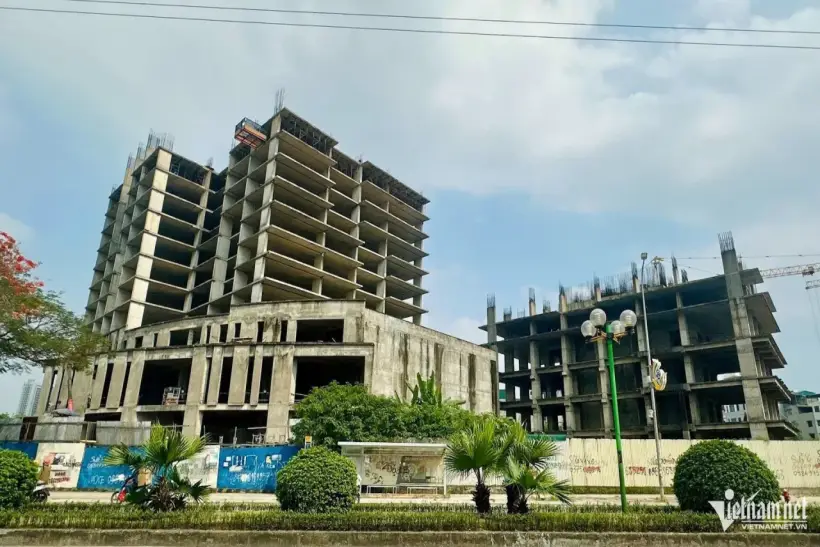
Hanoi has begun a tougher review of prime land plots and stalled developments that have sat behind fences for years in central and fast-growing districts, demanding reports on 341 delayed non-budget projects while clearing land for 1,428 schemes and preparing a land-price reform that could lift official values to VND702 million per square meter on the most expensive streets.
Idle land has become a growth problem
Hanoi is facing the paradox of a rapidly appreciating city: land is becoming more expensive, demand for housing and infrastructure is rising, yet some sites already allocated to investors remain unused for years. In Vietnam, such locations are often called “golden land” — plots in valuable districts near transport, residential areas, commercial corridors or future infrastructure.
VietnamNet reported that fenced-off prime plots in Hanoi, many allocated by the state to investors a decade ago, remain frozen, creating no jobs and contributing nothing to economic growth or the state budget. The article said the Hanoi People’s Committee issued Notice 396 to review and make final decisions on 341 delayed non-budget land-use projects, requiring investors to report actual progress on investment, construction, site clearance, financial obligations, completed legal procedures and unresolved obstacles.
This is no longer only a matter of urban order or visual blight. Idle plots lock up capital, restrict housing supply, delay roads and social infrastructure, and weaken land-policy efficiency. As Vietnam and its largest cities pursue increasingly ambitious growth targets, unused land has become a macroeconomic resource that remains outside productive use.
The city is threatening project withdrawals
The authorities’ approach is becoming stricter. It is no longer enough for investors to hold project rights formally; they must show the ability to build, resolve legal issues and meet financial commitments. If reports are not submitted, are late or fail to demonstrate implementation capacity, the city may consider project suspension or withdrawal.
For the property market, this is a significant signal. For years, land in fast-growing Vietnamese districts could be treated as an asset to hold while waiting for price appreciation. That model benefits the landholder but harms the city: neighborhoods do not receive schools, roads, housing, jobs or tax revenue.
If Hanoi starts reclaiming or restarting long-delayed projects in a meaningful way, developer behavior may change. Land would become not just a store of capital, but an obligation to build, pay, connect infrastructure and bring projects into operation.
Site clearance is now part of the infrastructure race
At the same time, authorities are accelerating site clearance for infrastructure. VnEconomy reported that Hanoi is carrying out land clearance for 1,428 projects across different wards, including 1,281 budget-funded works and 147 non-budget projects. Of these, 27 are classified as key national and municipal projects; the city is also advancing ring-road sections, Red River bridges and nine major development projects, including the Red River landscape axis and a high-tech healthcare and education complex in Hoang Mai.
Site clearance means preparing land for construction through acquisition, compensation, resettlement, demolition and legal formalities. In Vietnam, this stage is often the main bottleneck for infrastructure and real estate. A project may be approved and financed, but without a cleared site it remains stuck on paper.
For Hanoi, faster clearance is especially important because of transport congestion. The city needs ring roads, bridges, metro lines, public spaces and housing close to employment centers. Every delayed plot raises project costs, prolongs traffic pressure and lowers the return on public investment.
Land-price reform changes project economics
From 2026, Hanoi is preparing a new land valuation framework. VnEconomy said the city had collected public feedback on its first full land-price list, expected to take effect on January 1, 2026. The draft divides Hanoi into 17 zones and projects residential land price increases of 2–26% depending on location, with the highest level reaching VND702 million per square meter, equivalent to about $27,000.
A land-price list is the official basis for calculating taxes, fees, compensation, land-use payments and budget revenue. If official values move closer to market prices, the state gains transparency and income. For businesses, however, it means higher input costs.
The risk is that more expensive land pushes up housing prices and rents. For projects already struggling with legal procedures, financing or demand, higher land-related payments may become an additional barrier. The reform therefore fights speculation while also testing developer resilience.
Auctions are meant to return land to use
Hanoi is not only reviewing old projects; it is also preparing new land auctions. Hanoi Online reported that in 2026 the city plans to auction 306 projects and land plots covering nearly 729 hectares, excluding technical infrastructure areas. Expected budget revenue is estimated at roughly VND63 trillion.
A land-use-right auction is a mechanism through which the state transfers the right to use a plot under defined conditions. For the city, it raises budget revenue and allocates land to bidders with purchasing power. For the market, it is a signal of expectations: active bidding suggests confidence in future prices and sales.
But auctions can also intensify overheating. If winning bids rise beyond local purchasing power, developers must later sell housing at higher prices. In that case, land becomes an inflationary input: the budget receives revenue now, while buyers face higher prices later.
Housing prices make idle land more painful
The issue of unused land is especially sensitive because housing prices are rising. Savills reported that Hanoi recorded 7,914 apartment sales in the first quarter of 2025, while primary prices rose 32% year on year; the secondary market posted a slight price decline, its first in five years. The company also pointed to limited new supply and the importance of revised planning and legal frameworks in supporting development.
The primary market refers to developer sales, while the secondary market covers resale housing. The gap matters: if new apartments rise faster than older units, land costs, construction costs, legal procedures and expectations of future growth are being priced into new projects more aggressively.
For Hanoi residents, that means worsening affordability. Even if market activity remains strong, a new apartment becomes harder for middle-income households to buy. Idle plots are especially painful in that context: the city needs more supply, but part of its land remains outside the construction cycle.
New housing supply remains expensive
CBRE Vietnam said in the third quarter of 2025 that Hanoi recorded more than 10,300 newly launched condominium units, the second quarter in five years when new supply exceeded 10,000 units. The same quarter saw a record launch of more than 2,000 units in projects priced above VND120 million per square meter of net saleable area, excluding value-added tax and maintenance fees before discounts.
This shows that supply is returning, but the market structure is shifting toward expensive units. High prices reflect not only project quality, but also land costs, infrastructure expectations and scarcity of ready-to-build sites.
If the city can bring idle plots back into circulation, supply could theoretically improve. The result, however, will depend on what is built on those sites: affordable housing, social infrastructure, commercial complexes or more high-end apartments.
Growth ambitions require land-use discipline
Hanoi is officially targeting faster economic expansion. The government’s Thang Long portal reported that the Hanoi People’s Council approved the 2026 socio-economic development plan with an 11% gross regional domestic product growth target. Gross regional domestic product measures the value of goods and services produced in a region over a year.
Such a target cannot be reached through financial indicators alone. Hanoi needs roads, industrial zones, worker housing, public transport, schools, hospitals and commercial space. Land is a basic production input, and idle land is a hidden drag on growth.
The challenge is that faster reclamation or project restarts must be paired with legal predictability. If authorities are too lenient, land remains idle. If they are too abrupt, investors may fear administrative risk. The balance between discipline and protection of lawful rights will determine whether the campaign works.
Land auctions show speculative pressure
Infrastructure plans are already heating up suburban auctions. VCCI News reported that land-use-right auctions around Hanoi in early 2026 drew large crowds and bids far above starting prices, signaling returning capital and renewed confidence while also raising debate over speculation risks and whether prices reflect long-term fundamentals.
For the city, this is a mixed signal. Strong auction demand confirms confidence in infrastructure development and helps the budget. But if plots are bought for resale rather than construction, the idle-land problem may reappear in a new form.
That is why the fight against idle “golden” plots must include not only reviews of old projects, but conditions for new ones. Deadlines for development, financing transparency, penalties for delays, checks on ultimate owners and public status reporting all matter.
Hanoi is fighting a land-hoarding model
The capital’s core problem is not a handful of overgrown plots behind metal fences. It is deeper: land has become an asset that can be held while values rise, even when the urban economy needs it for immediate productive use. That model creates a gap between private gain and public cost.
When a site sits idle in a central area or near infrastructure, the city loses several times over. It receives no taxes or jobs, residents get no housing or services, surrounding districts face gaps in the urban fabric, and public investment in roads or metro lines produces a weaker effect.
As International Investment experts report, Hanoi’s campaign against idle “golden land” will test Vietnam’s wider urbanization model. If the city limits itself to reports and selective project withdrawals, the impact will be temporary. If the review of stalled projects is linked to transparent land valuation, enforceable development deadlines, affordable housing and infrastructure planning, Hanoi can turn frozen plots from a symbol of waste into a source of growth. The main risk is that returning land to circulation without controlling prices and project purpose may simply replace the old form of speculation with a new one.
FAQ
What does “golden land” mean in Hanoi?
“Golden land” refers to expensive plots in central or strategically important districts, often near transport, residential areas, commercial corridors or future infrastructure. Their value comes from location, not just size.
Why are idle plots a problem for Hanoi?
They produce no housing, jobs, tax revenue or infrastructure. As land and home prices rise, unused plots become a symbol of inefficient urban-resource allocation.
What is Hanoi doing about delayed projects?
The city is requiring investors to report implementation progress, legal status, financial obligations and unresolved obstacles. If investors cannot prove capacity, authorities may consider suspension or withdrawal.
How will land-price reform affect real estate?
A new land-price list could improve transparency and budget revenue, but also raise developer costs. If those costs are passed to buyers, housing prices may rise further.
Can auctions solve the idle-land problem?
Auctions can return land to use and generate budget revenue, but only if winning bidders actually build. Without development deadlines, auctions can become another source of speculation.