













Europe plans to tighten rules for Ukrainian refugees
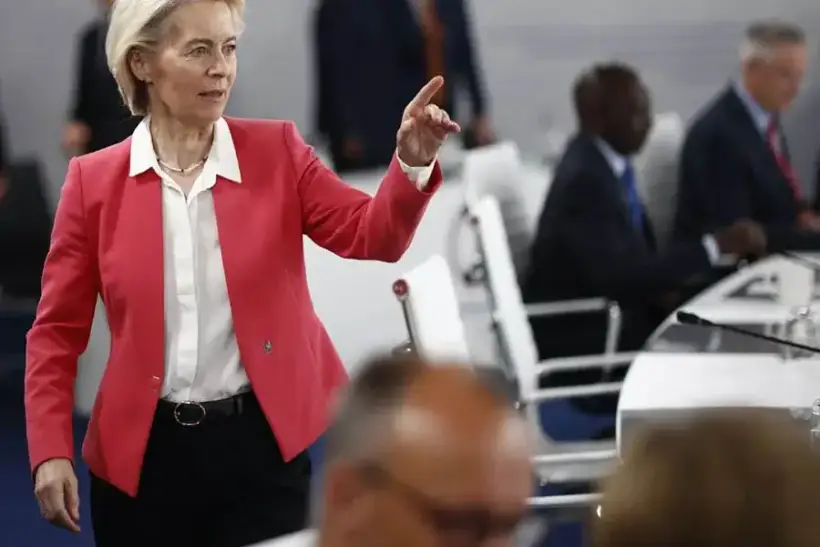
Yoan Valat / EPA
European Commission President Ursula von der Leyen has sent a letter to European leaders. She proposes changing the temporary protection regime for Ukrainians, which is in force until March 4, 2027. Earlier, EU ministers supported tightening rules for certain categories of refugees, including men of conscription age, Der Spiegel reports.
Extension of Ukrainian protection with restrictions
Von der Leyen announced that the European Commission will put forward a draft decision to extend the mass influx directive, which expires on March 4, 2027. The scheme provides collective protection without individual asylum assessments. However, the letter stresses the need to narrow the scope of the mechanism by excluding citizens who may be subject to mobilization.
At a meeting of EU interior ministers in early June, representatives of several member states supported this initiative, Tagesschau reports. German Interior Minister Alexander Dobrindt said protection should be extended, but expressed doubts that Ukrainian men of conscription age should fall under it. He noted that the inflow of men of draft age has increased in recent months and needs to be addressed. For example, men aged 23–60 may still apply for asylum, but their cases should be assessed individually rather than automatically.
Austrian Interior Minister Gerhard Karner also said there should no longer be automatic protection for men of conscription age “so that EU member states can maintain their willingness to help people.” Swedish Interior Minister Johan Forssell stressed that for victory, more men need to remain in Ukraine and take part in combat operations. The official proposal from the European Commission is expected in the coming days, as previously stated by Migration Commissioner Magnus Brunner.
Scale of reception and current refugee status
As of March 2026, more than 4.3 million Ukrainian citizens had obtained protection status in EU countries. Most were received in Germany (1.27 million), Poland (961,405), and the Czech Republic (379,820). Of them, 43.3% were women, 30.1% children, and 26.6% adult men.
This is one of the largest migration flows since the start of the full-scale conflict. The directive was adopted in 2022 and has been repeatedly extended. Growing pressure on the social systems of host countries has led to extensive debate on the issue.
Restrictions are already being introduced at the national level. In Poland, social assistance for Ukrainian refugees has been reduced since March 2026. In Germany, since April 2025, newly arrived Ukrainians have lost access to standard unemployment benefits (Bürgergeld) and now receive lower payments under asylum seeker support legislation. These measures, although taken independently by individual states, reflect a broader trend toward tightening conditions of stay.
Pressure on Kyiv
German Chancellor Friedrich Merz previously urged Ukrainian President Volodymyr Zelenskyy to strengthen controls over the departure of men abroad. “I asked him to ensure that these young men stay in the country, because they are needed there and not in Germany,” Merz said. This statement, made well before von der Leyen’s letter, reflects a consistent German position linking migration policy with Ukraine’s mobilization needs.
In 2024, Ukraine lowered the conscription age from 27 to 25 and introduced measures to improve recruitment and military registration, Euractiv reports. A travel ban applies to men aged 23–60, with some exceptions, such as single fathers. Since August 2025, men aged 18–22 have been allowed to leave the country. An estimated 100,000 of them have since gone abroad.
The labor shortage, according to European policymakers, makes the return of military-age men who left for the EU critically important and serves as a key argument for revising asylum rules.
Conclusion
Analysts at International Investment note that Ursula von der Leyen’s proposal marks a turning point in European migration policy toward Ukraine. For the first time since 2022, Brussels is explicitly signaling its intention to link protection to Ukraine’s military needs. If adopted, the EU would for the first time introduce age-based restrictions for refugees from countries affected by armed conflict.
At the same time, excluding men aged 23–60 from automatic protection is only one of the scenarios under discussion. Alternative options, including restrictions for those who left Ukraine illegally or a full continuation of the current regime, remain on the table. The final decision will depend on negotiations between the European Commission and national governments, which are still ongoing.
Importantly, if implemented, the proposed changes would apply only to new applicants and would not affect more than 1.15 million Ukrainian men already under temporary protection in the EU. A decision on extending the directive itself may be taken in July or September 2026.