







 How Ukraine’s New-Build Housing Market Has Changed Over Four Years
 European Prime Rents Rise as Property Yields Turn Higher
 The Most Expensive Airlines in Europe in 2026
 Housing Prices in Italy Reach a Two-Year High
 Travellers Increasingly Choose Cooler Scandinavia
 Serbia Property Sales Decline as Transaction Value Rises
Spain begins dismantling border checkpoint with Gibraltar
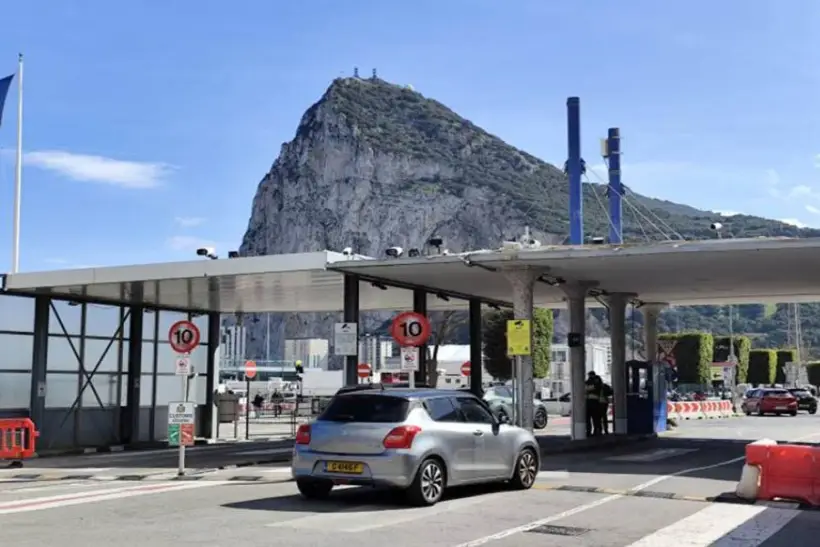
Spain has begun dismantling border infrastructure at the crossing with Gibraltar. The works are linked to an agreement between the European Union and the United Kingdom, which provides for the abolition of land border controls from 15 July 2026, Spanish News Today reports.
Dismantling of border infrastructure
Spain has started removing elements of the border crossing on its side of the frontier with Gibraltar. Canopies and metal structures previously used to manage vehicle checks, traffic flow distribution and entry procedures are being dismantled at the checkpoint site.
The works cover the main infrastructure of the land crossing, including inspection areas and technical facilities that supported the operation of the border post. The structures being removed are part of a border complex that has operated for more than a century and has become one of the most recognisable features of the Spain–Gibraltar frontier. The dismantling is being carried out by the Spanish state-owned company TRAGSA. The project budget is around two million euros.
Freight traffic will be redirected through a plot of land provided by the municipality of La Línea de la Concepción. Gibraltar Airport is also being upgraded and is expected to become a jointly used facility under the new border-crossing regime.
EU–UK treaty on Gibraltar
The treaty between the European Union and the United Kingdom on Gibraltar is the result of years of negotiations that began after Brexit. A political agreement was reached earlier, while the final version of the text was agreed in December 2025. The full document, including annexes, was published in February 2026.
The agreement is scheduled to be signed on 13 July in Brussels. The ceremony is expected to be attended by EU Trade Commissioner Maroš Šefčovič, UK Foreign Secretary Yvette Cooper, Spanish Foreign Minister José Manuel Albares, and Gibraltar’s Chief Minister Fabian Picardo.
The treaty provides for the abolition of land border controls from 15 July 2026 and the relocation of checks to Gibraltar’s port and airport, where the main procedures for monitoring the movement of people and goods will be concentrated. The document must still be approved by the Council of the European Union and the European Parliament, as well as ratified by the United Kingdom and Gibraltar. Full entry into force is expected by December 2026.
Schengen and sovereignty: UK and Spain positions
Gibraltar will formally remain outside the EU and the Schengen area, but similar rules for free movement will apply under a separate arrangement between the UK and the EU. The launch of the agreement was initially expected to be synchronised with the full rollout of the EU Entry/Exit System (EES). However, this proved impossible, and the system will not apply to Gibraltar residents until the treaty comes into force. Until then, the previous border-crossing regime with Spain remains in place, with no manual passport stamping since 2020.
The agreement does not affect the legal positions of the United Kingdom and Spain regarding sovereignty. Spain continues to claim Gibraltar, which was ceded to Britain under the Treaty of Utrecht in 1713. The United Nations considers Gibraltar a non-self-governing territory and recommends its decolonisation through bilateral negotiations, which have been ongoing since 1965.
Following Brexit, Spain proposed at the UN a model of joint sovereignty and a special status for Gibraltar within the EU. However, these proposals were rejected by the territory’s authorities. In 1967, 99.2% of Gibraltar residents voted against joint sovereignty, and in 2002, 98.9% rejected a similar proposal.
Significance of dismantling for the regional economy
Gibraltar’s population is estimated at 38,000 (2022 census), with a density of around 4,000 people per square kilometre. The vast majority are Gibraltarians. English is the official language, alongside widespread use of Spanish and the local Llanito dialect.
The economy is based on financial services, maritime activities, online gaming and tourism. The currency is the Gibraltar pound, pegged to the British pound sterling. GDP stands at around £3.1 billion (€3.6 billion), while GDP per capita is about £80,885 (€94,000).
Around 30,000 people cross the border daily, a significant share of whom are Spanish citizens. The territory provides roughly a quarter of jobs for residents of the neighbouring Campo de Gibraltar region, where income levels are significantly lower.
Political reaction and expert assessments
Politically, the agreement is described as a pragmatic compromise. Spain gains the presence of its representatives in the border system, necessary for the functioning of the Schengen-related arrangements, as well as elements of tax harmonisation. A transaction tax replacing import duties is introduced at 15% from April and will rise to 17% by 2028, in line with the EU’s minimum VAT rate.
Gibraltar’s Chief Minister Fabian Picardo emphasises that the presence of Spanish officials does not affect the territory’s sovereignty, describing it as a “joint control system, not an external presence”.
In Spain, the agreement has been criticised by the opposition. Representatives of the Partido Popular (the country’s main centre-right party) and Vox (a right-wing party with a strong anti-immigration and Eurosceptic stance) have raised concerns about a lack of transparency in the negotiations and insufficient parliamentary debate. Diplomatic circles, however, tend to view the accelerated agreement as a way to avoid prolonged uncertainty at the border and reduce risks to transport links between Spain and Gibraltar.