







 Israel Cuts Rate to 3.25% for Third Meeting
 Russian and Belarusian Owners List More Latvian Property
 Georgian Law Enforcement Busts Scammers Posing as Real Estate Brokers
 World’s Largest Economies in 2026: GDP and Purchasing Power Rankings
 Turkish Airlines Cancel Flights to Moscow
 Escalation in the Middle East: New US and Iranian Strikes
Estonia to ban property purchases by Russians and Belarusians from 2027
Unsplash
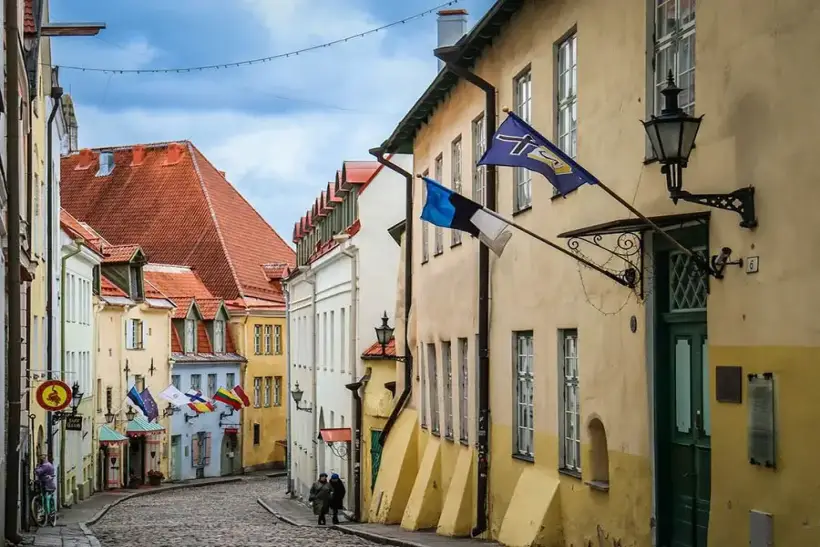
The Estonian government has approved a bill banning the purchase of real estate by certain foreign nationals. The restrictions will apply to Russian and Belarusian citizens who do not hold long-term resident status or permanent residence rights in Estonia, as well as companies under their control. The legislation is expected to take effect on January 1, 2027, subject to approval by the Riigikogu, according to ERR.
Purpose of the restrictions on Russian and Belarusian citizens
The main objective of the bill is to reduce the risks associated with the use of real estate in Estonia. The government says the measure is aimed at addressing national security threats, including espionage and the preparation of sabotage.
Interior Minister Igor Taro, who introduced the initiative, said the key issue is not only where a company is registered but also who ultimately controls its assets. He stressed that authorities must examine both a company's place of registration and its beneficial owners — the individuals who actually control the company and whose interests are served by the property purchase.
Estonia's property purchase ban: background
The idea of restricting property purchases has been under discussion in Estonia for several years. In 2023, the EKRE party proposed similar legislation, but it failed to gain government support. In 2024, the Ministry of the Interior, then headed by Lauri Läänemets, prepared a comparable bill, which also did not advance.
The current version has gone through several rounds of legal review since January 2026, when officials again publicly called for such restrictions. During the drafting process, particular attention was paid to ensuring compliance with Estonia's Constitution. The final version was revised accordingly and justified on national security grounds.
Who will be affected
The bill prohibits property purchases by Russian and Belarusian citizens who do not have long-term resident status or permanent residence rights in Estonia. The restrictions will also apply to companies registered in Russia or Belarus, as well as legal entities incorporated in any jurisdiction if their ultimate beneficial owner falls under the scope of the law.
The ban covers land plots, apartments, building rights, and shares in real estate. The legislation is not retroactive, meaning property already acquired will remain with its current owners.
The restrictions will not affect residential or commercial leases. In exceptional cases, the government will be able to grant special permission for a transaction if it does not conflict with the objectives of the law.
Enforcement measures
Compliance with the new rules will be monitored by notaries, bailiffs, insolvency administrators, authorities responsible for the sale of state property, and the Estonian Land and Spatial Development Board. These bodies will be required to identify the ultimate beneficial owners of legal entities and verify their citizenship.
The bill also updates Estonia's system of restricted areas for property acquisitions. The current framework, based on the country's 1999 administrative division, will be replaced by a system based on populated places, with restricted areas displayed on the public cadastral map.
Impact on Estonia's property market
The Estonian government believes the new restrictions will have only a limited impact on the real estate market. Based on 2025 data, around 600 transactions would have fallen under the proposed rules. At the same time, officials argue that the legislation will strengthen national security and public order.
As of April 2025, Russian citizens owned 36,952 properties in Estonia, while Belarusian citizens owned 896. As of January 9, 2026, Estonia had 7,797 Russian citizens holding residence permits and 70,237 with permanent residence rights. Among Belarusian citizens, the respective figures were 1,476 and 1,190.
Analysts at International Investment note that since February 2022, the Baltic states have pursued some of the strictest policies toward Russian and Belarusian citizens. Under these conditions, purchasing real estate in Estonia for investment or relocation purposes carries significant regulatory risks. The analysts recommend considering other jurisdictions for these objectives.