







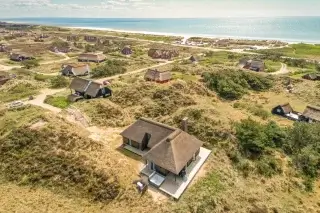
 Denmark Sets First-Half Tourism Record as Germans Lead
 Drought Dries Bärenschützklamm Waterfalls in Austria
 Thailand Industrial Property Faces Rising Vacancy Risk
 Apartment Prices in Estonia Differ by 51 Times
 European Property Investment Rises to €54 Billion
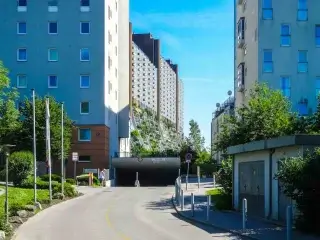 Vienna Leads Rentals, Alpine Resorts Earn More
Scandinavian Prefab Housing Market Seen Reaching $7.9 Billion

The prefabricated housing market in Sweden, Norway and Denmark is projected to expand from $6.35 billion in 2026 to $7.92 billion by 2031, equivalent to a compound annual growth rate of 4.53%. The forecast comes against a mixed construction backdrop: Swedish housing starts have improved, Denmark rebounded in the second quarter after a weak start to the year, while Norwegian residential permits are falling again.
Prefabricated housing market nears $6.4 billion
Mordor Intelligence values the Scandinavian prefabricated housing market at $6.35 billion in 2026, up from $6.07 billion in 2025, and projects it to reach $7.92 billion by 2031. The figures are proprietary market estimates rather than official government statistics. The model combines permits, completions, prefabrication penetration, delivered housing prices, factory capacity and interviews with industry participants.
The geographical definition is important. The analysis covers Sweden, Norway and Denmark and explicitly excludes Finland and Iceland. It measures completed residential buildings in which major structural elements are manufactured off site and assembled on site, while conventionally built homes using only minor prefabricated components are excluded.
Single-family housing represented about 55.4% of the market in 2025. Multifamily prefabricated housing is projected to expand faster, at roughly 6.85% annually through 2031. Sweden accounted for an estimated 43.6% of the market, while Denmark is forecast to be the fastest-growing country, at approximately 7.65% a year. These percentages are also outputs of the research model rather than national statistical series.
Swedish housing starts rise 8%
Sweden remains the largest market for industrialised residential construction in the region, supported by a long-established factory-built timber housing industry. The prevalence of prefabrication, however, varies sharply by housing type and should not be confused with its share of all new Swedish homes.
Fresh data from Statistics Sweden show that construction started on approximately 15,350 dwellings during the first half of 2026, 8% more than a year earlier. Around 12,700 were in multi-dwelling buildings, including special housing, up 16%. Starts in one- and two-dwelling buildings fell about 18% to 2,650 units. The numbers are preliminary and have been adjusted upward by 8% to account for normal delays in municipal reporting.
The divergence matters for prefab manufacturers because detached and small residential buildings have traditionally been an important market for factory-built timber systems. A contraction in that segment can therefore weigh on demand even when total housing starts are rising.
Industry body TMF provides a more narrowly defined measure of industrialised construction. Among recorded 2025 building-permit applications for individually built houses, 84.2% involved ready-to-assemble timber houses, 14% involved timber construction from loose materials and 1.8% involved masonry houses. The 84.2% figure should not be interpreted as the proportion of all Swedish homes that are prefabricated; it relates to this specific detached-house category.
Industrialised production moves into multifamily housing
A major source of potential growth is the expansion of factory production from detached houses into larger apartment developments. Depending on the system, factories can produce wall panels, structural frames or almost complete volumetric modules before they are transported to the construction site.
Swedish group Derome announced in June that it would work with Viktor Hanson on a 400-to-500-home development in Haninge, south of Stockholm. The buildings will use timber frames produced at the company's Värö factory, with development planned in stages from 2028. Factory production is intended to reduce the amount of work required on site.
Multifamily schemes may therefore become increasingly important to the industry's expansion. Repetitive apartment layouts can allow manufacturers to reuse engineering solutions and operate production lines more efficiently. The economics are not automatic, however: long transport distances, irregular order books and insufficient scale can offset some of the productivity benefits of off-site manufacturing.
Norway faces another decline in residential permits
Norway's housing construction market remains comparatively weak. Residential building permits increased to 20,184 dwellings in 2025 from 18,679 in 2024, an increase of roughly 8%, but the total remained far below the approximately 30,000 permits recorded annually in 2021 and 2022.
The trend weakened again in 2026. Statistics Norway recorded permits for 4,604 dwellings in the second quarter. On a seasonally adjusted basis, the number fell 9.2% from the previous quarter, while the unadjusted total was 10.1% below the second quarter of 2025.
For prefab manufacturers, this illustrates why urbanisation alone does not guarantee expanding demand. Actual permits, project starts, mortgage and development financing costs and household purchasing power determine how much housing eventually reaches production.
Long-term forecasts based on population growth therefore need to be considered alongside the current construction cycle. Norway has yet to show a sustained return to the residential development volumes seen earlier in the decade.
Danish housing construction rebounds in the second quarter
Denmark entered 2026 with a sharp decline in housing starts but staged a substantial rebound in the spring. That makes faster growth in prefabricated construction plausible, though still dependent on the broader residential cycle.
Statistics Denmark reported 6,714 housing starts in the second quarter of 2026, a seasonally adjusted increase of 23% from the first quarter. The floor area of residential construction starts rose 14%, while total started construction area increased 5%. Apartment construction was particularly strong, with starts rising from 2,166 units in the first quarter to 3,434 in the second, a 59% increase.
The rebound followed a weak opening quarter, when housing starts dropped 19% from the final quarter of 2025 to 5,173 dwellings. The statistical agency cautions that recent construction figures are subject to revision because of delays in registrations, meaning short-term movements should be treated carefully.
The shift toward apartment construction is especially relevant for off-site production. Greater repetition and larger project sizes can make standardised factory systems more economical than they are in many bespoke developments.
Energy rules increase the value of factory control
Tighter energy-performance and carbon-accounting requirements provide another structural driver for industrialised building systems. Factory production does not inherently make a building lower-carbon, but standardised processes can simplify material tracking, quality control and replication of tested construction assemblies.
Sweden's National Board of Housing, Building and Planning submitted proposals in May for implementing European requirements covering whole-life greenhouse-gas calculations and climate-impact limits for new buildings. Whole-life calculations are due to apply no later than January 1, 2028 for new buildings larger than 1,000 square metres and to other new buildings from 2030, when proposed limit values would also be introduced. Sweden has required climate declarations for most new buildings since 2022.
The revised EU Energy Performance of Buildings Directive requires new buildings owned by public bodies to meet a zero-emission standard from 2028 and all new buildings from 2030. It also introduces life-cycle global-warming-potential calculations for new buildings larger than 1,000 square metres from 2028 and for all new buildings from 2030.
These requirements do not automatically favour prefabricated construction over conventional methods. They do, however, increase the value of traceable materials, repeatable designs and controlled manufacturing processes, all of which can be easier to standardise in a factory environment.
Market growth still depends on housing construction
A rise from $6.35 billion to $7.92 billion would add about $1.57 billion to the market over five years. Expanding the share of off-site techniques alone will not be sufficient if the underlying volume of housing construction remains depressed.
Current official data present a mixed picture. Total Swedish housing starts are recovering, while one- and two-dwelling construction is still contracting. Norwegian residential permits weakened again in the second quarter. Denmark posted a substantial rebound, particularly in apartment development. Future regional growth may therefore depend increasingly on prefabricated systems gaining share in multifamily projects rather than relying predominantly on the traditional detached-house market.
As International Investment experts report, the forecast for Scandinavian prefabricated housing represents a credible long-term scenario but should not be read as a straightforward extension of current construction trends. The $7.92 billion figure is a proprietary research estimate, while official data from Sweden, Norway and Denmark show markedly different housing cycles. The main risk lies less in the technology itself than in the amount of housing being commissioned: factories can produce homes faster, but greater production efficiency cannot create demand in the absence of permits, financing and viable development projects.
FAQ: Scandinavian prefabricated housing market
How large is the Scandinavian prefabricated housing market in 2026?
The market is estimated at about $6.35 billion in 2026 and is forecast to reach $7.92 billion by 2031, equivalent to a compound annual growth rate of 4.53%. The figure is a private market estimate, not an official government statistic.
Which countries are included in the Scandinavian prefab housing market?
The analysis covers Sweden, Norway and Denmark. Finland and Iceland are excluded, so the estimate should not be treated as a figure for the entire Nordic region.
Which country has the largest market?
Sweden accounted for an estimated 43.6% of the market in 2025. It has a well-developed factory-built timber housing sector and a high share of ready-to-assemble timber systems in specific categories of detached housing.
What is prefabricated housing?
Prefabricated housing is built using major structural components manufactured away from the construction site and subsequently transported for assembly. These can include panels, walls, floor systems or nearly complete volumetric modules.
Why is prefab housing widely used in Scandinavia?
The sector benefits from a developed timber industry, high construction labour costs, the ability to perform more work in controlled factory conditions and long experience with industrialised wooden housing systems.
How is Swedish housing construction performing in 2026?
About 15,350 dwellings were started in the first half, an 8% annual increase. Multifamily housing increased, while starts in one- and two-dwelling buildings fell by about 18%.
What is happening in Norway and Denmark?
Norwegian residential permits declined 9.2% quarter on quarter in the second quarter on a seasonally adjusted basis. Denmark moved in the opposite direction, with housing starts rising 23% between the first and second quarters.
What could prevent the market from reaching the forecast?
The main risks are weak residential construction, expensive financing, underused factory capacity and logistics costs. A greater share of off-site construction does not guarantee market growth if the overall number of homes being developed remains low.