







 Georgian Law Enforcement Busts Scammers Posing as Real Estate Brokers
 World’s Largest Economies in 2026: GDP and Purchasing Power Rankings
 Turkish Airlines Cancel Flights to Moscow
 Hong Kong Property Rebounds as Momentum Slows
 Bulgaria’s Property Market Enters a More Mature Phase
 UK House Prices Rise as Mortgage Demand Weakens
Escalation in the Middle East: New US and Iranian Strikes
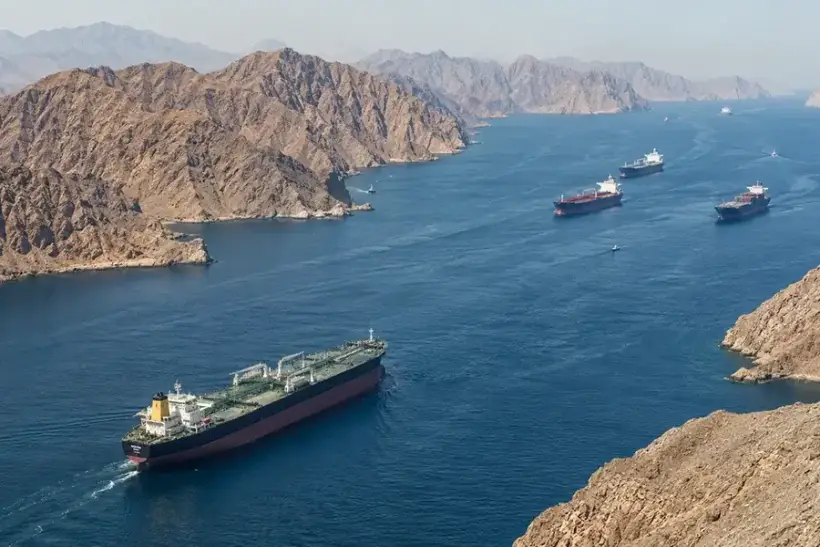
The United States and Iran have intensified their military confrontation, which resumed in late August. Hostilities have affected Jordan, Iraq and Bahrain, while US strikes targeted IRGC facilities near the Strait of Hormuz. The escalation has caused civilian casualties and pushed oil prices higher, Reuters reports.
Resumption of Hostilities
The latest round of confrontation began on August 30, when the United States struck Iranian territory for the first time since late July. Two IRGC launch sites on Larak Island in the Strait of Hormuz were hit. The US military linked the operation to preparations to mine the strait using maritime munitions. Iranian military personnel and civilians were reported killed and wounded, although exact casualty figures were not disclosed.
On the same day, Tehran used ballistic weapons and drones against the US military facilities King Hussein and Al-Azraq in Jordan. Technical and maintenance infrastructure, as well as areas where combat aircraft were stationed, came under attack. Jordanian air defence systems intercepted eight missiles. The IRGC claimed significant damage, while the US side reported no serious consequences.
For investors, the situation around the Strait of Hormuz remains the key factor. Following the strike on Larak Island, Brent crude rose by more than 2%, exceeding $90 per barrel.
Attacks on Tankers in the Strait of Hormuz
Two supertankers carrying Saudi crude were attacked on the evening of August 31 while exiting the Strait of Hormuz. Each vessel was carrying 2 million barrels of crude loaded at Saudi Arabia’s Juaymah terminal. The incidents occurred within minutes of each other off the coast of Oman. Saudi Aramco resumed oil loadings and sales from terminals inside the strait in August.
The Saudi-flagged Sidr was the first vessel hit, about 16.6 nautical miles northeast of Khasab. Minutes later, the Liberian-flagged Senegal Prosperity was struck by three projectiles of unknown origin. The crews of both vessels were unharmed, and no party claimed responsibility for the attacks.
Marisks, a company specialising in maritime risk analysis, said the incidents demonstrated a further increase in threats within the Omani corridor. Energy exports from Gulf countries remain restricted because of the US-Iran confrontation around Hormuz. Before the conflict began, roughly one-fifth of global oil supplies passed through this route. Qatar and Oman have sought an agreement to restore traffic, but negotiations have so far produced no result.
Hostilities in Early September
On September 1, the United States carried out a series of strikes on Islamic Revolutionary Guard Corps facilities. The targets included air defence and radar systems, maritime infrastructure, mine-laying capabilities and communications sites. Some were located near the Strait of Hormuz.
Iran responded with attacks on several fronts. Thirteen ballistic missiles entered Jordanian airspace: air defence systems intercepted 10, while three fell in remote areas. In northern Iraq, missiles and drones were directed at bases in Erbil. In Bahrain, air defence forces intercepted and destroyed Iranian drones. Tehran reported casualties among US forces, while US officials told Reuters there were no casualties.
According to Iran, five people were killed and at least 50 others wounded during a wedding near Sirik on the coast of the Strait of Hormuz. IRNA, citing regional authorities, gave a higher figure of 68 injured, while Mehr reported that a four-year-old child was among those killed. Another seven people died and eight were wounded in strikes on three locations in Khuzestan province.
Resources and Economic Pressure
The prolonged confrontation is increasingly affecting the capabilities of both sides. Iran’s economy has suffered heavily, while the capacity of its conventional armed forces has declined. The United States, meanwhile, has used a significant share of its stockpile of precision long-range missiles, raising concerns about the US military’s readiness for possible crises in other regions.
Washington continues to tighten sanctions against Tehran. Donald Trump said the United States now has almost complete control of the Strait of Hormuz and that Iran’s economic position is deteriorating. The US president described Washington’s position as stronger. Iran, in turn, warned countries in the region about the consequences of supporting US forces. The country’s military command said such assistance could trigger broader retaliatory strikes.
The conflict is also creating economic risks for the United States. Rising fuel prices are becoming an increasingly sensitive issue ahead of the November congressional elections. Following the September escalation, Asian stock markets fell, while the yield on 10-year US Treasury bonds rose to its highest level in nearly three years. Brent crude climbed to $95.68 per barrel on September 2.
Tourism and Investment
The prolonged confrontation has already affected the tourism sector and business environment in Gulf countries. Reuters notes disruptions to transport and other industries, as well as a decline in the region’s attractiveness as a stable international hub. The economic impact is particularly pronounced in Qatar and Kuwait, where GDP is expected to contract by more than 8% in 2026.
The crisis is changing investment priorities. Saudi Arabia and the UAE are accelerating multibillion-dollar projects to develop ports and oil pipelines that bypass the Strait of Hormuz. Investment is being directed, among other areas, toward infrastructure on the Red Sea and the UAE’s east coast, which could help maintain exports and cargo flows if the main route remains restricted.
Analysts at International Investment note rising risks for investment and the tourism industry. The outlook will depend on the duration of the confrontation and the security of air and maritime transport. Further strikes and attacks on commercial vessels could restrain capital inflows, delay new projects and reduce tourist travel to Gulf countries.