







 Covivio Hotels Revenue Grows 4.7% as European Markets Split
 Lithuanian Apartment Prices Accelerate Across Major Cities
 Georgia's Tourism Revenue Hits Record High
 Norway's Sovereign Fund Commits €1.5bn to European Warehouses
 Market Rout of October 2026: Can Branded Hotels Protect Capital?
 Residential Property Prices in Tbilisi Rise by 5.9% Year-on-Year
Tbilisi to Receive New Metro Trains from China
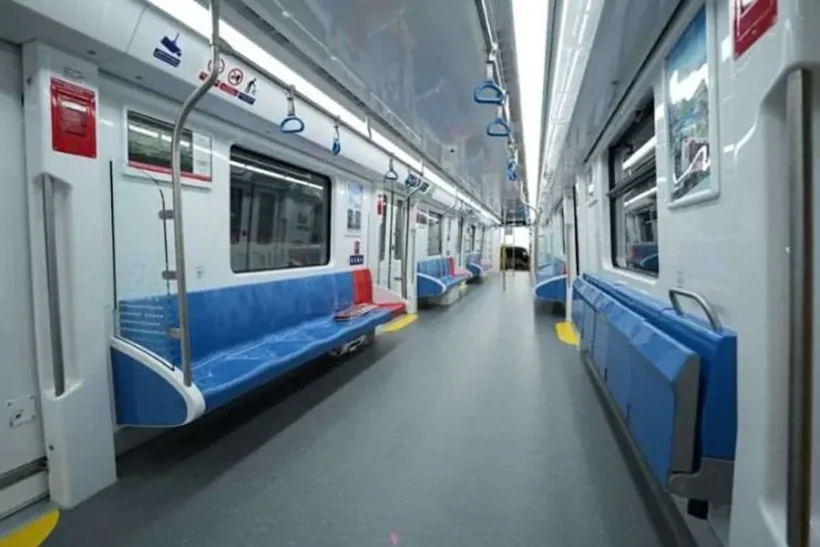
The Tbilisi Metro is set for its largest upgrade in decades. The first train has already been manufactured in China and is expected to arrive in the Georgian capital by the end of 2026. Under the project, the city will receive 111 new metro cars for 25 trains, Imedi reports.
First Train for Tbilisi Is Ready
Chinese corporation CRRC has completed production of the first four-car train for the Tbilisi Metro. It was presented on September 29 during a working visit by Kakha Kaladze. The mayor toured the plant, reviewed the production process and inspected the train, which is scheduled to be delivered to Georgia by the end of 2026.
Kaladze described the purchase as a historic event for the city. Tbilisi has not acquired new metro cars for 34 years. The mayor noted that the metro carries hundreds of thousands of people every day and remains a key part of the capital’s transport system. The arrival of modern trains is expected to make journeys more comfortable and safer.
CRRC Vice President Li Dingnan called the presentation of the first train for Tbilisi an important milestone in the project. Once the trains enter service, the company expects them to increase the capacity of the transport network and improve passenger service. CRRC also expects further cooperation with Georgia.
Tbilisi to Receive 25 Trains
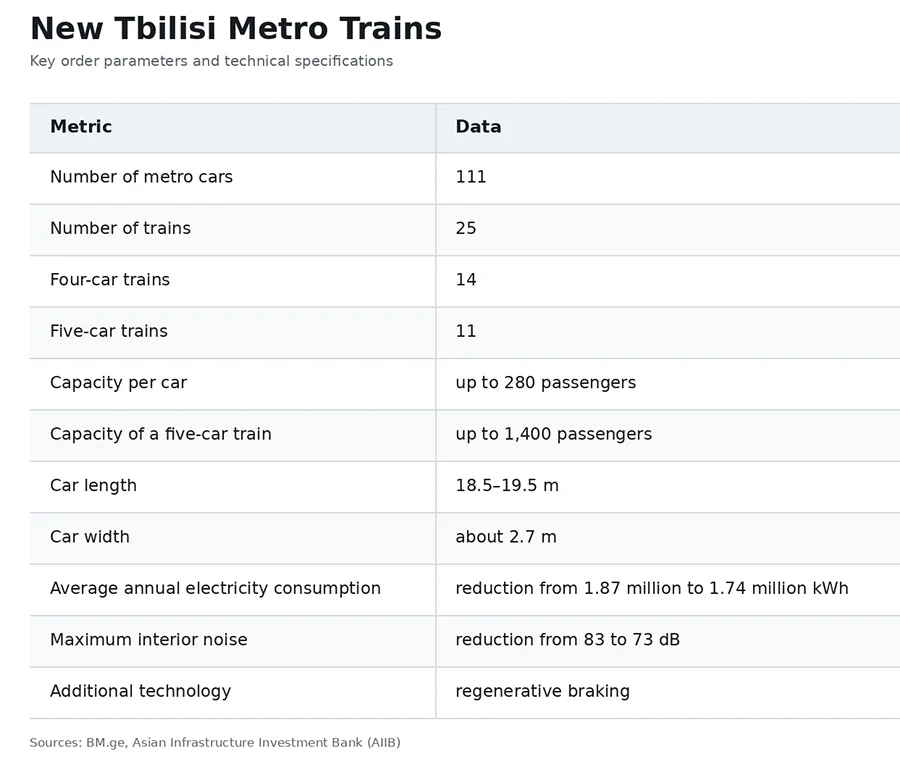
Tbilisi is purchasing 111 metro cars for 25 trains. Fourteen will have four cars, while another 11 will have five. The latter will operate on the Akhmeteli Theatre–Varketili line, where the additional capacity will allow more passengers to be carried. Each train will accommodate up to 1,400 people. A single car will be between 18.5 and 19.5 metres long and around 2.7 metres wide, with a maximum capacity of 280 passengers. Walk-through connections between the cars will allow passengers to move freely throughout the train while it is in motion.
Average annual electricity consumption is expected to decline from 1.87 million to 1.74 million kWh. Further savings for the Tbilisi Metro will come from a regenerative braking system that returns some of the power generated during braking to the network. The project also sets requirements for acoustic comfort. The maximum noise level inside the cars is expected to fall from 83 to 73 dB. Both noise and electricity consumption are among the project’s target indicators established by the Asian Infrastructure Investment Bank.
Georgia-China Contract Worth €149.4 Million
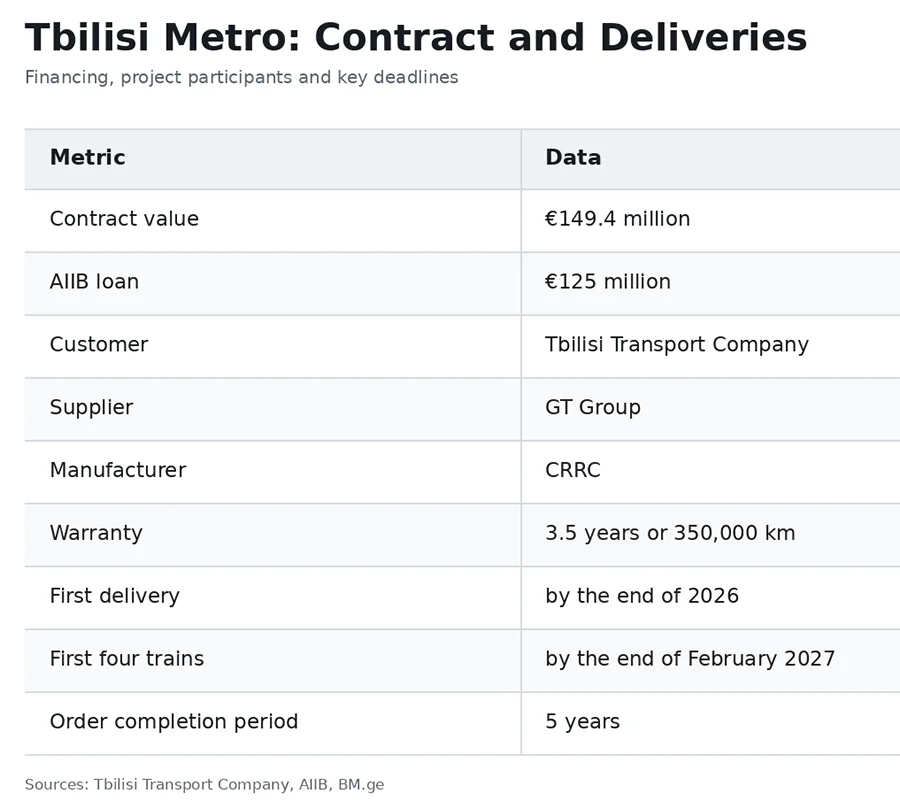
The Georgia-China contract is worth €149.4 million. The international tender was won by Georgian company GT Group, which acts as the supplier and is responsible for fulfilling the order for Tbilisi Transport Company. The trains themselves are manufactured by China’s CRRC. They are covered by a warranty of 3.5 years or 350,000 km.
Most of the cost is financed through a loan from the Asian Infrastructure Investment Bank. In December 2024, AIIB approved €125 million for Georgia to modernize the capital’s metro system. In addition to the trains, the procurement includes a driver-cab simulator and a package of spare parts. The program also provides training for personnel who will work with the new equipment. Drivers and maintenance specialists will be trained in two stages: first at the manufacturer’s plant and then in Tbilisi.
The project initially envisaged 97 cars: four cars in each of 13 trains and five in another nine. Following the tender, the order was increased to 111 units. The first deliveries are expected in 2026. The completed train is due to arrive in Tbilisi by the end of the year. GT Group previously said that four trains were expected to be delivered by the end of February 2027, while the entire order is scheduled to be completed over five years.
Tbilisi Metro Upgrade: Outlook
The purchase of new trains is part of a broader modernization program for the Tbilisi Metro. The AIIB project includes preparation of a feasibility study and preliminary documentation for the reconstruction of two depots. Another area concerns tunnel infrastructure, while a cybersecurity assessment of the system is also planned.
The current financing does not cover the reconstruction work itself. At this stage, the focus is on studies and design work that will determine the scope of future construction and the investment required.
Analysts at International Investment note that the metro modernization has long-term significance for Tbilisi. The ability to carry more passengers and improve the reliability of public transport is important for residents as well as for the growing number of tourists visiting the Georgian capital. Better connections between districts improve access to hotels, shopping and business centers, restaurants and attractions. For businesses, transport development can make different parts of the city more attractive, support commercial activity and create additional opportunities for investment in real estate, hospitality and services.