







 Covivio Hotels Revenue Grows 4.7% as European Markets Split
 Lithuanian Apartment Prices Accelerate Across Major Cities
 Georgia's Tourism Revenue Hits Record High
 Norway's Sovereign Fund Commits €1.5bn to European Warehouses
 Market Rout of October 2026: Can Branded Hotels Protect Capital?
 Residential Property Prices in Tbilisi Rise by 5.9% Year-on-Year
RP.pl
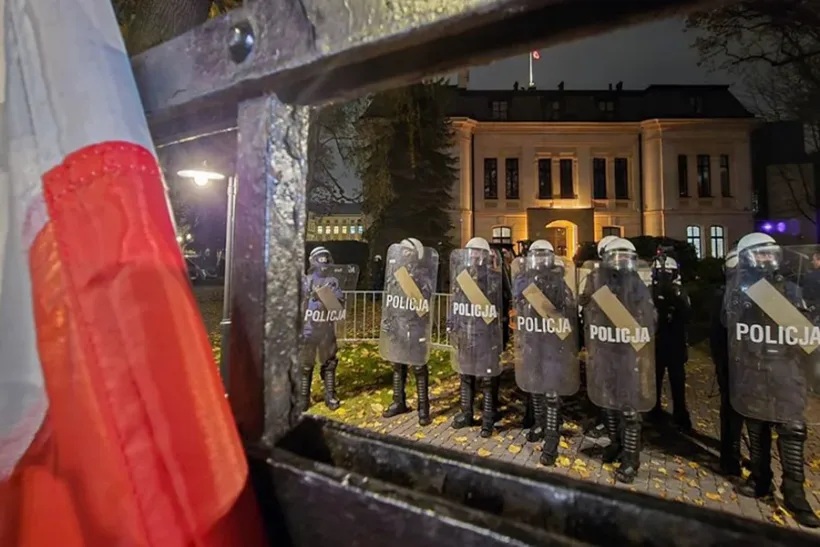
Poland has been plunged into a political crisis over an attempt to replace the leadership of the Constitutional Tribunal. The opposition has alleged a coup, the president has returned to the country urgently, and Prime Minister Donald Tusk's government insists that its actions are lawful.
How the conflict began on October 30
On the evening of October 30, at around 6 p.m. local time, a notice appeared on the website of Poland's Constitutional Tribunal announcing the temporary suspension of its president, Bogdan Święczkowski, and vice president, Bartłomiej Sochański. Their powers were suspended for one month. Judge Anna Korwin-Piotrowska announced that she would lead the institution during this period because she had the longest tenure on the bench.
Shortly afterward, a conflicting account was posted on the Tribunal's official X account. The message claimed that the institution's website had been unlawfully taken over, that Święczkowski and Sochański remained in office, and that Korwin-Piotrowska had no authority to lead the court. Those involved in the leadership change were accused of staging a coup. Supporters of the opposition Law and Justice party (PiS) and other right-wing movements gathered outside Poland's Constitutional Tribunal. Clashes broke out between demonstrators and law enforcement officers. Dangerous objects were thrown at the officers. Three protesters entered the fenced-off grounds and were detained.
Warsaw police denied reports that its officers had entered the building or clashed with security guards. According to the force, personnel remained outside after requests from the prosecutor general and a judge who had warned of a threat to public safety. The government describes the measures as necessary to maintain order, while the opposition regards them as interference in the court's work.
Poland's president returned home urgently
Polish President Karol Nawrocki turned his plane around while travelling to Senegal after learning of the attempt to suspend the Constitutional Tribunal's leadership. Back in Warsaw, he met overnight with Bogdan Święczkowski and First President of the Supreme Court Zbigniew Kapiński before visiting the institution's building.
A statement by President Nawrocki was published on the morning of October 31. He described the attempt to replace the Tribunal's leadership as a forceful takeover of a state institution and a violation of the constitutional order. He called for police to withdraw from the premises and announced urgent consultations with parliamentary parties.
Polish Prime Minister Donald Tusk said restoring the rule of law was the government's duty, even if the process proved difficult and painful. His cabinet is seeking to revise judicial reforms introduced under PiS.
Law and Justice leader Jarosław Kaczyński accused Tusk's government of seizing control of the Constitutional Tribunal and warned that Poland risked becoming a “police state.” The opposition views the attempt to suspend the court's leadership as unlawful interference in its work.
The roots of the Constitutional Tribunal conflict
The dispute surrounding Poland's Constitutional Tribunal began in 2015, when Law and Justice came to power and changed the rules for appointing judges. The reforms sparked controversy at home and criticism from European institutions. After Tusk's government took office in December 2023, the new coalition began revisiting those decisions. Some members of the Tribunal had been appointed while PiS was in power.
The dispute escalated again in spring 2026. In March, the Sejm elected six new Constitutional Tribunal judges. On April 1, the president administered the oath of office to only two of them. The other four took their oaths at the Polish parliament on April 9, but Nawrocki refused to recognize that procedure. The Tribunal's leadership prevented them from taking up their duties.
On May 6, the European Court of Human Rights ordered interim measures in response to an application by the four elected judges who had been unable to take up their posts. This was a procedural decision, not a final judgment on the Tribunal's composition. The disagreement over the judges' status remained unresolved.
On October 30, Polish Justice Minister and Prosecutor General Waldemar Żurek submitted five requests to lift judicial immunity to the Constitutional Tribunal: four concerning Bogdan Święczkowski and one concerning Bartłomiej Sochański. Such requests open the way for consideration of possible criminal proceedings against the judges but do not establish their guilt.
Korwin-Piotrowska justified the one-month suspension of the Constitutional Tribunal's leadership by citing Article 130 of Polish legislation, which permits judges to be temporarily suspended in exceptional circumstances. However, whether that provision applies to the institution's leadership, and whether Korwin-Piotrowska has the authority to make such a decision, remain disputed. Święczkowski and Sochański do not recognize their suspension.
What happens next
Anna Korwin-Piotrowska has convened a meeting of judges of Poland's Constitutional Tribunal for November 3. The agenda includes discussion of the institution's 2027 budget. However, Bogdan Święczkowski and Bartłomiej Sochański do not recognize her authority. The question of who has the right to lead the Tribunal and make decisions on its behalf remains unresolved.
International Investment analysts note that the continuing conflict creates a risk of legal uncertainty. If the authority of the Tribunal's leadership and judges remains contested, its rulings could also be challenged. This could complicate the legal assessment of long-term investment projects.
FAQ
Why are the events in Poland being described as an attempted coup?
That is how representatives of PiS and the Tribunal's former leadership characterize the events. They view the change in leadership as an unlawful seizure of authority. A coup has not been established as a fact.
What triggered the dispute over judicial appointments?
In March 2026, parliament elected six judges. The president administered the oath of office to only two, while the opposing sides disagree over the status of the remaining four.
Why did Poland's president cut short his trip to Senegal?
Karol Nawrocki turned his plane around before reaching Senegal after learning of events at the Constitutional Tribunal. On returning to Poland, he condemned the attempt to replace the court's leadership and convened political consultations.
What is scheduled for November 3?
Anna Korwin-Piotrowska announced a meeting of Constitutional Tribunal judges. The institution's previous leadership disputes the legitimacy of her authority and decisions.
What is known about a possible move to remove President Nawrocki from office?
As of the morning of October 31, verified media reports and official statements did not confirm any plan by Donald Tusk to remove the president from office.