







 The World's Best Collectible Real Estate Projects: RE:VALUE Awards Winners
 Foreign Capital Returns to European Office Property
 Germans Seek Temporary Asylum in Russia
 Alta Banka Collapse in Serbia: What Happens to Russian Depositors' Money
 Covivio Hotels Revenue Grows 4.7% as European Markets Split
 Lithuanian Apartment Prices Accelerate Across Major Cities
Madrid–Barcelona High-Speed Rail Line Could Close for Two Years
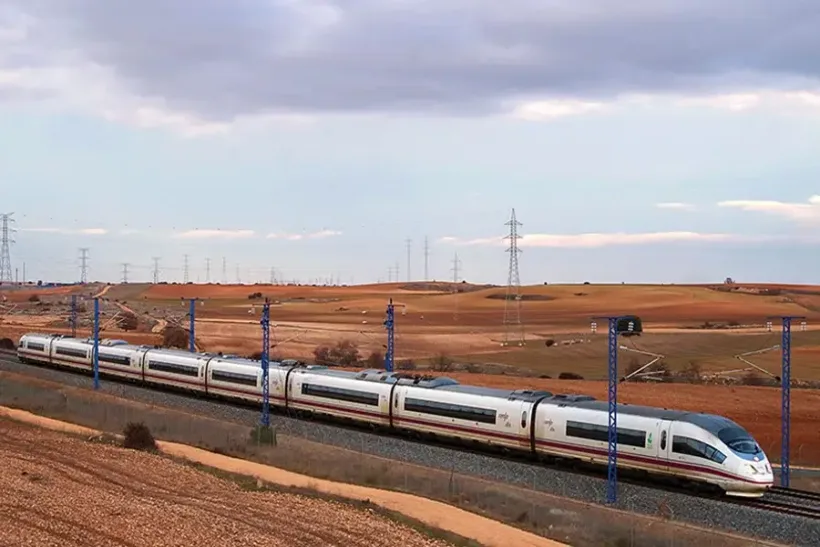
Wikimedia
Spain is considering a radical plan to modernize the country's busiest high-speed railway, the Madrid–Barcelona line. A complete suspension of services could cut the reconstruction period from five years to one or two, but would affect around 40,000 passengers a day. The proposal by Transport Minister Óscar Puente has already raised concerns among regional authorities, Cadena SER reports.
What Is Known About the Possible Closure
The Madrid–Barcelona high-speed railway connects Spain's two largest cities via Zaragoza and Lleida. The route is approximately 620 km long, and direct services began in 2008. Three operators currently serve the corridor: Renfe, Iryo and Ouigo. Trains reach speeds of up to 300 km/h.
In 2025, the line carried 14.4 million passengers, an average of around 39,500 per day. According to Spanish regulator CNMC, this was 1.7% below the 2024 figure. Nevertheless, it remains the country's busiest rail corridor.
On 30 October, Spanish Transport Minister Óscar Puente said the government was considering a complete suspension of services during reconstruction. He estimated that this approach could reduce the project timeline to one or two years instead of five. No final decision has been made, and possible closure dates have not been announced.
His comments came at a press conference following an accident in Urda, Toledo province, on the Madrid–Seville route. Puente emphasized that the proposed closure was primarily intended to improve service reliability and punctuality. In Spain, railway repairs are usually carried out at night or during brief service restrictions, allowing trains to continue operating. This extends the duration of the work. In Germany, some lines close completely for comprehensive upgrades. The ministry is considering adopting a similar approach.
What Modernization Work Is Planned
Reconstruction is expected to begin in 2027 on the Madrid–Calatayud section, which is more than 150 km long. The minister described its condition as particularly problematic. Train drivers had reported track defects as early as summer 2025, prompting speed restrictions on certain stretches.
Preparations are already underway. In June 2026, state-owned infrastructure operator Adif awarded a €112.76 million contract to purchase aerodynamic sleepers for the Mejorada del Campo–Calatayud section. Their design reduces the effect of airflow on the ballast beneath the tracks. The program also includes replacing rail fastenings and reinforcing the Benamira and Río Blanco viaducts.
The modernization aims to raise the maximum operating speed to 350 km/h and shorten journey times. Alongside the new sleepers, further track modifications and suitable rolling stock will be required. No date has been set for introducing the higher speed.
Impact on Regions, Tourism and Business
The possible closure has drawn objections from the authorities in Aragon. Regional president Jorge Azcón demanded that the Transport Ministry provide documents justifying such a decision. Plans to renovate the Calatayud–Madrid section have caused particular concern. Restrictions could disrupt connections between Zaragoza, other cities in the region and the Spanish capital.
Engineering representatives in Aragon and Catalonia have proposed considering repair options that would preserve some train services. A prolonged shutdown could adversely affect regional economies and transport accessibility. Business association Pimec has voiced similar concerns.
According to CNMC, trains accounted for 83.1% of combined rail and air passenger journeys between Madrid and Barcelona in 2025. The average train ticket cost €52.89, an increase of 15.2% over the year.
If the line closes completely, travelers will need alternative routes by plane, bus or car. Rail operators will have to revise timetables and establish ticket exchange or refund arrangements. Organizing temporary transport services will be one of the main challenges for the authorities.
International Investment analysts note that a prolonged suspension of rail services could affect tourism demand, hotel occupancy and revenue from commercial properties along the corridor. Investors should consider these risks when assessing projects, particularly those targeting short-stay visitors. In the longer term, infrastructure upgrades and higher train speeds could strengthen the region's investment appeal.
Frequently Asked Questions
When could the Madrid–Barcelona railway close?
No date has been announced. As of 2 November 2026, no decision has been made to suspend services. Modernization of certain sections is scheduled to begin in 2027.
How long could high-speed train services be suspended?
A full closure could allow repairs to be completed in one to two years. Keeping trains running during construction could extend the work to around five years.
Which sections are due to be upgraded first?
Reconstruction is expected to begin on the Madrid–Calatayud section. Adif's initial contracts also cover work on the Mejorada del Campo–Calatayud stretch.
What will happen to tickets already purchased?
Rules for cancellations, exchanges and refunds during any future closure have not been announced. Passengers should follow updates from their train operator.
What travel alternatives will be available?
If direct high-speed services are fully suspended, travelers could consider flights, buses or car journeys. No detailed replacement transport plan has been presented.
How could the closure affect tourism?
Disruptions could make travel between cities more difficult, increase costs and affect hotel demand along the route. The scale of the impact will depend on the construction schedule and alternative transport arrangements.