







 Israel's Real Estate Market: Falling Prices and Declining Sales
 Paraguay New-Build Home Prices Rise by 25%
 Vienna Tightens Rules for Short-Term Apartment Rentals
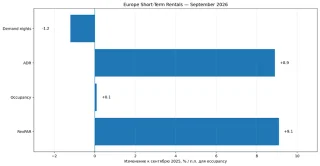 60% of EU Foreign-Affiliate Turnover Comes From Outside EU
 Israel Expels Russians and Ukrainians
 Russia’s GDP Growth Slows to 1%: Risks of Stagnation
Germany Proposes Expanding Eligibility for Residence Permits

Unsplash
Proposals in Germany would make it easier for refugees to obtain residence permits and secure a longer-term right to stay. The measures could help people retain legal status when temporary protection ends, even without formally recognised professional qualifications. The changes may affect hundreds of thousands of foreign nationals, particularly Ukrainians and Syrians. For now, the proposals remain under discussion.
Who Could Qualify for a German Residence Permit
On November 10, the parliamentary group of Germany’s Social Democratic Party (SPD) presented proposals to amend immigration legislation. Lawmakers want to broaden the grounds for obtaining residence permits in Germany so that refugees can retain their right to stay after temporary protection ends. The proposed provisions would take account of employment, education, family circumstances and other evidence of integration.
Employed applicants would need to show that they have a legal job, pay social insurance contributions and earn enough to cover most of their living costs. Formal recognition of professional qualifications would not be mandatory. Under current rules, the lack of a recognised diploma can make it difficult to switch to an employment-based residence permit even with a permanent job.
A separate pathway is proposed for school pupils, university students and vocational trainees with humanitarian status. Authorities could consider their prospects of completing education and finding work. Receiving social benefits during studies would not prevent them from applying for a permit. Lawmakers also want to take account of caring for young children or ill relatives when family responsibilities limit the ability to work.
The amendments would affect Sections 25a and 25b of Germany’s Residence Act. These provisions currently allow some people whose deportation has been suspended to obtain a residence permit after successful integration. The SPD wants to extend this route to holders of humanitarian permits under Sections 24 and 25. Applicants could then change the legal basis of their stay without first losing their existing status.
Employment Does Not Guarantee a German Residence Permit
Hundreds of thousands of refugees could lose their right to stay in Germany even if they are legally employed and financially independent. Humanitarian protection is temporary and may be withdrawn when circumstances change. An employment contract does not by itself secure another permit: formally recognised professional qualifications are often required. The SPD wants to remove this obstacle by changing Germany’s residence permit rules.
The issue is particularly acute for people from Syria. Around 950,000 Syrians live in Germany, and more than half hold humanitarian residence permits. Political change in their home country has prompted debate about possible returns. Germany’s Federal Office for Migration and Refugees is already reviewing the grounds on which protection was granted. The employment rate among Syrians is about 48%, rising to 60% among those who arrived in 2015. Losing protection could also mean losing the right to remain.
Temporary protection for Ukrainians has been extended until March 4, 2028, but their status beyond that date remains uncertain. Nearly 40% of Ukrainian nationals have jobs, rising to about half among those who arrived in 2022. The end of the programme could create difficulties even for people with stable incomes. Unless protection is extended again, they would need to qualify for a German residence permit on another legal basis.
A large-scale departure of foreign nationals would also affect German businesses. Healthcare, construction, logistics and other sectors already face staff shortages. Social Democrats warn that losing experienced employees could deepen the problem. Germany continues to recruit specialists from abroad, yet risks losing people who are already established in the local labour market and pay taxes.
What Is Being Proposed for Ukrainians in Germany
A separate route has been developed in Germany to help Ukrainian nationals move from temporary protection to employment-based residence permits. By the end of 2025, fewer than 19,000 of approximately one million people granted this status had changed the legal basis of their stay — about 2%. One barrier is the requirement to have professional qualifications formally recognised, even with steady employment.
On November 12, the Expert Council on Integration and Migration (SVR) proposed changing the rules for employment-based residence permits in Germany. It wants Ukraine added to the list of countries whose citizens have easier access to the German labour market. Under this approach, diploma recognition would not be required, but applicants would still need a contract with an employer and would have to meet the other conditions. The proposal has not become law.
Ukrainians can remain in Germany under temporary protection until March 4, 2028. The SVR calls for a clear transition framework before the programme expires to avoid a surge of applications to immigration offices. Many displaced people have found jobs, learned German and enrolled their children in local schools, but these steps do not guarantee a new residence permit.
Prospects for Immigration to Germany
Germany has steadily tightened its immigration policy in recent years. Chancellor Friedrich Merz’s government, formed in 2025, strengthened border controls, pursued an increase in deportations and suspended family reunification for people with subsidiary protection. The SPD proposal to ease access to residence permits for people with humanitarian status contrasts with this policy.
Analysts at International Investment note that the initiative highlights a conflict between efforts to curb immigration and the needs of Germany’s economy. Employers face labour shortages, and the departure of foreign nationals already in work could make them worse. New residence permit pathways could help retain these employees without broadly easing entry and asylum rules. However, any such changes would need the support of the Christian Democratic Union (CDU) and Christian Social Union (CSU), which favour stricter immigration laws. The conservatives’ position will show whether the governing coalition is prepared to make an exception to its current approach in the interests of business.
Frequently Asked Questions About Residence Permits in Germany
Who could benefit from the proposed residence permit rules?
Foreign nationals with humanitarian status who work, study or care for relatives. The SPD proposal has not become law.
Does an employment contract guarantee the right to stay in Germany?
No. If humanitarian protection ends, a person must have another legal basis for residence.
Can I obtain a work residence permit without having my diploma recognised?
Some routes already allow this. Further changes have been proposed, including for Ukrainian nationals, but they have not been approved.
How long does temporary protection for Ukrainians last in Germany?
It has been extended until March 4, 2028. It does not automatically lead to permanent residence.