







 How Ukraine’s New-Build Housing Market Has Changed Over Four Years
 European Prime Rents Rise as Property Yields Turn Higher
 The Most Expensive Airlines in Europe in 2026
 Housing Prices in Italy Reach a Two-Year High
 Travellers Increasingly Choose Cooler Scandinavia
 Serbia Property Sales Decline as Transaction Value Rises
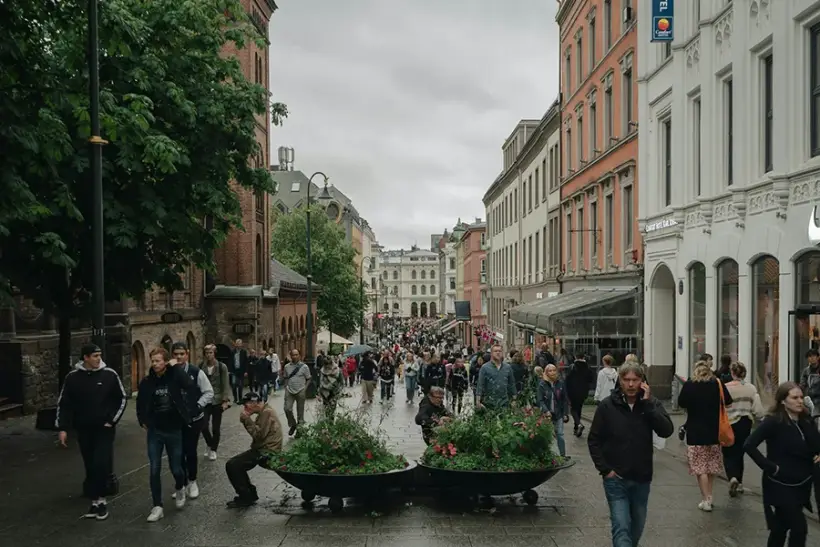
Norway’s immigration system is facing growing criticism over long waits for residence permits, family immigration, permanent residence and appeals. The Local describes the problem through the experiences of foreign residents who say months or years of waiting for the Norwegian Directorate of Immigration, known as UDI, have left them unable to control work, family life and long-term plans.
UDI says on its official website that published waiting times are only a guide, not a guarantee. The agency cannot say exactly when an applicant will receive a decision, and waiting times may change while a case is pending.
Family immigration carries the heaviest cost
The most severe consequences appear in family immigration cases, where spouses, partners, children and parents can be kept apart while a file remains unresolved. UDI says that between March 1 and May 1, 2026, it was processing family immigration applications submitted up to November 1, 2025; once a case is assigned to an officer, the time to decision depends on whether further checks are needed.
For applicants, that means being moved into processing does not necessarily mean a quick decision. Additional documentation, identity checks, income verification or assessment of family ties may still delay the outcome.
Permanent residence applicants face uncertainty
The backlog also affects people already living in Norway who are trying to secure long-term status. Reports on UDI waiting times indicate that thousands of applicants are waiting for permanent residence permits, creating uncertainty around employment, travel, mortgages and future settlement.
Permanent residence is more than an immigration document. It affects stability, labour mobility, family planning and, in many cases, the path toward citizenship.
Police appointments add another layer
Before a case reaches UDI, applicants often need appointments with the police to submit documents, register or provide biometric data. Oslo police said expected waiting time for appointments in the district could be up to 16 weeks, while the Service Centre for Foreign Workers in Oslo had a waiting time of up to three weeks for skilled worker immigration.
This creates a two-step delay: first the applicant waits for a police or service-centre appointment, then for UDI processing. For employers, the system complicates international recruitment; for families, it delays lawful settlement.
Appeals extend the waiting game
If an application is rejected, the case may go to the Immigration Appeals Board, known as UNE. The board says it processes eight out of ten cases within the published number of months, but timing depends on case type and starts when UNE receives the file.
For family immigration appeals, UNE lists a waiting time of about 15 months. That means a rejected applicant can face uncertainty long after the first decision.
Policy pressure is rising
The delays come as Norway tightens parts of its migration policy. The government says it is working to reduce the number of asylum seekers without protection needs, speed up settlement for those granted residence and accelerate returns for people without legal stay.
That reflects a wider European shift: governments need foreign workers but are also trying to limit irregular migration. In Norway, the issue is especially sensitive because of high living costs, pressure on municipalities and political debate over integration.
The human cost is becoming harder to ignore
For applicants, waiting is not passive. It can mean being unable to change jobs, sign a long-term rental contract, plan children, visit relatives abroad or build a career. Some people become dependent on an employer or spouse because their legal status has not yet been confirmed.
The central issue is that immigration processing is no longer just an administrative step. It becomes a source of social vulnerability. The longer the wait, the greater the risk of lost income, family separation and psychological strain.
As reported by International Investment experts, Norway’s immigration system faces not only a speed problem but a predictability problem. For investors, employers and families, the main risk is that even lawful relocation can become economically and emotionally costly when the state cannot provide a clear decision horizon. Norway will need to balance migration control with its attractiveness to skilled workers, family migrants and long-term residents.
FAQ
Why do immigration applications take so long in Norway?
Reasons include UDI workload, document checks, police appointment queues, complex family cases, appeals and tighter migration control.
What is UDI?
UDI is the Norwegian Directorate of Immigration, the agency that processes many applications for visas, residence, asylum, family immigration and permanent residence.
Can applicants know the exact decision date?
No. UDI publishes indicative waiting times, but they are not guarantees and may change.
Why are delays especially serious for families?
Because spouses, children and parents may remain separated or legally uncertain while the case is pending.