







 How Ukraine’s New-Build Housing Market Has Changed Over Four Years
 European Prime Rents Rise as Property Yields Turn Higher
 The Most Expensive Airlines in Europe in 2026
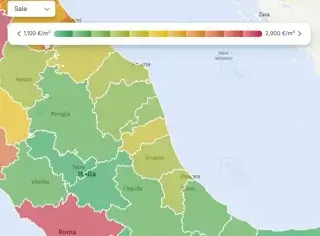 Housing Prices in Italy Reach a Two-Year High
 Travellers Increasingly Choose Cooler Scandinavia
 Serbia Property Sales Decline as Transaction Value Rises
Europe’s Housing Shortage Keeps Prices Rising

European home prices are expected to continue outpacing household incomes as lower borrowing costs revive demand while residential construction remains insufficient. The imbalance is particularly visible in Portugal, Spain and Ireland, where population growth, migration and new household formation are running ahead of housing delivery.
European house prices are set to keep rising
Average home prices across Europe’s major residential markets are expected to increase by about 4% in 2026 and by more than 3% in 2027. S&P Global Ratings expects lower real mortgage rates, meaning borrowing costs adjusted for inflation, to support valuations over the longer term. Higher unemployment and weaker consumer confidence in some economies will restrain the recovery.
The market has already passed through much of the correction caused by the rapid increase in interest rates during 2022 and 2023. Transactions declined and prices fell or stagnated in Germany, France, Sweden, Finland and several other countries, but the downturn did not produce widespread forced selling.
Many homeowners who borrowed before rates increased retained long-term fixed-rate mortgages. They therefore had little incentive to sell. Developers, meanwhile, postponed projects as financing, materials and labour became more expensive.
The result is a market in which purchasing demand can recover much faster than supply. Even a moderate improvement in mortgage conditions brings buyers back, while the number of completed properties responds with a delay measured in years.
Portugal and Spain are outpacing Western Europe
Actual price growth is already running above the regional forecast. In the first quarter of 2026, European Union home prices increased by 5.1% from a year earlier. Prices in the euro area rose by 4.7%. Compared with the final quarter of 2025, the increases were 1.2% and 1%, respectively.
Eurostat recorded an annual decline in only one member state: prices in Finland fell by 2%. The largest increases were reported in Portugal at 17.8%, Bulgaria at 14.8% and Slovakia at 14.4%. Spain gained 12.8%, Croatia 14.3%, Lithuania 11.9%, Latvia 10.9% and Czechia 10%.
Price growth was much weaker in several large western European economies. Germany recorded an increase of 1.4%, France 0.1% and Belgium 2%. The Netherlands remained stronger at 5.2%, while Ireland gained 6.8%.
The divergence reflects differences in economic growth, migration, household income, land availability and residential construction. In southern Europe, employment growth, international demand, tourism and expanding urban populations are adding to purchasing pressure.
Portugal, Spain and Ireland face particularly deep structural shortages. Demand is rising faster than the number of completed homes, while planning delays, labour shortages and elevated development costs prevent supply from catching up quickly.
First-quarter annual figures and full-year forecasts are not directly comparable. Quarterly data measure the change from early 2025 and may include base effects, while annual forecasts assume that momentum will moderate later in the year. Both measures nevertheless point to persistent upward pressure.
Construction growth is not producing enough buildings
The latest construction figures illustrate the source of the imbalance. Total construction production increased by 1.8% in the EU and by 1.2% in the euro area in May 2026 compared with a year earlier. Much of the increase came from civil engineering and specialised construction activities.
Construction of buildings declined by 5.2% in the EU and by 6.6% in the euro area. On a monthly basis, the segment contracted by 0.4% and 0.7%, respectively. Spain, despite its double-digit house-price growth, reported a 10% annual fall in total construction output.
The building category is broader than residential property and includes other types of structures. Even so, the data show that the improvement in the headline construction index has not translated into a sustained recovery in the segment most relevant to housing supply.
Developers are dealing with expensive finance, labour shortages, elevated material prices and lengthy approval procedures. A limited supply of serviced land adds further costs. Projects may remain commercially unviable even when demand is strong, or they may require selling prices that a large share of local households cannot afford.
Several years can pass between the approval of a project and the completion of a home. Financing must be secured, infrastructure connected, contractors appointed and construction finished. Supply therefore reacts far more slowly than mortgage rates, household income and purchasing demand.
Mortgage borrowing remains expensive
Previous rate reductions improved financing conditions from their peak, but euro-area mortgages have not returned to the exceptionally low costs seen before 2022.
The composite cost of new household borrowing for house purchases stood at 3.45% in May 2026. The European Central Bank reported that loans with a floating rate or an initial fixation of up to one year averaged 3.60%. Rates reached 3.47% for fixation periods of one to five years, 3.65% for five to ten years and 3.32% for more than ten years.
A modest decline in interest rates does not guarantee better affordability. Buyers must also consider the purchase price, the required deposit and the total amount borrowed. If a home increases in value by 5% to 10% a year, a reduction of a few tenths of a percentage point in the mortgage rate may not offset the higher principal.
Cheaper credit can also accelerate price growth. A lower interest rate increases the amount households are able to borrow. When supply is constrained, this additional purchasing power competes for the same properties and is partly transferred to sellers through higher prices.
Existing owners and new buyers are in very different positions. Borrowers who previously secured low fixed rates can continue servicing their loans on favourable terms. First-time buyers face both higher property prices and more expensive borrowing.
This reduces forced sales and supports valuations, but it also limits household mobility. Owners are reluctant to give up an inexpensive mortgage for a new, more costly loan, while younger households remain in rented accommodation for longer.
The shortage is adding pressure to rental markets
Limited supply also affects tenants, even where rental growth remains below house-price inflation. Potential buyers who cannot obtain a mortgage or accumulate a deposit remain in the rental sector for longer.
EU rents increased by 3% year on year in the first quarter of 2026 and by 0.7% from the previous quarter. Purchase prices rose faster, but rents usually adjust more gradually because contracts are renewed at different times and several countries restrict annual increases.
The pressure is strongest in capitals, university cities and tourism-dependent regions. Permanent residents compete for accommodation with students, seasonal employees, incoming professionals and short-term visitors.
Higher purchase prices also increase the costs faced by landlords who use mortgage financing. Some of these expenses can be transferred to tenants. Investors may also withdraw from the market when rental yields become too low relative to property prices and financing costs.
Europe needs about 650,000 additional homes a year
The scale of the shortage is substantially larger than current construction volumes. Europe needs to build more than 2 million homes each year to meet demand. Current output is about 1.6 million, leaving an annual gap of roughly 650,000 properties. Delivering the additional supply would require an estimated €153 billion of investment every year.
Social housing represents only 6% to 7% of the EU’s residential stock. About 20% of homes are unoccupied, while short-term rental supply increased by 93% between 2018 and 2024. The European Commission’s figures show that the crisis involves physical shortages, inefficient use of existing stock and a mismatch between the location of homes and employment.
Vacant properties are not necessarily located where people need to live. Many are in rural areas or small towns, while others require extensive renovation. They cannot be transferred to major urban markets, and restoring them may not be commercially viable.
The European housing programme includes faster digital permitting, lower administrative costs, workforce training and greater use of industrial construction methods. Authorities also plan to address short-term rentals in areas experiencing severe housing stress.
More than €43 billion has been mobilised for housing under the EU’s 2021–2027 budget. An additional €10 billion is expected in 2026 and 2027, while partner financial institutions are due to mobilise as much as €375 billion by 2029.
The funding covers new construction, renovation, energy efficiency and affordable rental housing. Its impact will depend largely on implementation by national, regional and municipal authorities.
Buyer subsidies can raise prices
Governments are trying to improve affordability through tax incentives, subsidised mortgages, guarantees and deposit assistance. These programmes can help selected households, but they do not resolve the shortage.
When the number of available properties remains unchanged, subsidies increase buyers’ purchasing power and may be absorbed into sale prices. The effect is strongest in local markets with limited land and low levels of new construction.
A more durable response requires faster planning approvals, greater density, better public transport, social rental construction and serviced development land.
The type of housing delivered is equally important. A market can simultaneously have a shortage of small urban apartments and an oversupply of large homes in rural or suburban locations. An increase in the national housing stock does not necessarily solve shortages near jobs and public services.
Investment prospects are becoming less straightforward
Rising prices support the value of assets already owned, but they do not guarantee strong future returns. In Portugal, Spain and other fast-growing markets, the gap between purchase prices, household incomes and potential rental revenue is widening.
Investors must consider borrowing costs, taxation, maintenance, vacancy periods and restrictions on landlords. The faster prices rise relative to local incomes, the greater the probability of political intervention.
Governments may limit short-term rentals, tighten rent-indexation rules, tax vacant homes or expand tenant protections. Such measures can reduce net returns even when nominal property values continue to increase.
Weak construction therefore has two conflicting effects. It supports prices by restricting supply, but it also increases social tension and regulatory risk. Long-term investors need to consider whether a city can expand its housing stock without placing excessive pressure on transport and public infrastructure.
As International Investment experts note, forecast price appreciation does not mean that Europe’s housing market has become safer or more affordable. Scarcity supports owners of existing properties but increases regulatory exposure and reduces the prospective yield on new investments. Lower mortgage rates without faster construction may attract more buyers, but much of the benefit is likely to pass to sellers through higher prices. Lasting affordability relief requires sustained housing delivery in cities and regions where demand is concentrated.