







 China Nears a Decision on Fresh Stimulus
 Fines for Illegal Rentals in Spain Reach €800,000
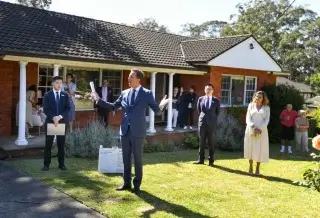 Australia’s Spring Auctions Rise but Remain Well Below 2025
 Number of Foreigners Holding Turkish Residence Permits Exceeds 1.27 Million
 Demand from Russian Tourists for Holidays in Georgia Rises by 20–25%
 Montenegro Property Buying Costs in 2026
The Austrian Real Estate Market: Price Dynamics and Outlook for 2026
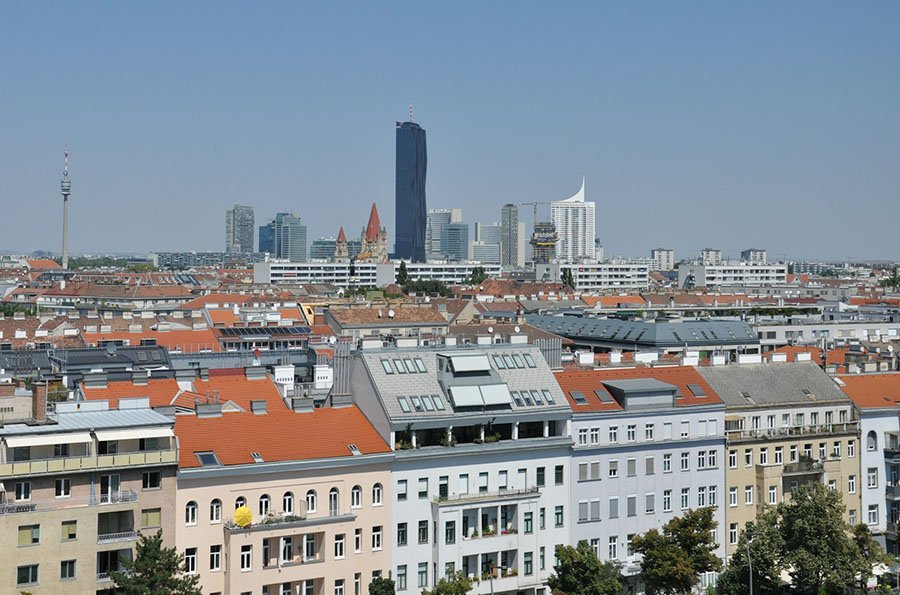
Austria’s residential real estate market is gradually emerging from the correction phase and showing the first signs of recovery, according to a Raiffeisenzeitung review citing data from Raiffeisen Research. Sales and mortgage lending have started to increase, and price dynamics have returned to positive territory, while uncertainty remains in the market and a return to the pre-crisis boom is not expected.
Market development: prices and lending
From the third quarter of 2022 to the end of 2024, nominal housing prices declined by an average of around 5%. After a volatile first half of 2025, prices rose by 1.3% in the third quarter compared with April–June. Over the past three years, the market has developed unevenly. Construction costs increased, pushing up prices for newly built properties. In Vienna, the price of new apartments rose by 1.7% over this period, while in the other federal states it increased by around 8%. At the same time, the secondary market recorded declines: by 8.9% in Vienna and by an average of 5.3% in other locations. Combined with wage growth of around 20% under collective agreements since 2023, this has significantly improved affordability in this segment.
At the same time, purchase financing remains more challenging than before the shift in monetary policy in 2022. Borrowing costs have risen substantially. While the average mortgage rate was about 1.8% in 2018, it stood at around 3.4% in 2025. According to Raiffeisen Research, the European Central Bank has completed its rate cuts after reaching the peak and is likely to take a prolonged pause, implying that current financing conditions will largely remain in place.
Higher rates have had a direct impact on household burdens. In 2018, servicing a mortgage required around 28% of net income, while in the third quarter of 2025 this figure reached 37%. In 2026, according to Raiffeisen’s forecast, price growth could accelerate to 2.5%.
Vorarlberg: no visible change
In some regions, the recovery is barely noticeable. One example is the federal state of Vorarlberg. Manfred Miglar, Deputy Chairman of the Management Board of Raiffeisen Landesbank Vorarlberg, notes that the market remains sluggish, new construction projects are implemented only selectively, and demand is subdued. At the same time, prices for new housing in the region remain at record highs, preventing any talk of a clear recovery. A stabilising factor may be the relatively steady level of interest rates over the year, although changes to housing subsidy schemes have increased uncertainty for many projects.
As a result, buyers are increasingly opting for compact apartments on the secondary market with low operating costs, paying more attention to layout and the number of rooms than to total floor area. In 2026, the Vorarlberg market is expected to remain in a phase of sideways price movement and to become a year of stabilisation rather than growth, according to Miglar.
Easing of strict rules and outlook
Gerhild Bensch-König, Managing Director of Raiffeisen WohnBau, believes that the housing market as a whole has passed the bottom of the cycle. Economic weakness, uncertainty and developer bankruptcies have undermined buyer confidence. Since August 2025, the situation has gradually begun to improve, supported by a relatively moderate level of interest rates and the abolition of the KIM-Verordnung requirements. This regulation (“Kreditinstitute-Immobilienfinanzierungsmaßnahmen-Verordnung”) required banks from 2022 to apply strict criteria when assessing applications:
minimum own capital of at least 20% of the property value;
maximum share of monthly payments of no more than 40% of income;
maximum loan term of up to 35 years.
The aim was to reduce the risk of household over-indebtedness and systemic financial stress. The rules were abolished in June 2025, expanding banks’ scope for individual client assessments and more flexible mortgage financing conditions.
Bensch-König stresses that 2026 will remain challenging and that a return to pre-crisis boom volumes should not be expected. Peter Mayr, Managing Director of Raiffeisen Immobilien Salzburg and representative of Raiffeisen Immobilien Österreich, explains that the desire to purchase owner-occupied housing remains strong, but financing continues to limit the number of transactions. He expects further market stabilisation.
Martina Hirsch, Managing Director of s REAL Immobilien, emphasised that the situation has improved noticeably in recent months, but Austria’s housing market remains highly differentiated. In 2026, differences between federal states will persist in terms of price levels as well as demand and supply dynamics — ranging from Vienna’s stable but heterogeneous market to faster purchase decisions in Vorarlberg and growing interest in certain regions of Carinthia and Styria.
Real estate investment in Austria
Investment apartments have become a separate segment with positive momentum. Marion Weinberger-Fritz, Managing Director of Raiffeisen Vorsorge Wohnung, noted that sales returned to pre-crisis levels in the second half of 2025. A decline in new construction volumes and lengthy bureaucratic procedures are leading to supply shortages, supporting rental growth and improving investment returns. Demand for rental housing is so strong that prospective tenants are effectively competing for available units.
Erwin Gröss, Managing Director of Strabag Real Estate in Austria, describes the current recovery as fragile and slow. He points to the return of interest from institutional investors, particularly in energy-efficient assets, but stresses that the market has entered a phase of normal interest rates with no prospect of significant further declines. Key structural challenges — rising construction costs, lengthy approval processes and a shortage of affordable housing — remain unresolved. In his view, 2026 will require practical solutions and systemic changes rather than further debate.
At the same time, investors should not expect high yields in Austria. According to Global Property Guide, the average gross yield stands at 3.70%. After accounting for maintenance costs, taxes and marketing expenses, it is typically lower by a couple of percentage points, implying a net yield of around 2%. In the event of vacancies, returns may decline further, potentially even turning negative. In Vienna, the average gross yield is estimated at 4.60%, translating into a net yield of around 2.60%; in Graz it stands at 3.76% (1.76%), and in Salzburg at 2.74% (0.74%).
Analysts at International Investment note that, given the forecast moderate price growth and the persistence of relatively expensive financing in 2026, the key factor for buyers will be the choice of a specific segment and location. The secondary market appears more accessible in terms of entry prices, while regional differences will continue to determine transaction speed and price ranges. For rental property investors, supply shortages and growing competition for tenants support rents, but with low net yields, precise cost calculations, realistic vacancy assumptions and a focus on long-term asset resilience are critical.