













Floods Increase Risks in the UK Housing Market
Borrowers May Lose the Ability to Refinance
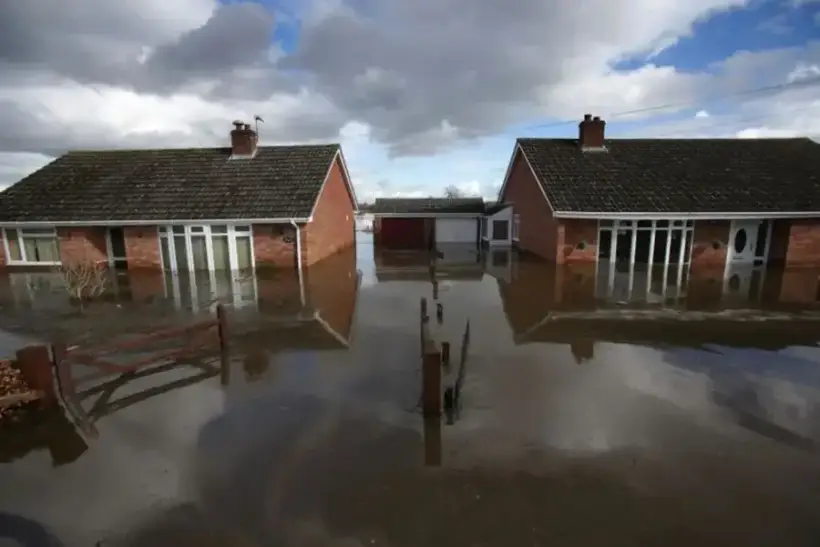
Rising flood damage in the UK is forcing banks to reassess their approach to mortgage lending. Financial institutions are evaluating the potential decline in collateral values and the impact of climate factors on long-term portfolios. This increases risks for borrowers who may face refinancing restrictions, Bloomberg reports.
A New Reality for the UK Mortgage Market
UK banks identify London, Eastern England, Yorkshire and Humberside as the main high-risk areas. According to the UK Environment Agency, 6.3 million properties in England are already located in areas at risk of flooding from surface water, coastal surges and overflowing rivers. At the same time, construction continues in potentially vulnerable zones. Insurer Aviva estimates that around 11% of new homes built between 2022 and 2024 are located in areas facing medium to high flood risk, compared with 8% in the previous decade.
The situation is compounded by climate change and urban development patterns, where drainage infrastructure often struggles to cope with heavy rainfall. In January 2026, Cornwall recorded its wettest January on record. Damage from such events puts direct pressure on property values and, consequently, on banks’ mortgage balances.
The Risk of “Mortgage Prisoners”
Mark Cunningham, Managing Director at PriceHubble, notes that Nationwide Building Society was among the first lenders to tighten its policy. Back in 2024, the mutual stopped issuing mortgages for certain properties located in high flood-risk areas. If a bank becomes the only lender willing to finance such homes, it risks ending up with a portfolio of borrowers unable to move to other institutions. In that scenario, the lender becomes effectively trapped, while customers lose the ability to refinance.
Adair Turner, former head of the UK banking regulator and current chairman of Chubb’s European business, points out that insurers operate on annual contracts and can raise premiums each year or withdraw from risky regions altogether. Banks, by contrast, issue mortgages for 20 years or more, effectively lending into a future expected to be wetter and hotter. This long-term exposure makes them more vulnerable.
Positions of Major Banks
Barclays reports that 2.6% of its UK mortgage portfolio is located in high flood-risk areas, with a further 1.2% in very high-risk zones. The bank states that an increase in flooding could directly affect collateral valuations and housing demand.
NatWest estimates that 3.4% of its assessed UK home loans are in high-risk areas and 1.3% in very high-risk areas. The bank restricts lending on flats, new builds and buy-to-let properties in such locations and regularly reviews its policies in line with updated flood-risk data.
Lloyds Banking Group, the country’s largest mortgage lender, says one in six properties in its portfolio is exposed to flood risk. The bank conducts physical inspections of higher-risk properties and declines lending if a home is deemed unsuitable collateral.
HSBC has previously indicated that flooding could have the largest impact on its UK portfolio. Like its peers, it identifies London, Eastern England, Yorkshire and Humberside as particularly vulnerable regions.
The Regulatory and Insurance Factor
In December, the UK Prudential Regulation Authority introduced stricter requirements obliging banks to incorporate climate risks into credit assessments. Climate risk consultant Hannah Cool notes that lenders have begun revisiting earlier decisions.
Claudine Blamey, Chief Sustainability Officer at Aviva, stresses that incorporating climate scenarios into mortgage portfolio assessments makes them part of the broader investment decision-making process.
A key role is played by the government-backed Flood Re scheme, designed to ensure affordable insurance for homes in flood-prone areas. The program is set to run until 2039, but a parliamentary watchdog warned last year that the UK is not on track to become fully flood-resilient by that date. Flood Re currently has £3.2 billion in reinsurance capacity but faces constraints as climate-related risks become more expensive globally.
NatWest states that Flood Re is crucial in containing impairment rates within its residential mortgage portfolio. However, homes built after 2009 are not eligible for the scheme, adding uncertainty for newer developments.
A Tipping Point
Edward Burgess of Rightmove highlights the need to identify a “tipping point” — the moment when an area currently considered relatively safe could see its risk profile change over the lifetime of a mortgage. Graeme McRitchie of Leeds Building Society notes that lenders must balance serving customers with protecting themselves from systemic risks, especially if insurance becomes unavailable in certain regions.
Analysts at International Investment note that rising climate threats are reshaping not only the environmental but also the financial landscape of the UK housing market. The mortgage sector is entering a phase where weather conditions become a factor in creditworthiness alongside borrower income and collateral value.