







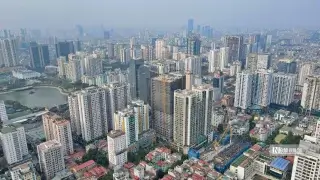
 Vietnam Mortgage Surge Pushes Homes Out of Reach
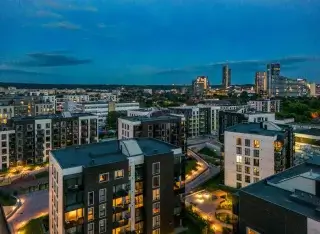 Lithuanian Apartment Prices Accelerate Across Major Cities
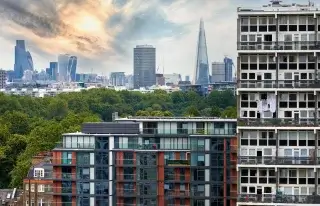 London Flats Lose Value Ahead of Leasehold Reform
 Construction of the Batumi–Sarpi Highway Begins in Georgia
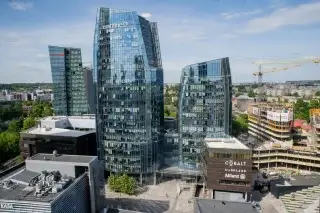 Baltic Property Investment Accelerates in 2026
 Hong Kong and Singapore Renew Their Expat Rivalry
Batumi Real Estate Market in 2025: Sales Growth and Declining Rental Yields

Secondary market surpasses new developments in number of transactions for the first time
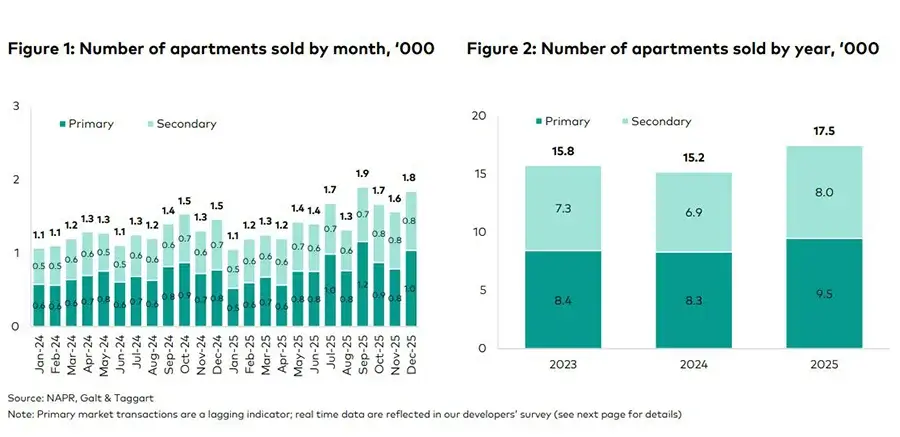
Batumi’s real estate market continued to expand in 2025: the number of apartment transactions reached 17,478, up 15% compared to 2024. In monetary terms, the market volume exceeded $1.3 billion for the first time (+23.8%), according to a study by Galt & Taggart. The recovery was driven by the launch of new development projects and increased activity in the secondary market. At the same time, price growth is outpacing demand, which is reducing rental yields.

Housing demand structure in Batumi
The structure of demand has changed noticeably, with the secondary market surpassing new developments in the number of transactions for the first time in several years. For comparison, in the peak year of 2023, primary housing accounted for 8.4 thousand deals and ready housing for 7.3 thousand. In 2025, these figures reached 8 thousand and 9.5 thousand respectively.
A survey of major developers covering about 40% of the market (more than 30 projects) showed that sales in their developments increased by 23.9% compared to 2024. However, this result still remains 26.3% below the record levels seen in 2023.
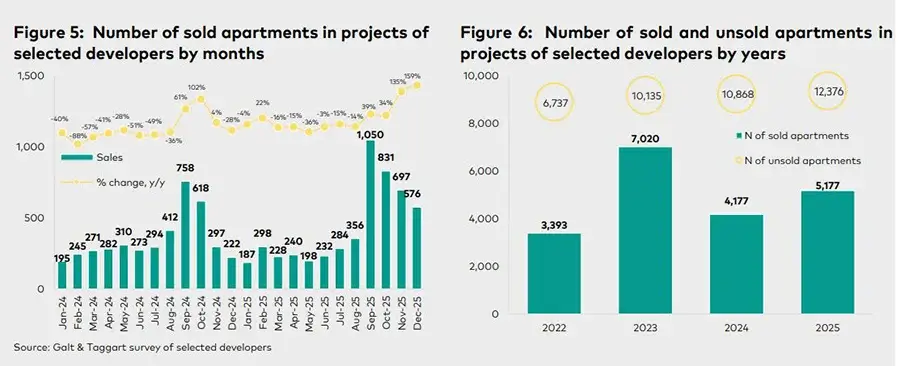
The main warning signal is the continued accumulation of unsold apartments. By the end of 2025, projects contained about 12,400 unsold units, 13.9% more than in 2024. Supply is growing faster than demand, creating the risk of oversupply. At the same time, 95% of apartments in projects completed in 2025 were sold, indicating strong demand for finished housing.
Apartment prices in Batumi
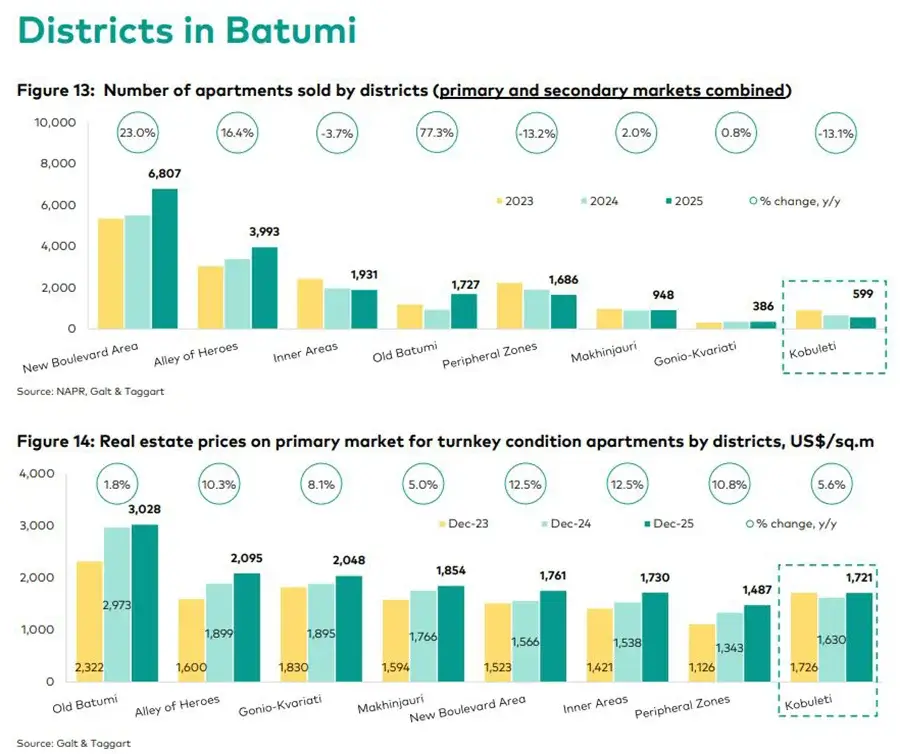
By the end of 2025, the average price per square meter in new developments in Batumi reached $1,865, while on the secondary market it was about $1,450. Over the year, primary housing prices increased by 9.4%, while ready housing rose by 6.9%. The price gap between the two segments continues to widen.
New Boulevard
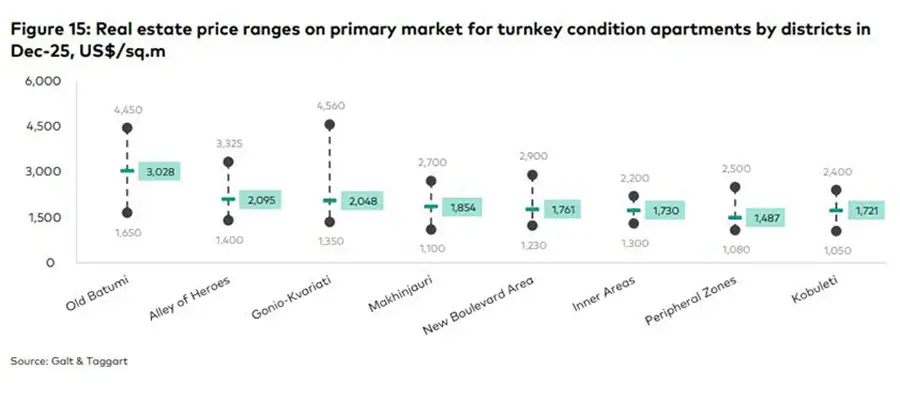
New Boulevard remains the sales leader for the second consecutive year. In 2025, 6,807 transactions were concluded here — almost twice as many as in any other area. The average price reached $1,761 per square meter by December. Prices range from $1,230 to $2,900 depending on the class of the property. Buyers are attracted by developed infrastructure, proximity to the sea, and a wide range of new residential complexes.
Heroes Alley
Heroes Alley ranked second in terms of transaction volume with 3,993 sales. This area is more expensive: the average price is $2,095 per square meter, with prices ranging from $1,830 to $3,325. The district is активно developing with premium residential complexes, which explains the high price ceiling.
Old Batumi
Old Batumi took third place with 1,727 apartment transactions. It is the most expensive district in the city, with an average price of $3,028 per square meter and a range from $1,650 to $4,450. The historic center, with limited supply and elite projects, traditionally attracts buyers interested in the premium segment.
Gonio–Kvariati
Gonio–Kvariati also stands out as one of the most expensive locations. In December 2025, the average price per square meter reached $2,048, with a range from $1,350 to $4,560. Housing in this prestigious resort area of Batumi is often more expensive than on New Boulevard and Heroes Alley.
Other areas
In Makhinjauri, prices range from $1,100 to $2,700 (average $1,851), while in Kobuleti they range from $1,000 to $1,700 (average $1,721). Inner districts remain the most affordable, with prices between $1,040 and $1,900. In peripheral areas, the average price is about $1,730 with a range of $1,040–$3,000. In total, these locations accounted for about 1,686 transactions.
Rental yields decline
While housing prices in Batumi continue to rise, rental rates have remained almost unchanged at around $35.6 per day. Rental yield — a key indicator for investors — has been declining for the third consecutive year. At the end of 2023 it reached 10%, dropped to 8.8% in 2024, and fell further to 7.4% by the end of 2025, according to calculations by Galt & Taggart.
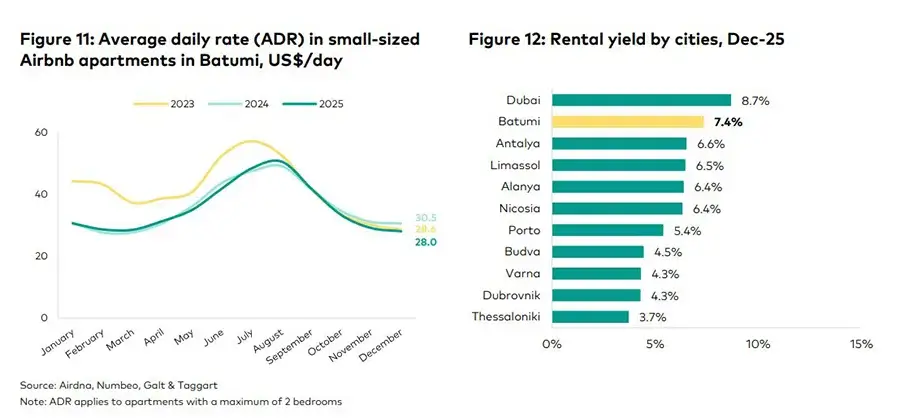
Analysts at International Investment note that these figures do not take into account maintenance costs and other expenses. Possible vacancy periods, which are quite common in this sector, are also not included. As a result, the actual net yield of residential property is estimated to range between 2% and 4%.
Future dynamics will depend on whether rental rates manage to catch up with rising property prices. So far this has not happened: the supply of rental units is increasing as new projects enter the market, which is holding back rent growth. In 2026, analysts expect the trend to continue, with rental yields likely to decline further.