







 Australia’s Spring Auctions Rise but Remain Well Below 2025
 Number of Foreigners Holding Turkish Residence Permits Exceeds 1.27 Million
 Demand from Russian Tourists for Holidays in Georgia Rises by 20–25%
 Montenegro Property Buying Costs in 2026
 Four in Ten Companies Would Not Choose Slovakia
 Gulf Countries Prepare Unified Tourist Visa
Paris Targets Empty Homes With Taxes
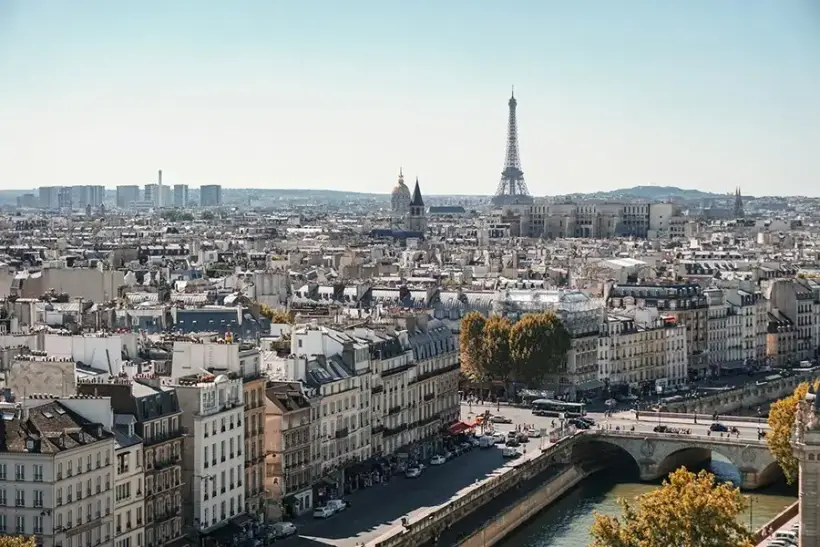
The city looks for housing inside existing stock
Paris is preparing to nearly double the tax pressure on owners of vacant homes as it tries to push more apartments back into the rental and sales market. Le Monde reported that city authorities plan to use a new tool included in France’s 2026 budget and hope to mobilize around 20,000 apartments. According to the publication, the issue affects roughly 20% of the capital’s housing stock, or about 274,000 units that are not used as permanent homes.
Vacant housing in this context is not simply an apartment between two tenants. It refers to property that remains unused for a prolonged period, is not offered on the regular market and does not serve as a primary residence. For Paris, it has become a political issue because the city is simultaneously facing scarce affordable rentals, high purchase prices, pressure from tourist accommodation and a declining permanent population.
The new tax framework starts in 2027
France’s reform creates a unified tax system for vacant residential premises from January 1, 2027. Zéro Logement Vacant, a platform linked to public policy on empty homes, says the new tax will replace two previous schemes: the tax on vacant housing in high-pressure areas and the local tax on vacant housing. In areas with severe housing shortages, the base rate will be 17% of cadastral rental value after the first year of vacancy and 34% after the second year, while municipalities will be able to increase the rate.
Cadastral rental value is an administrative estimate of a property’s potential income used in the French tax system. It is not the same as market rent, but it is the basis for several local taxes. A higher rate therefore does not mean a direct tax on the market value of the apartment, but it makes long-term vacancy more expensive.
Paris wants to turn taxation into supply
For city authorities, the tax matters less as a revenue source than as a tool to change owner behavior. If an owner keeps an apartment empty because of expected price gains, inheritance issues, renovation, occasional personal use or reluctance to rent, the new fiscal burden is meant to push the property toward sale, long-term rental or social rental channels.
Past tax measures against vacant housing in France produced limited results. The main reasons were administrative complexity and the difficulty of distinguishing genuinely vacant dwellings from temporarily unused, seasonal or renovation-stage homes. The new framework strengthens the role of municipalities because revenue from the tax will flow to communes or intermunicipal bodies, not only to the central state.
Nearly one in five units is not permanently occupied
Data from the Paris unit of the regional environment, planning and transport directorate show the scale of the problem: in 2020, around 19% of housing in Paris, or 262,000 units, was classified as unoccupied. That category includes several situations: long-term vacant homes, second residences, occasional housing used for professional reasons, furnished tourist rentals and short-term technical vacancy between occupants.
That mixed structure makes the issue difficult. Not every unoccupied apartment can quickly be returned to the standard rental market. Some homes need renovation, some are used irregularly by owners, and others are tied up in inheritance or legal disputes. But even a partial mobilization matters for the city: 20,000 apartments is comparable to several years of construction in a dense capital where available land is scarce.
The tax complements a wider anti-speculation push
Paris is already pursuing a broader campaign against practices that push permanent residents out. On its official website, the city describes plans to strengthen enforcement against illegal tourist rentals, unsafe housing, rent-control violations, lease-avoidance schemes and speculative practices. It also wants to create a municipal rent guarantee and an observatory for the private housing stock.
This shows that the vacant-home tax is not being treated in isolation. It is part of a broader set of measures against the transformation of housing into a passive financial asset. The signal to owners is changing: a Paris apartment can no longer be kept outside the market for years without consequences if the city can show it is vacant without valid reason.
Brussels already uses a penalty model
Paris is looking at other large cities that are also trying to return empty units to residential use. In the Brussels-Capital Region, keeping a property unoccupied or using it for purposes other than housing for more than 12 consecutive months is an offence. Once a suspected property is identified, the owner receives a warning and has three months to prove that the home is occupied or to justify vacancy through a valid reason such as renovation, force majeure or a legal obstacle. If no valid explanation is accepted, an administrative fine is imposed based on facade width, the number of vacant floors and the duration of vacancy.
The Brussels model matters for Paris because it combines a tax-and-penalty approach with an administrative verification process. Owners are not punished automatically on suspicion alone, but they must explain the status of the property. If vacancy continues, the fine rises over time and the city can seek public management of the unit for renovation and rental.
New York targets luxury second homes
In New York, a similar logic is aimed at a different segment: expensive second homes that are not used as the owner’s primary residence. Governor Kathy Hochul proposed a tax on homes valued at $5 million or more if they are used as second residences and owned by people who do not live in the city. Officials estimate recurring revenue of at least $500 million a year and say the tax would not affect ordinary New Yorkers.
Such a measure is often called a pied-à-terre tax, meaning a surcharge on a secondary city residence used occasionally. For Paris, the New York example matters less for its exact rate than for the political shift it represents: global cities are beginning to treat vacant or rarely used housing as a problem of urban sustainability, not merely as a private investment choice.
Old French measures were criticized for weak results
France’s Court of Accounts previously warned that policies against vacant housing had delivered weak results despite the scale of the problem. According to data cited by Le Monde in 2025, France had more than 3 million vacant homes, including around 1.2 million that had been empty for more than two years. Causes included outdated housing, poor location, complex inheritance cases and weak coordination of public tools.
That finding is important for judging the Paris initiative. A tax increase alone may not be enough if owners cannot quickly put a property on the market because of renovation needs, inheritance disputes, debts or the physical condition of the building. The most effective policy usually combines tax pressure, renovation support, legal assistance, social rental channels and accurate vacant-property registers.
The Paris tax is not only about revenue
If the average owner of a vacant apartment faces a doubling of the annual bill, the economic calculation changes. Holding a property empty becomes more costly, especially if the apartment produces no rent while still requiring service charges, insurance, maintenance and local taxes. The effect may be limited for very wealthy owners, but for heirs, small investors and owners of several apartments, the tax can become a real incentive.
For tenants, the outcome is less certain. Even 20,000 returned apartments will not solve the entire Paris housing crisis, where demand structurally exceeds supply. But additional stock can ease pressure in some districts, expand choice for families and young professionals, and reduce the share of homes used only as stores of capital.
Owners and the market face new risks
The main risk for owners is stronger enforcement and a higher cost of passive ownership. If an apartment is empty, the owner will have to document the reason: renovation, uninhabitability, legal dispute, temporary vacancy or another valid situation. Without such justification, the unit may face a higher tax rate and, in some systems, penalty procedures.
For the market, this means a gradual shift away from a soft model in which an empty apartment was treated purely as a private matter. In a city with a severe housing shortage, housing is increasingly being treated as a scarce resource. That logic strengthens municipalities and could become a model for other French cities facing tight rental markets.
Paris is testing a new urban norm
The Paris decision reflects a wider international trend. Cities with expensive real estate are increasingly trying to separate the right to own property from the right to keep housing unused without public consequences. Brussels uses fines and public management, New York is advancing a tax on luxury second homes, and Paris is turning to higher vacant-home taxes and stronger municipal control.
As experts at International Investment report, the Paris initiative could become an important test for European housing markets where rental shortages are increasingly linked not only to insufficient construction but also to inefficient use of the existing stock. The critical conclusion is that a vacant-home tax can return some units to the market, but it cannot replace construction, renovation of older housing and rental reform. If Paris relies only on fiscal pressure, the effect will be moderate; if the tax becomes part of accurate tracking, renovation support and long-term rental policy, the city could achieve a real increase in available housing.
FAQ
What does Paris want to do with empty homes?
Paris wants to increase tax pressure on homes that remain unused for long periods, with the goal of returning part of that stock to the rental or sales market.
When could the new rules take effect?
France’s unified tax system for vacant residential premises is scheduled to take effect from January 1, 2027.
How many vacant homes are there in Paris?
Around one-fifth of Paris housing is not used as permanent accommodation. In 2020, that represented about 262,000 units, while a more recent estimate cited by Le Monde puts the figure at about 274,000.
What tax could apply to vacant housing?
In high-pressure areas, the base rate under the new system is 17% of cadastral rental value after one year of vacancy and 34% after two years, with municipalities able to increase rates under the reform.
Why is Paris being compared with Brussels and New York?
Brussels fines long-term vacant housing and can move units into public management, while New York is advancing a tax on luxury second homes worth $5 million or more. All three cities are trying to reduce passive housing ownership during a housing shortage.
Will the tax reduce Paris housing prices?
The tax alone is unlikely to sharply reduce prices, but it can increase rental and sales supply, especially if combined with renovation support, tourist-rental enforcement and incentives for long-term leasing.
Who is most exposed to the new policy?
Owners who keep apartments empty for long periods without documented justification face the greatest risk. This may include investors, heirs, second-home owners and those holding properties off the market while waiting for price gains.