







 How Ukraine’s New-Build Housing Market Has Changed Over Four Years
 European Prime Rents Rise as Property Yields Turn Higher
 The Most Expensive Airlines in Europe in 2026
 Housing Prices in Italy Reach a Two-Year High
 Travellers Increasingly Choose Cooler Scandinavia
 Serbia Property Sales Decline as Transaction Value Rises
Israelis increase investment in Georgia’s real estate market
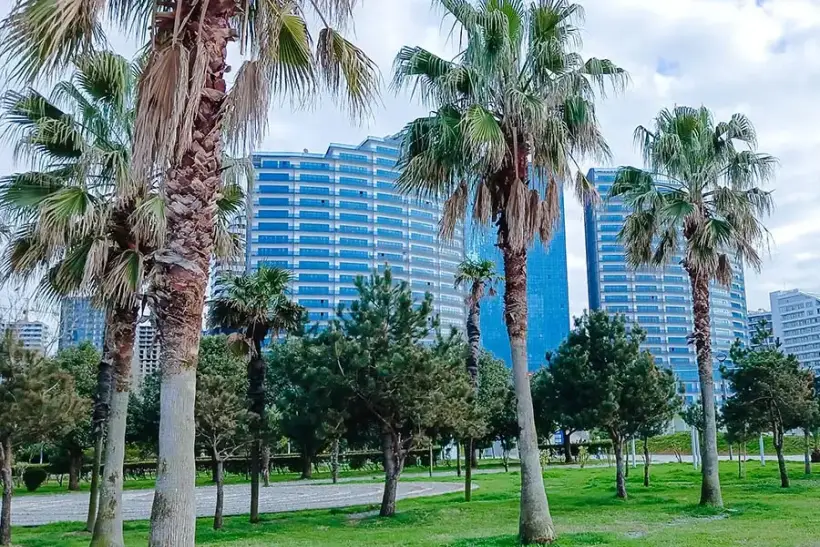
Israeli citizens are strengthening their position in Georgia’s real estate market. In Tbilisi, they have already become the largest group of foreign homebuyers, while in Batumi they remain among the key foreign investors, according to research by Galt & Taggart. The country continues to attract foreign buyers thanks to affordable prices, high returns, and a fast, transparent transaction process.
Who buys housing in Tbilisi
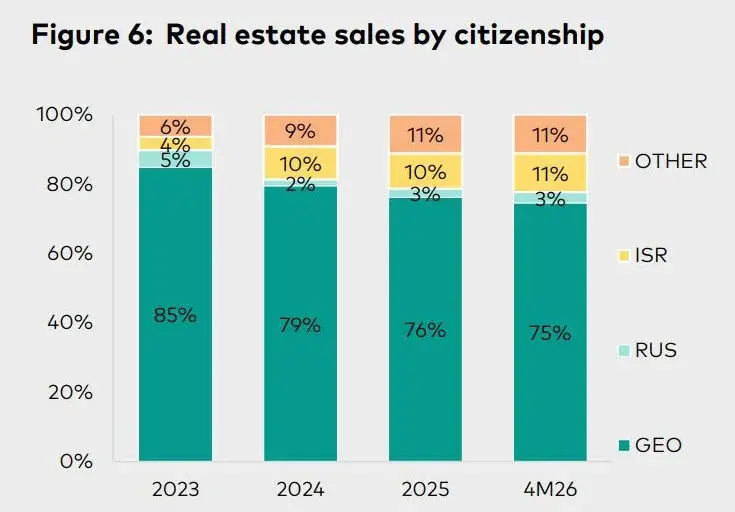
Local citizens still remain the main buyers of housing in Tbilisi. At the same time, data from surveys of major developers shows that over the past few years the market has become significantly more international.
In 2023, Georgian citizens accounted for 85% of all apartment sales in the projects included in the study. In 2024 this figure fell to 79%, in 2025 to 76%, and in the first four months of 2026 to 75%.
This means that the share of foreign buyers increased from 15% to 25% over three years. In practice, one in four apartments in new residential complexes in Tbilisi is now purchased by a foreigner. The most notable growth has come from Israeli buyers. In 2023 they accounted for only 4% of sales, rising to 10% in 2024. In 2025 the figure remained at this level, and in January–April 2026 reached 11%.
Thus, Israelis have become the largest group of foreign homebuyers in Tbilisi’s primary market. Today, more than one in ten apartments in new projects is purchased by Israeli citizens.
The role of Russian buyers is gradually declining: from 5% to 2% in 2023–2024, stabilizing at around 3% in 2025 and in January–April 2026. At the same time, the share of “other countries” increased from 6% to 9% and then to 11%.
Apartments in Batumi: investment demand
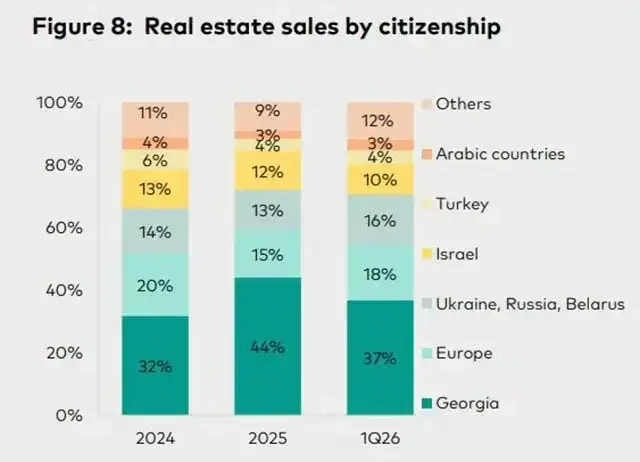
Georgian citizens remain the largest group of property buyers in Batumi as well, although their activity has fluctuated. In 2024 they accounted for 32% of sales, rising to 44% in 2025, and reaching 37% in Q1 2026. Domestic demand continues to account for more than one-third of all transactions.
Europe ranks second with 20%, 15%, and 18% respectively. Buyers from Ukraine, Russia, and Belarus accounted for 14% of apartment transactions in Batumi in 2024, then 15% and 16%. Israeli investors are also active in this market, with a share of 13%, 12%, and 10%. The country remains one of the most significant foreign sources of demand.
Turkish buyers reduced their presence from 6% in 2024 to 4% in Q1 2026. The share of buyers from Arab countries remains at 3–4%.
Advantages and disadvantages of housing in Georgia
The growing interest from foreign investors is driven by several factors. These include high housing prices in their home countries, particularly in Israel. Another key factor is the desire to diversify assets abroad, the development of air connectivity between countries, and the attractive returns offered by Georgian real estate. An additional incentive is the relatively simple purchase procedure for foreigners and the absence of restrictions on foreign investment.
At the same time, a certain cooling in the housing market is linked to oversupply. Construction continues on a massive scale. Gross rental yields have declined from 10% recorded three years ago to 7.1%, according to Galt & Taggart. In the future, this figure may fall to 5.1%, and in more conservative scenarios to 3.4%. Analysts at International Investment note that real yields, after accounting for all costs, are already lower at 2–3%. During vacancy periods, they can fall to zero or even negative levels. As a result, investors, including those from Israel, are increasingly shifting attention to other real estate segments in Georgia, especially the hospitality sector.
Shift of investment toward Batumi hotels
Hotels in Batumi significantly outperform apartments in terms of returns, with yields reaching 10–17%. Even with a higher entry cost, the profitability of a hotel room is approximately 4.8 times higher than residential rental income. This is due to a centralized operational model in which management, marketing, bookings, reception, and services are integrated into a single system, treating the property as one business unit.
Branded hotels in Batumi demonstrate stable occupancy rates: 68.6% in 2022, 70% in 2023, and 71% in 2024. The average room price of around $286 indicates a stable pricing environment even under more conservative market conditions.
For investors, the combination of high occupancy and stable pricing translates into a more predictable cash flow model. In the residential segment, income is more dependent on vacancy periods, tenant search, and individual property management — while the hotel model partially mitigates these risks through professional operators.
At the same time, the supply of high-quality hotels in Batumi remains limited, with the market dominated by city hotels and a small number of international chains. This increases interest in new higher-end projects, where return potential is supported by both supply constraints and stable tourism demand.