







 How Ukraine’s New-Build Housing Market Has Changed Over Four Years
 European Prime Rents Rise as Property Yields Turn Higher
 The Most Expensive Airlines in Europe in 2026
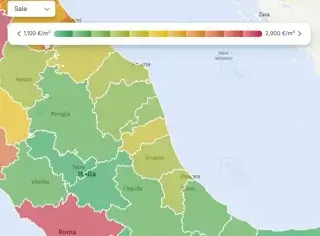 Housing Prices in Italy Reach a Two-Year High
 Travellers Increasingly Choose Cooler Scandinavia
 Serbia Property Sales Decline as Transaction Value Rises
Second Home Tax in New York: New Rates for Luxury Real Estate in the United States

New York has included a progressive tax on luxury second homes in the state budget, Reuters reports. Rates are differentiated depending on the market value of the property. The measure is set to take effect on July 1, 2026. The reform is expected to generate about $500 million per year, supporting the city’s economy.
Tax Rates and Mechanism in New York Real Estate
The pied-à-terre tax is an annual surcharge on residential property in New York that is not used as a primary residence. The mechanism assumes that owners of high-value properties who do not pay municipal income tax will additionally contribute to funding city services.
A property is not considered a second home and is exempt from the additional tax if it is occupied by the owner or their close relatives — spouses, parents, children, siblings, grandparents, grandchildren — as well as tenants.
The surcharge on second homes has been introduced for the 2026 fiscal year. Rates depend on the market value of the asset:
$5–15 million — 0.8%
$15–25 million — 1.05%
above $25 million — 1.3%
For apartments and cooperatives, a separate scale applies: 4% for $1–3 million, 5.25% for $3–5 million. The highest tax rate is set for properties above $5 million — 6.5%.
A revision of the property valuation system is possible in order to align assessed values with market levels. Starting in fiscal year 2028, apartment rates are expected to be brought in line with those applied to single-family homes.
Reasons for Tax Changes in New York: Budget Deficit
The surcharge initiative emerged amid a growing gap between revenues and expenditures in New York’s budget. According to the city’s financial analysis for 2026–2030, the mid-term deficit is estimated at around $3–5 billion per year, while in peak years of the planning horizon it reaches approximately $9–10 billion annually.
The current fiscal year budget remains formally balanced, but this is achieved through temporary measures. The calculations rely on one-off revenue sources and reduced reserves, which decline from about $8 billion to under $6 billion over the planning period, as well as expenditure adjustments.
Spending is growing faster than the revenue base. Over the planning period, total expenditures increase by more than $20 billion, driven mainly by social programs, housing subsidies, education and healthcare, as well as debt service exceeding $10 billion annually. Tax revenue growth lags behind spending dynamics, widening the structural gap.
Position of Government and City Authorities
New York Mayor Zohran Mamdani said that taxation of ultra-wealthy property owners and international investors would help reduce the budget deficit. According to him, the measure aims to ensure a fairer distribution of the tax burden, where high-income taxpayers contribute to financing the city, while authorities respond to the growing cost-of-living pressure on low- and middle-income residents. As one example of properties potentially affected by the policy, he pointed to the penthouse of Citadel founder Ken Griffin, a $238 million residence overlooking Central Park.
New York City Council Speaker Julie Menina supported the initiative, noting its potential to generate additional revenue for essential city services. She linked the proposal to broader efforts to strengthen the city’s fiscal stability and reduce pressure on middle-income workers.
Local borough leaders also backed the measure. Brooklyn Borough President Antonio Reynoso said New York should not become a space for ultra-wealthy investors. Manhattan Borough President Brad Hollman-Sigal noted that luxury properties are often used as a store of capital and frequently remain vacant, while their owners still benefit from the city’s infrastructure and security system. In his view, such assets should make a greater contribution to funding transport, schools, and municipal services.
New York State Governor Kathy Hochul said that owners of multi-million-dollar second homes are capable of contributing to the city on the same level as other residents, given the scale of public resources they use.
What This Means for Investors
Citadel founder Ken Griffin said the measures could weaken New York’s investment climate and reduce the attractiveness of the luxury real estate market. Pershing Square Capital Management hedge fund manager Bill Ackman warned of potential capital outflows and reduced interest in the premium housing segment. Investor Kevin O’Leary expressed doubts about the effectiveness of the tax and pointed to liquidity risks for high-value properties.
Analysts at International Investment note that such initiatives typically cool demand from investors and high-net-worth buyers. Similar trends have already been observed in London following the introduction of additional taxes and the removal of certain incentives in the luxury property market.
Investment strategies in New York real estate may shift. A portion of capital is expected to be redirected toward jurisdictions with more favorable tax regimes and lower regulatory risks.