







 How Ukraine’s New-Build Housing Market Has Changed Over Four Years
 European Prime Rents Rise as Property Yields Turn Higher
 The Most Expensive Airlines in Europe in 2026
 Housing Prices in Italy Reach a Two-Year High
 Travellers Increasingly Choose Cooler Scandinavia
 Serbia Property Sales Decline as Transaction Value Rises
Foreign buyers regain interest in Turkish housing market
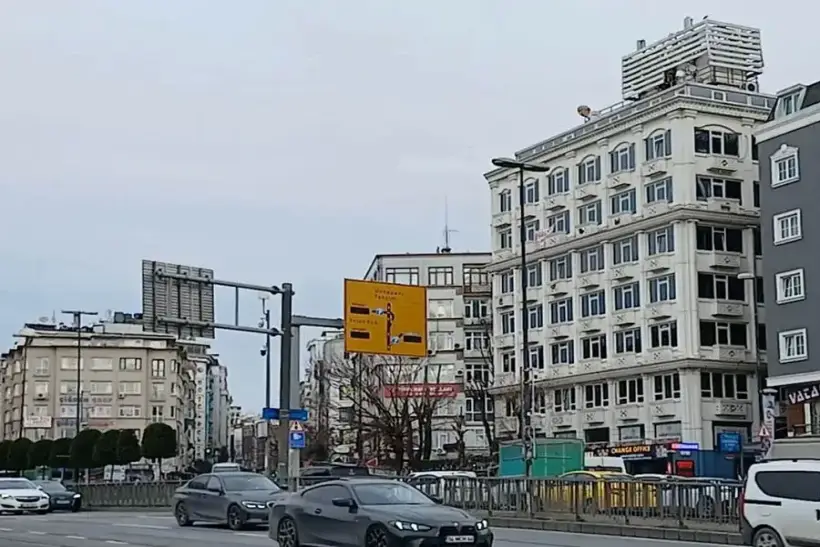
Overall real estate sales in Türkiye increased in June 2026, while buyers from abroad became significantly more active, according to the Turkish Statistical Institute (TUIK). However, six-month data shows that the growth has not yet offset the decline compared with 2025 levels.
Real estate sales dynamics in Türkiye
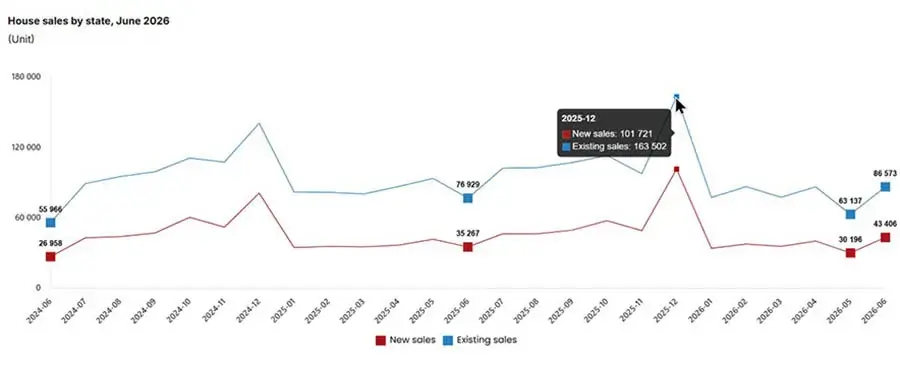
In June 2026, Türkiye recorded 129,979 residential property transactions, 15.8% more than in the same month of 2025. In January–June, the total number of transactions declined by 3.1% to 699,516.
The secondary market remained dominant. In June, existing homes accounted for 66.6% of total sales, or 86,573 properties, up 12.5% year-on-year. At the same time, the six-month figure decreased by 4.8% to 478,029 transactions.
New homes showed the strongest growth rate. Sales increased by 23.1% in June to 43,406 properties. Their share of the total market remained lower at 33.4%. Over the first half of the year, however, this segment recorded a slight increase of 0.8%, reaching 221,487 transactions.
Mortgage-backed housing purchases also grew significantly in June 2026, rising by 72.1% to 25,993 properties. They accounted for 20% of all housing transactions. The majority of the market continued to consist of purchases without mortgage financing — 80%, or 103,986 properties (+7.1%).
During the first six months, mortgage transactions increased by 32.2% to 142,794 properties, while non-mortgage purchases declined by 9.3% to 556,722.
Foreign buyers increase activity in Türkiye’s housing market
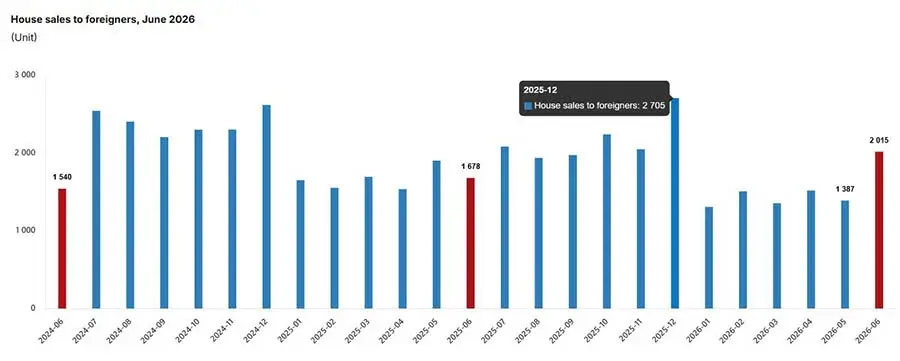
In June 2026, foreign buyers purchased 2,015 properties in Türkiye, 20.1% more than in the same month of 2025. Transactions involving foreign citizens accounted for 1.6% of the total housing market.
Russian citizens were the largest group of foreign buyers, purchasing 381 properties. This was 42.2% higher than in May, when Russians bought 268 properties, and 16.9% above the June 2025 figure of 326 transactions. Buyers from Ukraine and Iran followed, with 170 purchases each.
For comparison, foreign purchases amounted to 1,306 properties in January, 1,506 in February, 1,353 in March, 1,516 in April and 1,387 in May. Against this background, June figures were significantly stronger and exceeded the level recorded in the same month of the previous two years. However, the market peak was higher in December 2025, when foreign buyers purchased 2,705 properties.
In January–June 2026, foreign purchases decreased by 9.2% year-on-year to 9,083 properties.
Commercial real estate sales in Türkiye
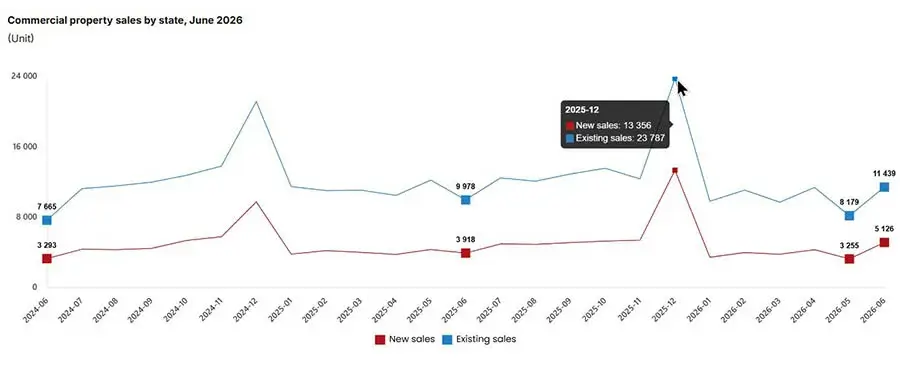
Commercial property sales in Türkiye reached 16,565 transactions in June 2026, increasing by 19.2% compared with the same month a year earlier.
New commercial properties recorded stronger growth, with sales rising by 30.8% to 5,126 units. Existing commercial property transactions totaled 11,439, up 14.6% year-on-year.
Mortgage-backed commercial property purchases increased by 86.7% to 745 transactions. The majority of deals were completed without mortgage financing, reaching 15,820 transactions, up 17.2%.
In the first half of 2026, commercial property sales totaled 85,528 units, down 5.3% compared with the same period of 2025. Mortgage transactions increased by 66.6% to 4,005, while other transactions declined by 7.3% to 81,523.
Economic background: high interest rates and inflation
The Central Bank of the Republic of Türkiye kept its key interest rate unchanged at 37% for the third consecutive meeting. The decision came amid accelerating inflation: consumer price growth reached 32.37% year-on-year in April and increased to 32.61% in May.
The regulator continues to maintain a tight monetary policy due to pressure on the Turkish lira, rising energy costs and geopolitical uncertainty. At the same time, high interest rates remain one of the factors limiting access to credit for businesses and homebuyers.
International Investment analysts note that the real estate market is facing mixed conditions. On the one hand, expensive mortgage financing is restraining part of demand. On the other hand, high inflation and a weaker lira continue to support interest in real estate as a way to preserve capital.
For foreign buyers, the depreciation of the Turkish currency makes assets more affordable when calculated in US dollars and euros. However, currency fluctuations can also reduce investment returns when measured in foreign currencies.