







 Alta Banka Collapse in Serbia: What Happens to Russian Depositors' Money
 Covivio Hotels Revenue Grows 4.7% as European Markets Split
 Lithuanian Apartment Prices Accelerate Across Major Cities
 Georgia's Tourism Revenue Hits Record High
 Norway's Sovereign Fund Commits €1.5bn to European Warehouses
 Market Rout of October 2026: Can Branded Hotels Protect Capital?
UK House Prices Rise for the First Time Since May

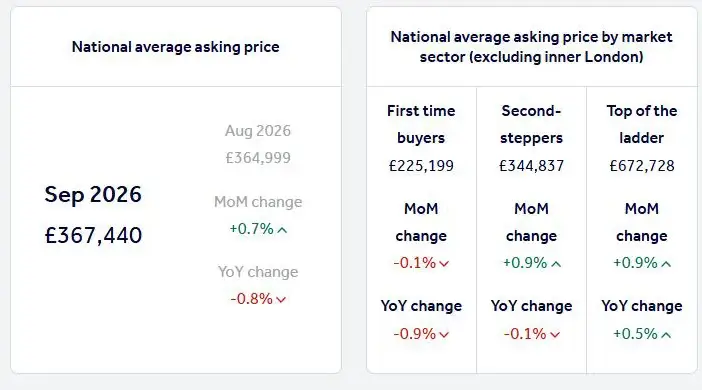
The average UK house price rose by 0.7% in September to £367,440 (€427,000). However, it remains 0.8% lower than a year earlier. The market became more active after the summer slowdown, but the large number of properties for sale is increasing competition among sellers and limiting price growth, Rightmove reports.
UK House Price Trends
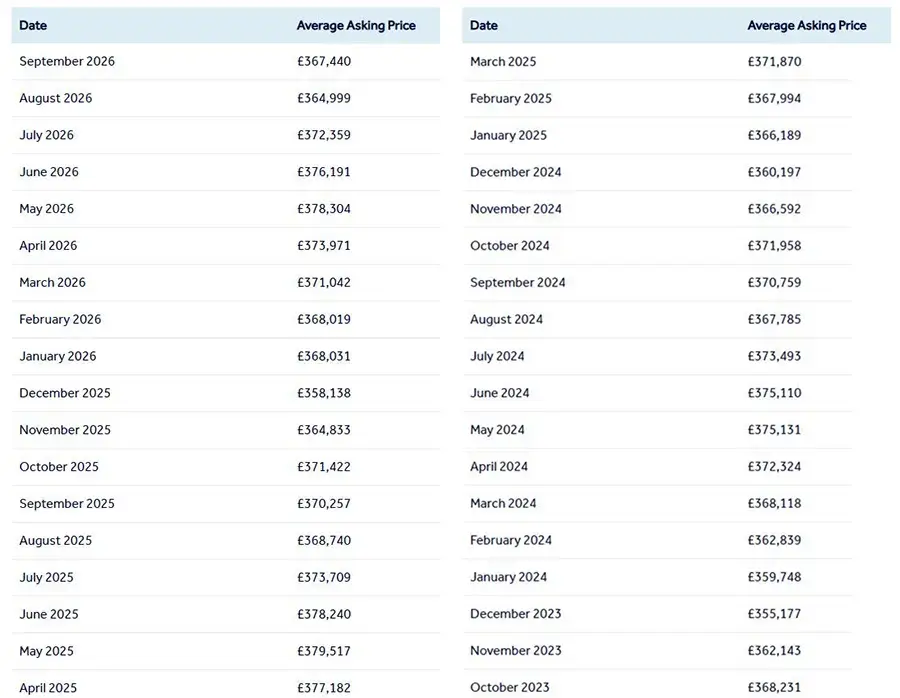
UK house prices fell for three consecutive months over the summer: by 0.6% in June, 1% in July and 2% in August. In September, the market returned to growth for the first time since May, with the average price rising by 0.7%, exceeding the usual increase for this time of year. Over the past ten years, prices have risen by an average of 0.5% in the first month of autumn.
September’s increase has not yet offset the summer decline. Prices remain 2.3% below their June level and 0.8% lower than a year ago. Rightmove attributes the renewed activity to sellers and buyers returning to the market after the summer slowdown. However, trends vary considerably across different property segments.
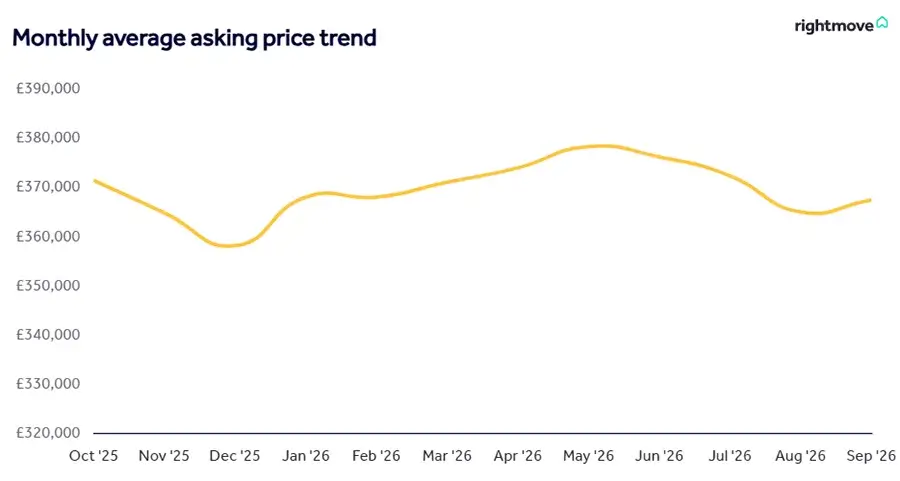
The five-year trend provides a broader context for the latest changes. After a period of rapid house price growth in the first half of this period, the pace slowed considerably, with prices fluctuating within a relatively narrow range in recent years. In 2026, the average price reached £378,304 in May, then fell to £364,999 in August before recovering to £367,440 in September.
Properties aimed at first-time buyers are listed at an average of £225,199 (€262,000). Prices in this segment fell by 0.1% over the month and by 0.9% over the year. Properties for those moving to a more expensive home have an average asking price of £344,837 (€401,000). Their value increased by 0.9% over the month but remained 0.1% below last year’s level.
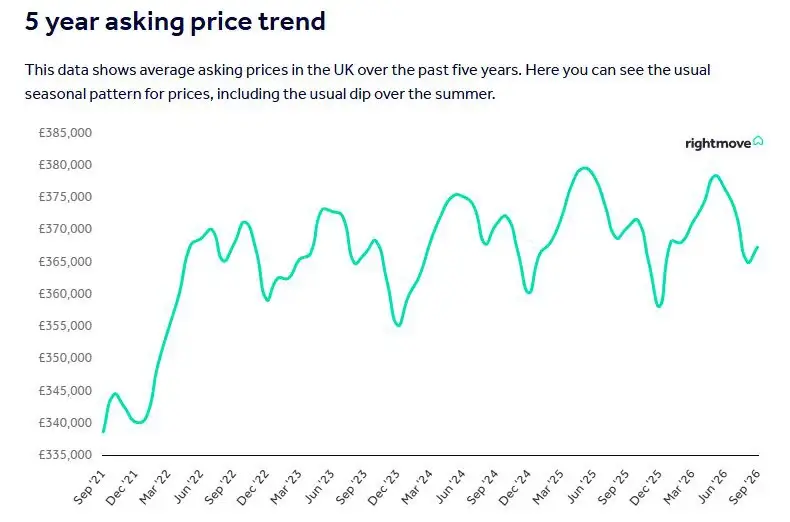
At the top end of the market, prices rose by 0.9% to £672,728 (€782,000). These properties are 0.5% more expensive than a year ago. The strongest recovery is being seen among higher-priced properties, while homes aimed at first-time buyers continue to become cheaper.
UK Housing Supply Increased
The number of homes for sale in the UK has reached its highest level for this time of year in 12 years. In August, each estate agent had an average of 65 properties listed for sale, compared with 63 in May and 62 in April. Demand, meanwhile, remains weaker than last year, with enquiries from prospective buyers down 9%.
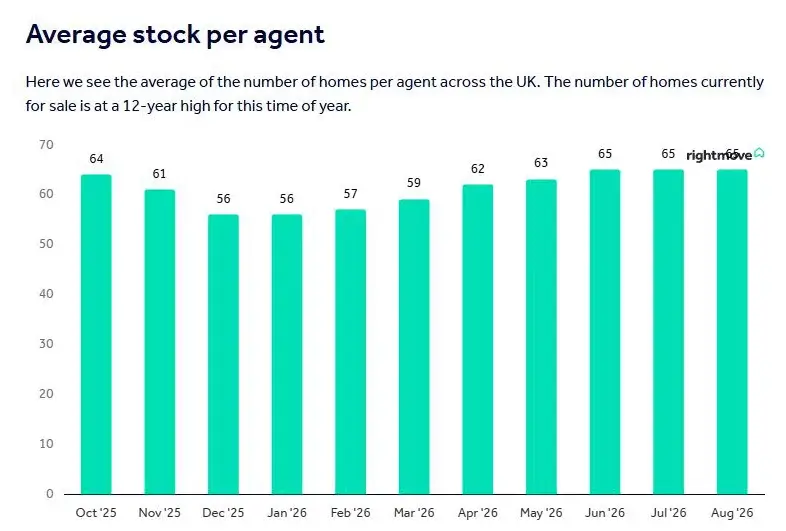
A wide choice of properties combined with weaker buyer activity is increasing competition among sellers. In these conditions, setting the right initial asking price is particularly important. Since the beginning of 2026, 74% of homes that were sold found a buyer without a subsequent reduction in the asking price.
Mark von Grundherr, director of estate agency Benham and Reeves, notes that competition is particularly strong in London. Buyers in the capital have a wide range of properties to choose from, so an overpriced home can quickly lose their interest. Sellers therefore need to set an appropriate price when the property first comes onto the market.
Rightmove expert Colleen Babcock points to the combination of high supply and weaker demand. Sellers are competing for fewer buyers, making both price and property quality increasingly important in securing a sale.
House Prices Across UK Regions
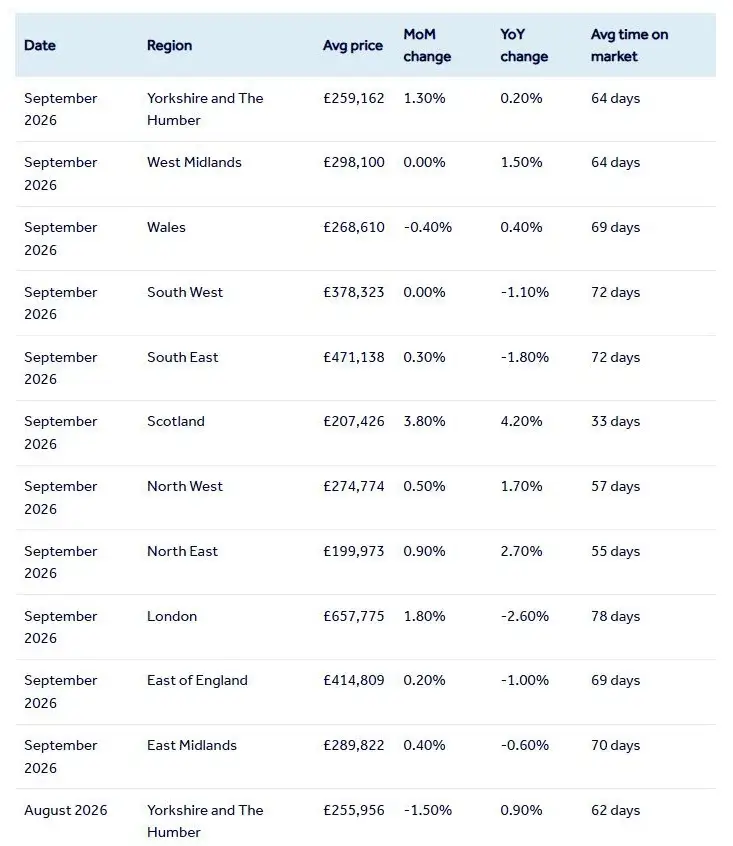
Scotland recorded the strongest price growth in September, with the average rising by 3.8% to £207,426 (€241,000). Compared with a year earlier, prices were up 4.2%. The market remains one of the most active in the country, with properties taking an average of 33 days to find a buyer.
In London, the average property price increased by 1.8% to £657,775 (€765,000), although it remains 2.6% below the September 2025 level. Homes take considerably longer to sell than in Scotland, with an average of 78 days needed to find a buyer. In North East England, the average price stands at £199,973 (€233,000), up 0.9% from the previous month and 2.7% year-on-year. In North West England, prices reached £274,774 (€320,000), increasing by 0.5% and 1.7%, respectively.
In Wales, prices fell by 0.4% to £268,610 (€312,000), although property remains 0.4% more expensive than a year ago. In South East England, the average price reached £471,138 (€548,000), rising by 0.3% over the month but falling by 1.8% over the year.
Regional differences are even more pronounced in the proportion of properties that secure a buyer. The figure reaches 91% in Scotland, 71% in North West England and 56% in South East England, compared with just 42% in London. Rightmove’s Colleen Babcock highlights a significant divide between the north and south of the country: more affordable markets are seeing stronger activity, while sellers in expensive regions have to wait longer to secure a sale.
Mortgages and UK House Prices
The average rate on a two-year fixed mortgage rose from 5.09% in August to 5.29% in September. At the end of February, before the start of the war in Iran, it stood at 4.25%. As a result, monthly repayments on a new mortgage are now approximately £180 (€209) higher than before the conflict began. The increase in rates is linked to continuing uncertainty in financial markets.
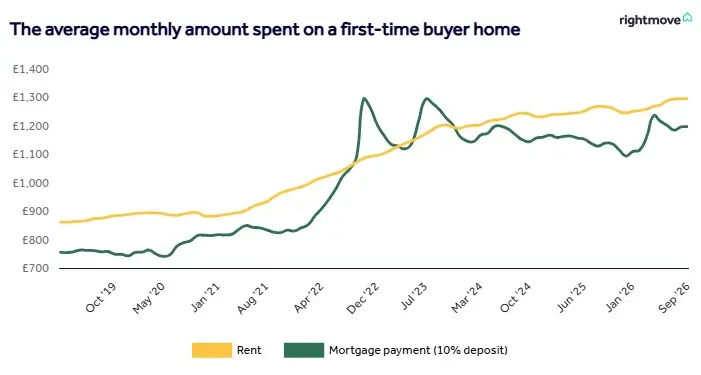
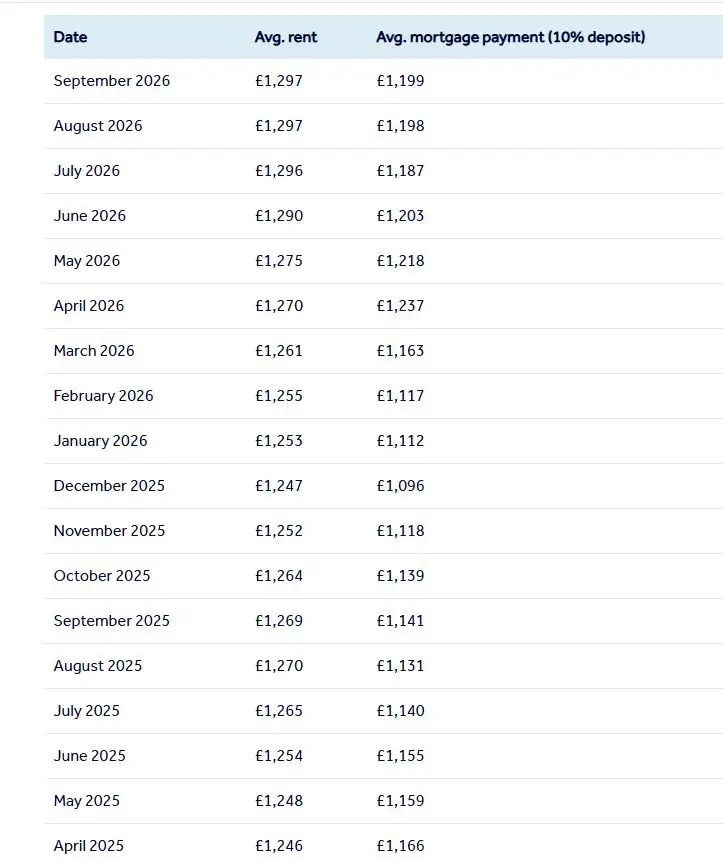
For first-time buyers, however, mortgage payments remain lower than rent. For a property with two bedrooms or fewer and a 10% deposit, the average monthly mortgage payment is £1,199 (€1,394). Renting a comparable property costs an average of £1,297 (€1,508). The difference is £98 (€114) per month, although buyers need to save for a deposit and meet lenders’ income requirements.
With the average price of such a property at £225,199 (€262,000), a single working buyer could borrow a maximum of £176,904 (€206,000) if the mortgage is limited to 4.5 times annual income. For two working borrowers, the estimated maximum rises to £353,808 (€411,000). These estimates are based on average earnings data from the UK Office for National Statistics.
Rightmove mortgage expert Matt Smith notes that higher rates are increasing borrowers’ monthly costs, while uncertainty over future borrowing costs may lead some prospective buyers to postpone a purchase. At the same time, a wide range of mortgage products remains available for buyers with different deposit sizes.
What This Means for Investors
The modest increase in prices does not fundamentally change the situation. Conditions for foreign capital in the UK have become less favourable. The Tier 1 (Investor) immigration route for wealthy investors was closed in February 2022. In April 2025, the non-dom regime, which provided preferential tax treatment for foreign income and capital gains, was abolished. It was replaced by the four-year Foreign Income and Gains (FIG) regime, available to new UK tax residents following at least ten years of residence outside the country. Once this period ends, foreign income and capital gains are taxed under the standard rules.
The changes are already affecting the behaviour of some wealthy residents, with a number of entrepreneurs and investors leaving the UK. A decline in the presence of this group could further weaken demand in London’s prime property segment, where international capital has traditionally played a significant role. The rental market only partly offsets these risks. The average gross buy-to-let yield in the UK is around 5.8%, compared with 5.1% in London. Actual returns will be lower after taxes, property maintenance costs, potential vacancy periods and financing expenses.
International Investment analysts note that the most challenging conditions are in the prime segment, particularly in London. High entry costs are combined with relatively low rental yields, subdued price growth and longer selling periods. In more affordable regions, the relationship between property prices and rental income is considerably more favourable. The current market may appeal to investors because of the wide choice of properties and the possibility of negotiating discounts, but rapid returns are difficult to achieve. In the near term, expensive mortgages, moderate rental returns and the lack of conditions for substantial property price growth remain significant constraints.