







 Covivio Hotels Revenue Grows 4.7% as European Markets Split
 Lithuanian Apartment Prices Accelerate Across Major Cities
 Georgia's Tourism Revenue Hits Record High
 Norway's Sovereign Fund Commits €1.5bn to European Warehouses
 Market Rout of October 2026: Can Branded Hotels Protect Capital?
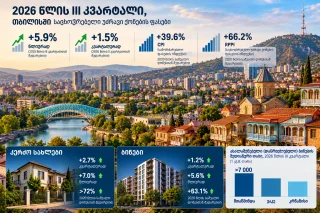 Residential Property Prices in Tbilisi Rise by 5.9% Year-on-Year
Switzerland Prepares Restrictions for Foreign Property Buyers

Unsplash
Switzerland is preparing to tighten conditions for foreign property buyers. The National Council has backed an initiative that could affect residential, holiday and commercial properties. The reform could significantly narrow the opportunities available to overseas investors in the local market.
What Foreigners Can Buy in Switzerland
The opportunities available to overseas buyers depend primarily on their place of residence, nationality and the type of property. Citizens of the EU and the European Free Trade Association (EFTA) who actually live in Switzerland are not considered foreign non-residents under property acquisition rules. A similar regime applies to citizens of other countries who hold a permanent category C residence permit.
Foreign nationals from outside the EU and EFTA who live in Switzerland but do not hold a C permit can currently buy a house or apartment at their actual place of residence without special authorization. The property must be used as their primary residence and registered directly in the owner’s name. It cannot be rented out to third parties.
For buyers living abroad, the options are considerably more limited. Ordinary residential property cannot be freely purchased as a rental investment. Separate rules apply to holiday homes, secondary residences and premises used for business purposes.
Who Needs Permission to Buy Property
Permission to buy property in Switzerland is primarily required for foreign non-residents. This category includes foreigners who do not live in the country, as well as citizens of states outside the EU and EFTA who are staying there without a permanent category C residence permit.
Restrictions also apply to businesses. They cover foreign companies and entities registered in Switzerland if they are effectively under foreign control. The law takes into account equity stakes, voting rights and certain forms of financing.
The competent authority in the canton where the property is located decides on each specific transaction. It determines whether authorization is required and whether there are legal grounds for granting it. Additional regional restrictions are particularly important when purchasing a second home or holiday property.
How Switzerland Restricts Foreign Buyers
The main restrictions are set out in the Federal Act on the Acquisition of Real Estate by Persons Abroad, widely known as Lex Koller. Its purpose is to control the transfer of Swiss real estate into foreign ownership. The legislation combines an authorization regime with exemptions for certain categories of buyers and properties.
The rules cover more than the direct purchase of a house, apartment or plot of land. In some cases, stakes in companies and funds, rights to use property and other transactions that effectively place an investor in the position of an owner are also taken into account. This means the restrictions may apply even when a foreign buyer does not register the property directly in their own name.
Lex Koller does not impose a blanket ban on foreigners. Some transactions require authorization, while others are permitted without it. Separate rules apply, for example, to property permanently used for business activities, primary residences of foreigners living in the country and certain properties acquired by cross-border workers.
Lex Koller 2026: What They Want to Change
On September 22, 2026, the National Council backed an initiative to tighten the legislation. A total of 123 MPs voted in favor and 54 against. The proposal covers primary and secondary residences, holiday properties, apartment buildings and commercial real estate. The Council of States must now consider the measure.
This does not mean that a ban has already entered into force. The parliamentary initiative is still going through the legislative process, and the final scope of the possible restrictions may still change.
The Federal Council has also prepared its own reform of Lex Koller. The draft was presented on April 15, 2026 and submitted for consultation until July 15. The government proposed tighter controls in several areas, including primary residences for third-country nationals, commercial real estate, holiday properties and investments through funds and companies.
For citizens of countries outside the EU and EFTA, one of the key proposals concerns primary residences. At present, a foreign national living in Switzerland can, under certain conditions, acquire such a property without authorization. The government proposes making approval mandatory. If the owner later leaves the country, the property would have to be sold within two years.
Commercial Real Estate and Funds for Foreigners
The Swiss commercial real estate market is currently regulated more leniently than the residential sector. A foreign non-resident may purchase, without special authorization, property that is permanently used for economic activity, including an office, shop, shopping center, hotel, restaurant, warehouse, production facility or other business premises.
The owner does not have to operate from the building personally. Current rules allow commercial property to be bought as an investment and leased to a company or entrepreneur. Ordinary apartments and apartment buildings, however, do not become commercial real estate simply because they generate rental income.
The Federal Council’s reform is intended to distinguish between property purchased for an owner’s own business and investment made solely for rental income. The first option would remain available, while the second would be restricted for foreign non-residents. If adopted, the rule would make it more difficult for overseas investors to acquire offices, retail properties and other commercial buildings for leasing.
The changes would also affect investment instruments. The government proposes restricting foreign purchases of certain shares in residential property companies, regularly traded units in real estate funds and shares in real estate SICAVs. The reform therefore concerns not only direct property acquisitions but also access to the market through financial structures.
Holiday and Residential Property in Switzerland
Holiday property in Switzerland is already among the most tightly regulated categories. A foreign non-resident may buy a house or apartment for holiday use only in cantons and municipalities where such transactions are permitted. Authorization is required, while the number of properties is limited by annual quotas.
As a rule, one family may own only one such property. The standard maximum net living area is 200 sq. m, while the plot for a detached house is limited to 1,000 sq. m. In certain cases, the authorities may allow a larger area. Holiday homes may be rented out on a short-term basis, but they must not become permanent rental properties.
The Federal Council proposes reducing the quotas and changing the rules for resale. At present, the transfer of a holiday property from one foreign owner to another does not, under certain conditions, reduce the cantonal quota. Under the proposed system, each new purchase by a foreigner would count toward the quota, which could further reduce supply.
Transactions involving second homes in Switzerland are regulated differently. A foreign non-resident may obtain permission to buy one if cantonal law allows it and the buyer has particularly close ties to the specific location. Regular holidays, relatives in the area or studies are not sufficient on their own.
Apartment buildings are a separate category. Buying a residential building to generate rental income does not fall under the commercial real estate exemption. Such investments are already restricted for foreign non-residents, and the September initiative backed by the National Council explicitly provides for a further tightening of the rules governing apartment buildings.
Property in Switzerland and the Right to Residence
Buying a house, apartment or other property does not automatically give a foreign national the right to live in the country. Property ownership and obtaining a Swiss residence permit are regulated separately. Even a high-value transaction does not in itself provide grounds for residency; applicants must meet immigration requirements.
The Swiss system differs from programs in some other countries where investment in residential or commercial property may be used as a route to legal residence. In Switzerland, nationality, place of residence and permit category determine which rules apply to the transaction and whether approval under Lex Koller is required. This is particularly important for those who view property investment as both a financial strategy and part of a relocation plan. Acquiring an asset does not resolve the issue of legal residence, while a possible tightening of Lex Koller could further narrow the options available to non-residents.
According to analysts at International Investment, the reform strengthens the distinction between investment opportunities and migration rights. For overseas buyers, advance checks of transaction conditions, cantonal requirements and their own legal status are becoming increasingly important. If the proposed measures are adopted, investments in the residential, holiday and commercial segments will require particularly careful assessment.
FAQ
Can a foreigner buy property in Switzerland?
Yes. However, the conditions depend on nationality, place of residence and the category of property. Many transactions by foreign non-residents require authorization from cantonal authorities.
Can you buy property in Switzerland without a residence permit?
Yes, in certain cases. Subject to the applicable rules, foreign non-residents may acquire, for example, holiday and commercial properties. The opportunities to buy ordinary residential property are significantly more limited.
Can a foreigner buy an apartment to rent out?
Ordinary residential property purchased solely to generate rental income does not qualify as commercial real estate freely available to foreign non-residents. Such investments are subject to substantial restrictions.
What is Lex Koller?
Lex Koller is the commonly used name for the federal legislation regulating the acquisition of Swiss real estate by foreigners. It determines when authorization is required and which exemptions apply to different categories of properties and buyers.
Does buying property in Switzerland give you the right to residence?
No. Property ownership in itself is not a basis for obtaining a residence permit.
Did Switzerland ban foreigners from buying property in 2026?
No. The National Council supported a tightening of Lex Koller, while the Federal Council prepared its own reform proposal. However, as of October 6, 2026, the new restrictions have not yet entered into force.