







 Covivio Hotels Revenue Grows 4.7% as European Markets Split
 Lithuanian Apartment Prices Accelerate Across Major Cities
 Georgia's Tourism Revenue Hits Record High
 Norway's Sovereign Fund Commits €1.5bn to European Warehouses
 Market Rout of October 2026: Can Branded Hotels Protect Capital?
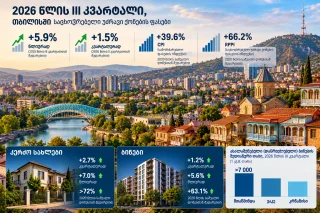 Residential Property Prices in Tbilisi Rise by 5.9% Year-on-Year
EU Prepares Housing Construction Reform
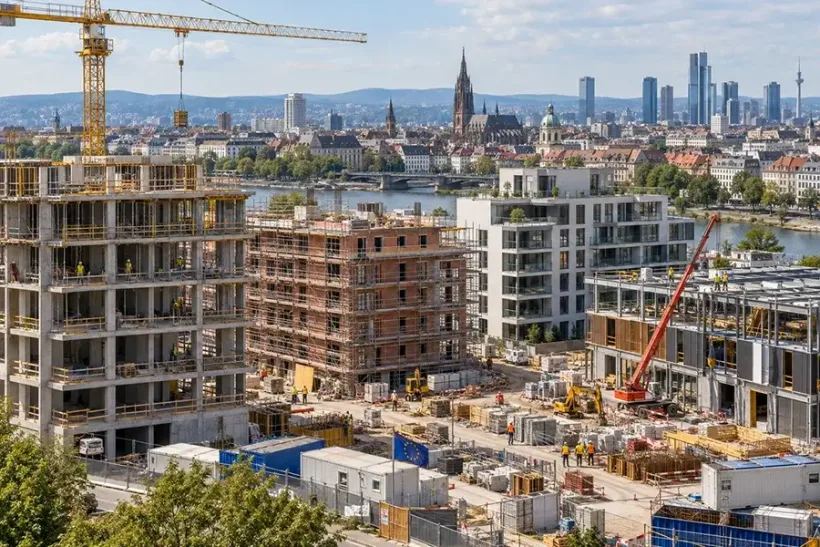
On 14 October 2026, the European Commission met with industry representatives to discuss housing construction. Together with Energy and Housing Commissioner Dan Jørgensen, participants examined barriers facing new projects, including permitting procedures, land use, financing, taxation, building standards and labour shortages. The findings will inform the Housing Simplification Package, which the EU plans to present in 2027.
Barriers to Housing Construction in the EU
The meeting provided a forum for direct exchanges between the European Commission and industry representatives. Participants examined European and national regulations that delay construction projects and increase costs for developers. The discussion covered the entire project cycle, from spatial planning and securing land to purchasing materials, construction work and putting buildings into operation.
Particular attention was paid to so-called gold-plating, whereby member states add their own requirements to EU rules. Such provisions may introduce extra inspections, paperwork and approvals. The Commission is collecting practical examples to distinguish the effects of EU-wide legislation from problems arising when these rules are applied at national and municipal levels.
The agenda was established in advance and covered public procurement, financial and tax rules, urban planning, nature conservation, land use, construction waste, energy efficiency, technical standards and the availability of skilled labour. The forthcoming reform is primarily intended to address administrative delays and overlapping procedures. Environmental safeguards, building safety and the quality of urban spaces are to be maintained.
Building Permits in Europe
One of the most specific measures was already set out in a European Commission recommendation dated 9 September 2026. Member states were encouraged to establish deadlines for issuing building permits, aim for 60-day procedures where appropriate and introduce tacit approval at certain stages. Priority should be given to social and affordable housing projects, as well as renovation and conversion of existing buildings. These recommendations are not binding and do not impose a universal permit deadline across the EU.
In late September, the International Union of Property Owners (UIPI) proposed complementing this approach with a single point of contact for applicants, standardised documentation and better coordination between authorities. The organisation also called for an advance list of required construction permits, so developers could assess project schedules and costs before making major commitments. The proposals were submitted to the Commission as part of preparations for the Housing Simplification Package.
Faster approvals have a direct impact on construction costs. While a project awaits a permit, investors continue to incur expenses for land, financing and preparatory work. Changes to the requirements can also force them to revise documents already completed. For the industry, predictability throughout the process—including environmental assessments and coordination with local authorities—is as important as the statutory deadline for reviewing an application.
Land and Urban Planning Rules
A second major area of consultation concerns the availability and use of land. Urban plots cannot always be brought into residential development quickly: zoning regulations, density limits, inconsistent administrative requirements and the cost of providing infrastructure can delay projects. The Commission is examining which procedures could be better coordinated to shorten site preparation times.
Property owners have proposed facilitating the redevelopment of former industrial sites, increasing density within existing urban areas and making it easier to change the designated use of buildings. These sites allow housing to be built close to existing infrastructure, but land remediation, further surveys and substantial expenditure may still be necessary. Shorter approval times alone will not resolve these financial challenges.
The Council of European Municipalities and Regions (CEMR) argues that the reform must respect cities' responsibilities for zoning, local taxation, permits and planning. The organisation supports greater alignment of EU housing construction rules while retaining environmental protections and opportunities for residents to participate in decisions. Under this approach, Brussels' general recommendations would be applied with regard to differences between local property markets.
Financing, Taxation and Procurement
The 14 October agenda also covered construction financing and taxation. The changes could affect other EU initiatives. In particular, a review of EU public procurement rules is being considered to give greater weight to social objectives, including affordable housing development. This is especially relevant for municipalities that commission large housing programmes.
Another proposed area of reform concerns tax requirements for organisations delivering social and affordable housing in the public interest. The Commission links this work to a review of anti-tax-avoidance rules. The details will depend on the progress of the relevant initiatives; the meeting on 14 October did not introduce new tax benefits.
Property owners and industry associations also want policymakers to consider how banking regulation affects borrowing costs and financing for smaller renovation projects. Access to long-term capital is often just as important to developers and social housing providers as the speed of approvals. In parallel, the Commission is developing an affordable housing investment platform in 2026 to connect financing information, public institutions and private investors.
Building Renovation and New Technologies
The EU aims to increase housing supply through new construction, the renovation of ageing buildings, the conversion of non-residential premises into homes, internal reconfiguration and the addition of new floors to existing properties. Approval requirements can be particularly expensive for these projects because owners must comply simultaneously with construction, energy-efficiency and planning rules.
UIPI has called for changes to the application of building energy-efficiency requirements and to the approval process for small renovation schemes. It also advocates more consistent sustainable-finance rules and proportionate reporting requirements so that individual property owners do not face administrative obligations designed for large corporations. These are consultation proposals rather than measures already adopted.
The EU is also discussing modular building techniques, factory-produced components and the reuse of materials. Their wider adoption depends on compatible technical standards and the ability to apply the same solutions across countries without lengthy repeat certification. Other challenges include workforce training, manufacturing capacity and local contractors' ability to deliver large projects.
Why Housing Construction Has Become a Priority
Around 1.6 million houses and apartments are built in the European Union each year. The Commission estimates a shortfall of another 650,000 homes, bringing total annual housing construction needs in the EU to approximately 2.25 million units. Additional investment needed to close this gap is estimated at €153 billion. The forthcoming package aims to reduce costs and delays that prevent supply from expanding.
Eurostat data published on 1 October illustrate the pressure on the market: in the second quarter of 2026, house prices in the EU rose by 4.7% compared with the same period in 2025, while rents increased by 3%. The strongest increases in property prices were recorded in Portugal, Bulgaria and Lithuania. These figures underscore affordability pressures, although price trends and the causes of housing shortages vary from country to country.
The Commission is discussing faster construction alongside another strand of housing reform focused on the use of existing properties. The Affordable Housing Act proposal presented on 9 September provides for measures in areas facing acute housing shortages, including regulation of short-term rentals, second homes and vacant properties. The October meeting addressed a different aspect of the problem: removing obstacles to the creation of additional homes rather than reallocating existing housing stock.
Outlook for Housing Construction in the EU
The meeting with Dan Jørgensen forms part of a wider series of consultations with industry representatives, regions, municipalities and EU member states. The collection of written submissions closed on 30 September, while expert discussions will continue until the end of 2026. The Commission will compare industry proposals with existing legislation, identify administrative barriers and prepare a set of changes.
The Housing Simplification Package is scheduled to be presented in 2027. It could contain proposed changes to EU-wide legislation, guidance on implementing existing rules and measures requiring decisions by national and local authorities. Different instruments would follow different adoption procedures: some could be introduced through administrative changes, while others would require legislation.
International Investment analysts believe that regulatory changes could make previously postponed projects financially viable by reducing prolonged approval periods and unpredictable costs. Faster construction, however, does not guarantee lower prices. Housing affordability will continue to depend on land values, borrowing conditions and consumers' purchasing power.
For investors, the reform could create additional opportunities and intensify competition between developers. In cities with persistent housing shortages, a larger pipeline of new homes could stimulate the market, although returns will still depend on construction costs and actual demand. The key measure of the new rules' effectiveness will be an increase in homes that buyers and tenants can afford while allowing developers to cover economically viable project costs.
FAQ about EU Housing Reform
What did the European Commission discuss on 14 October 2026?
Participants examined obstacles to housing construction in Europe, including lengthy approval procedures, land-use rules, financing, taxation and technical requirements. Their proposals will inform the Housing Simplification Package.
How does the EU plan to accelerate building permits?
The recommendations issued on 9 September propose deadlines for reviewing applications, a 60-day benchmark where appropriate, digital procedures and tacit approval in certain cases. Industry associations are also calling for a one-stop-shop system.
When will the new EU housing construction rules take effect?
The European Commission plans to present the Housing Simplification Package in 2027. Implementation dates will depend on the legal form of each measure and decisions taken by EU institutions, national governments and local authorities.
How many additional homes does the European Union need?
The Commission estimates an annual shortfall of approximately 650,000 houses and apartments. With current construction at around 1.6 million units, total annual demand for new housing is estimated at about 2.25 million homes.
Which changes could affect housing investment?
The proposals cover new approaches to public procurement, financing for construction and renovation, and amendments to certain tax rules. Specific measures have yet to be agreed.
Will the EU housing reform reduce property prices?
Faster construction could expand supply and ease price pressure in some cities. The final impact will also depend on land costs, access to credit, infrastructure and buyers' purchasing power.