







 Covivio Hotels Revenue Grows 4.7% as European Markets Split
 Lithuanian Apartment Prices Accelerate Across Major Cities
 Georgia's Tourism Revenue Hits Record High
 Norway's Sovereign Fund Commits €1.5bn to European Warehouses
 Market Rout of October 2026: Can Branded Hotels Protect Capital?
 Residential Property Prices in Tbilisi Rise by 5.9% Year-on-Year
Cyprus Property Sales Hit Record as Foreign Demand Grows
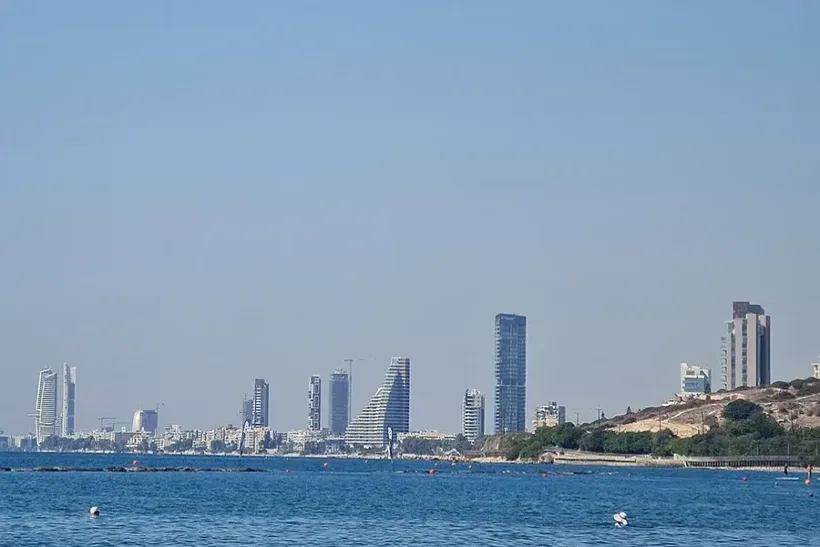
Στέφανος Νικολάου, Wikimedia Commons, CC BY-SA 4.0.
Cyprus property activity is rising in transactions as well as prices. A total of 1,681 sale contracts were lodged with the Department of Lands and Surveys in September 2026, up 13.3% year on year. January–September contracts reached 14,969, an increase of 13.6%.
It was the strongest September since at least 2007. Limassol remains the largest district market, while Larnaca recorded the fastest September growth. Paphos continues to stand out for its unusually high exposure to foreign buyers.
For investors, these figures matter more than another price record. They show where appreciation is supported by liquidity and where performance depends more heavily on foreign capital and new development.
Transactions are supporting the price rise
International Investment reported earlier in October that Cyprus residential prices rose 8.5% year on year in Q2 2026. Apartment prices increased 8.9% and houses 5.8%. Famagusta recorded the fastest overall district growth at 10%, followed by Larnaca at 9.8%, Paphos at 9.6%, Limassol at 7.8% and Nicosia at 5.7%.
The September contract data add a liquidity measure to that price picture. Limassol recorded 506 contracts, up 16.1% year on year. Larnaca rose 28.9% to 393, Paphos 10.2% to 345 and Nicosia 6.6% to 374. Famagusta fell 20.3% to 63.
For January–September, Limassol recorded 4,860 contracts, Larnaca 3,291, Nicosia 3,163, Paphos 2,999 and Famagusta 656.
Cyprus districts compared
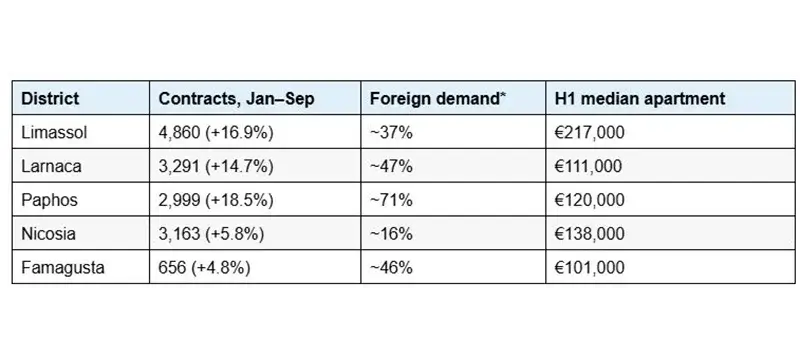
The periods differ: contracts and foreign-buyer exposure cover January–September, while median resale apartment prices refer to H1. The foreign-buyer share is approximate because DLS reports properties lodged under foreign-buyer contracts against total contract counts.
Limassol remains the deepest market
Limassol accounts for almost one third of Cyprus sale contracts. January–September activity increased 16.9% to 4,860 contracts.
Completed transfer values show an even stronger concentration of capital. By the end of July, Limassol had already accounted for more than €1 billion of registered transfer value, far ahead of any other district.
For investors, that depth is Limassol’s strongest argument. There are more potential buyers and more capital moving through the market. The trade-off is the island’s highest entry price. The H1 median resale apartment cost €217,000 and the median house €325,000.
Price growth has also slowed relative to several other districts. Limassol residential prices rose 7.8% year on year in Q2, below Larnaca, Paphos and Famagusta. Deep liquidity does not necessarily mean the fastest future appreciation.
Larnaca is growing from a lower base
Larnaca recorded the strongest September increase, with sale contracts up 28.9%. Nine-month activity rose 14.7%.
The entry point remains substantially lower than in Limassol. The H1 median resale apartment cost €111,000 and the median house €185,000.
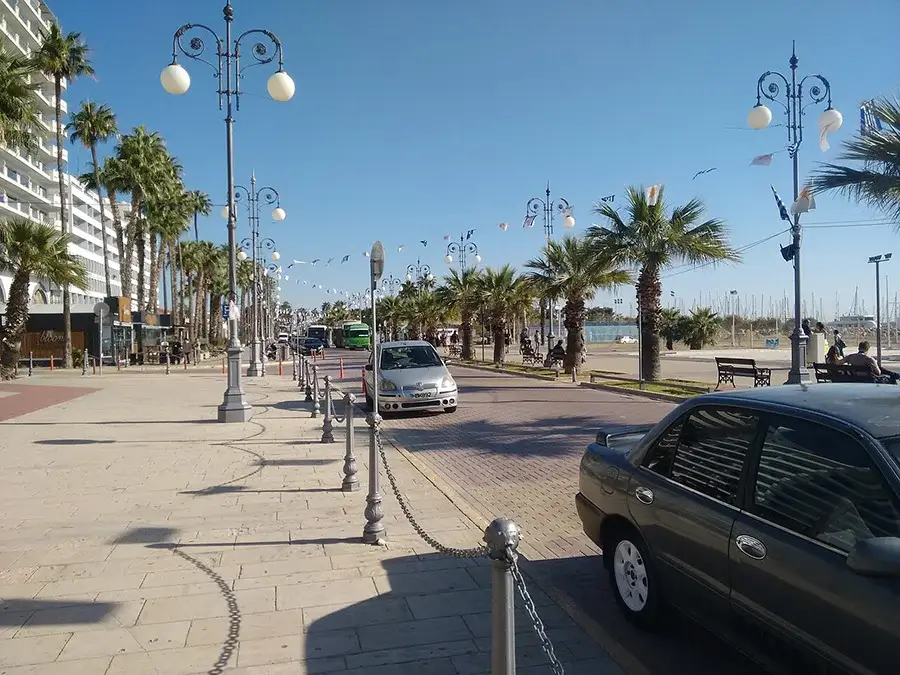
Larnaca combines a lower entry price with rapidly expanding transaction activity. Photo: Héctor Ochoa (Robot8A), Wikimedia Commons, CC BY-SA 4.0.

For investors, Larnaca offers one of the clearest compromises between price and liquidity. The risk is future supply: strong transaction growth attracts development, and today’s relative scarcity can turn into stronger competition at exit.
Paphos is most exposed to foreign demand
Foreign demand is distributed very unevenly.
DLS figures indicate that overseas buyers accounted for roughly 42% of lodged contracts nationwide in January–September. The share was around 71% in Paphos, 47% in Larnaca, 46% in Famagusta, 37% in Limassol and only 16% in Nicosia.
Paphos is therefore the island’s most internationally exposed market. Foreign demand supports prices and liquidity, but it also increases sensitivity to cross-border capital flows, mobility and rules for third-country buyers.
A lodged sale contract is not the same as a completed title transfer. DLS records them separately. Earlier in 2026, foreigners represented a much smaller share of completed transfers than of newly lodged contracts.
Claims that foreign buyers already account for “half of the Cyprus property market” therefore need a clear definition of the underlying measure.
Where apartments cost less
District differences are also visible in the resale market.
In H1 2026, the median resale apartment was €217,000 in Limassol, €138,000 in Nicosia, €120,000 in Paphos, €111,000 in Larnaca and €101,000 in Famagusta.
These are resale medians rather than prices for new coastal developments. Prime new-build units in Limassol and Paphos can cost several times more. The figures are useful because they show the real entry threshold in the mass resale market.
Larnaca therefore remains materially cheaper than Limassol, while Paphos combines a moderate resale median with very high foreign-buyer exposure.
Foreigners can buy, but the rules differ
Non-EU nationals need permission from the relevant District Administration to acquire immovable property. Permission can cover land of up to 4,000 sq m for an owner-occupied home or up to two units. The restriction applies jointly to married couples.
The official process normally takes two to three weeks and carries no permit fee.
EU nationals are not subject to the same non-EU acquisition regime. Distinguishing EU and third-country buyers is therefore essential when interpreting foreign demand.
The rules for third-country buyers may also become tighter. During 2026 the government and parliament have been discussing amendments that could restrict purchases near critical infrastructure and the ceasefire line, in agricultural areas and by plot or residence size. These are proposals under discussion, not a new blanket ban in force.
Property can support permanent residence, but not automatically
Buying a property does not by itself grant permanent residence.
The expedited investor route requires a qualifying investment of at least €300,000 excluding VAT. Where the investment is a house or apartment, the relevant residential category requires a first-sale property.
Applicants must also demonstrate secured annual income of at least €50,000, increased by €15,000 for a spouse and €10,000 for each dependent minor child. For the residential route, the investment funds must originate abroad.
A €300,000 purchase can therefore form part of a permanent-residence application, but not every €300,000 property qualifies.
Taxes and purchase costs
Cyprus abolished stamp duty on new documents from 1 January 2026.
Transfer fees depend on VAT treatment. A transaction subject to VAT is exempt from transfer fees. Where VAT does not apply, legislation provides a 50% reduction from the normal transfer fee.
The standard bands are 3% on the first €85,000, 5% from €85,001 to €170,000 and 8% above €170,000.
The reduced 5% VAT rate applies to qualifying property used as the buyer’s primary and permanent residence. An investment apartment does not automatically qualify.
Capital gains on Cyprus immovable property are generally taxed at 20%, subject to the statutory exemptions and deductions.
Liquidity is rising alongside affordability pressure
Record contract volumes are positive for liquidity but create a more difficult picture for local housing affordability.
Limassol is the clearest example. Summer rents for a one-bedroom apartment were around €1,000–1,100 a month, compared with €600–650 in Nicosia, €500–600 in Larnaca and €500–550 in Paphos. Two-bedroom Limassol rents were around €1,400–1,500.
Rental growth stabilised in 2026, but the absolute level remains high. For owners this supports income. For local workers and households it worsens affordability.
Foreign demand should not be treated as the only cause. The Central Bank points to both foreign and domestic demand as well as higher construction costs.
New supply is rising quickly
Construction is already responding to higher prices.
Residential units covered by building permits reached 8,978 in the first five months of 2026, up 63.7% from 5,484 a year earlier.
For current investors this is both positive and risky. More supply can ease scarcity, but projects bought solely on the assumption of continued rapid price growth may face much stronger competition at resale.
Local pipelines in Larnaca, Paphos and individual Limassol submarkets therefore matter more than the national supply figure alone.
Northern Cyprus carries a separate legal risk
All figures in this article refer to areas under the effective control of the Republic of Cyprus.
The Republic’s Ministry of Foreign Affairs specifically warns foreign purchasers about property in the northern part of the island where title belongs to displaced Greek Cypriot owners. Such transactions can have criminal and civil consequences.
Properties marketed under the broad label “Cyprus property” are therefore not automatically legally comparable. Title and jurisdiction checks are essential.
What the record means for investors
Cyprus remains a highly liquid market in 2026: contract volumes are growing at double-digit rates, prices continue to rise and foreign demand remains strong.
The investment case differs sharply by district. Limassol offers the deepest market and highest entry cost. Paphos is most exposed to overseas demand. Larnaca is expanding quickly from a lower price base. Nicosia remains much more domestically driven. Famagusta shows that a strong national market does not guarantee monthly growth in every district.
The central question is no longer whether Cyprus can produce another 8–10% headline price gain. It is how broad the buyer pool for a specific property will remain as supply rises and regulation of third-country demand potentially tightens.
FAQ: Cyprus property in 2026
Are Cyprus property sales rising?
Yes. A total of 1,681 sale contracts were lodged in September, up 13.3% year on year. January–September contracts reached 14,969, an increase of 13.6%.
Where is most property being sold?
Limassol remains the largest market, with 4,860 contracts in the first nine months. Larnaca recorded 3,291, Nicosia 3,163 and Paphos 2,999.
Where do foreign buyers purchase most often?
Paphos has the highest foreign-buyer exposure. Around 71% of January–September lodged contracts were associated with overseas buyers. The share was around 47% in Larnaca and 37% in Limassol.
How much does Cyprus property cost?
In the H1 resale market, median apartment prices were around €217,000 in Limassol, €138,000 in Nicosia, €120,000 in Paphos, €111,000 in Larnaca and €101,000 in Famagusta.
Can foreigners buy property in Cyprus?
Yes. Non-EU nationals require District Administration permission and face limits on the number and type of properties that can be acquired.
Does buying property provide Cyprus permanent residence?
Not automatically. The expedited investor route requires a qualifying investment of at least €300,000 excluding VAT plus additional requirements concerning the property, source of funds and income.
What taxes and purchase costs apply?
Stamp duty was abolished from 2026. VATable transactions are exempt from transfer fees, while eligible non-VAT purchases receive a 50% transfer-fee reduction. The reduced 5% VAT rate applies only to qualifying primary residences.
What tax applies when property is sold?
Capital gains on Cyprus immovable property are generally subject to a 20% rate, subject to applicable exemptions and deductions.
What are the main risks?
High entry prices and affordability pressure in Limassol, dependence on overseas demand in Paphos and other coastal markets, rapidly increasing new supply, possible tighter rules for third-country buyers and the separate legal risks of property in the northern part of the island.