







 Covivio Hotels Revenue Grows 4.7% as European Markets Split
 Lithuanian Apartment Prices Accelerate Across Major Cities
 Georgia's Tourism Revenue Hits Record High
 Norway's Sovereign Fund Commits €1.5bn to European Warehouses
 Market Rout of October 2026: Can Branded Hotels Protect Capital?
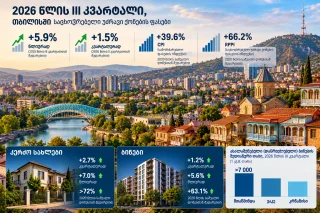 Residential Property Prices in Tbilisi Rise by 5.9% Year-on-Year
Turkey Revokes Investors’ Citizenship
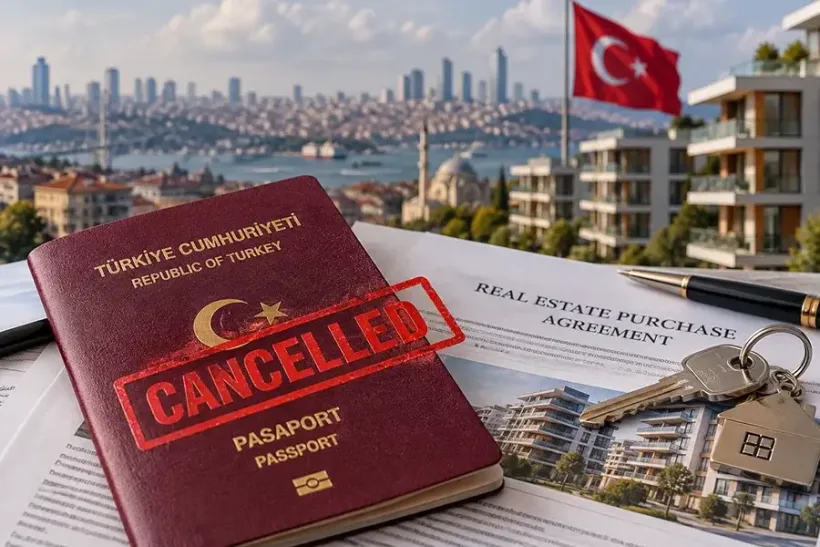
More than 1,000 foreign nationals could lose Turkish citizenship over fraudulent real estate transactions, IMI Daily reports. In autumn 2026, the authorities began another process to revoke the passports of investors and their family members. Investigators uncovered inflated property valuations and sham payments that enabled applicants to circumvent the investment program’s requirements.
Fraudulent Real Estate Transactions in Turkey
On September 21, the Istanbul prosecutor’s office announced the results of an operation targeting Gül İnşaat, Beyaz İnşaat and LİV İnşaat. Investigators reviewed real estate transactions in Turkey involving 734 foreign nationals and declared 274 sales fraudulent.
Developers and intermediaries inflated property values in appraisal reports. They also simulated payments through intermediary companies or used the sellers’ own funds. The required amount of foreign currency did not actually enter Turkey. Investigators identified the irregularities by comparing land registry records, appraisal reports and financial data from MASAK, Turkey’s Financial Crimes Investigation Board.
Based on forged documents, 263 investors and 807 members of their families obtained Turkish citizenship. The total value of the fictitious transactions exceeded 3.5 billion Turkish lira, or approximately $72 million. Prosecutors issued arrest warrants for 88 suspects.
On September 25, a court ordered 33 people detained and placed another 20 under house arrest. Other judicial supervision measures were imposed on 21 participants in the alleged fraudulent real estate scheme in Turkey. Restrictions on the disposal of assets covered 2,011 properties, including a hotel, as well as vehicles, yachts and bank accounts. Trustees were appointed to 30 companies.
Other Investigations Involving Investors
In September 2025, investigators established that 451 investors had obtained Turkish citizenship in violation of the rules. The findings helped identify links between those involved in the schemes and uncover other suspicious transactions.
In August 2026, prosecutors uncovered a scheme involving Babacan İnşaat. The developer was investigated over property sales based on inflated valuations. The authorities began proceedings to revoke the citizenship of 687 people, including investors and their family members, who had obtained passports through these transactions.
On August 4, 2026, the Interior Ministry released figures on the revocation of Turkish citizenship: more than 6,000 foreign nationals, including investors’ family members, had lost their citizenship following checks. The figure reflects the combined results of several investigations, not just the Babacan İnşaat case. The ministry did not specify the period covered by the data. Most decisions involved breaches of investment requirements; the remainder related to public order and national security concerns.
Turkish Citizenship by Investment
The Turkish citizenship by investment program allows foreign nationals to qualify by purchasing property worth at least $400,000. Applicants must provide evidence of the property’s value and retain ownership for three years. Spouses and minor children can obtain citizenship alongside the principal investor.
Other qualifying options include a bank deposit, fixed-capital investment, government bonds or certain investment funds, with a minimum investment of $500,000. Financial routes are subject to minimum holding periods. Creating at least 50 jobs is another way to qualify for citizenship.
Since March 2024, valuations of properties purchased for investment-based citizenship have been carried out by the specialized state company GEDAŞ. In December of the same year, confirmation of property values began to be transmitted directly to the land registry. Nevertheless, investigators continue to review purchases completed before these stricter controls were introduced.
Turkey’s Real Estate Market: Outlook and Risks
International Investment analysts note that the investigations have exposed a weakness in buying property primarily to obtain Turkish citizenship. An artificially inflated valuation may formally satisfy the program’s requirements, but it does not increase a home’s actual market value. Investors may incur losses on resale even if they retain ownership of the property. Tighter oversight could reduce such transactions but will not undo the consequences of irregularities in earlier sales.
The investigations could change how developers serving foreign participants in the program operate. Meeting the required price threshold is no longer enough to reassure buyers: independent valuations and evidence of genuine payments matter. Companies that attracted customers mainly with the promise of a passport may lose some buyers. Verified property values and transparent payment arrangements are becoming more important for the market.
The outlook depends on the scale of further checks and how previously issued passports are reviewed. If the authorities clearly distinguish fraudulent transactions from lawful investments, stronger oversight could bolster confidence in the program. Otherwise, uncertainty may deter new purchases, as foreign nationals will have to consider the possibility of losing citizenship even after the application process is complete. The situation is further complicated by an already sharp decline in demand for Turkish property among foreign buyers.
FAQ
Why is Turkey revoking investors’ citizenship?
Investigators uncovered inflated property valuations and sham payments used to substantiate investment claims. Passports issued on the basis of false documentation may be revoked.
How many people could lose citizenship in the September 2026 case?
The proceedings concern 263 investors and 807 family members, a total of 1,070 people. This is the number of potential revocations, not decisions that have already been carried out.
Could the checks affect an investor’s family members?
Yes. If a spouse or minor children obtained citizenship through the same investment application, a review of its legality may also affect their passports.
How much must be invested in real estate to obtain Turkish citizenship in 2026?
The property must be worth at least $400,000. The buyer must retain ownership for at least three years, and the purchase price and payments must be properly documented.
Can Turkish citizenship be revoked after three years of property ownership?
The three-year holding period does not waive the requirement for the original transaction to be lawful. If the documents or investment evidence are found to have been falsified, the citizenship decision may be reviewed.
Is Turkey still granting citizenship through investment?
Yes, the program remains in operation. Other qualifying forms of investment are available in addition to property purchases, although the authorities have tightened checks on property valuations and payment documentation.