







 Covivio Hotels Revenue Grows 4.7% as European Markets Split
 Lithuanian Apartment Prices Accelerate Across Major Cities
 Georgia's Tourism Revenue Hits Record High
 Norway's Sovereign Fund Commits €1.5bn to European Warehouses
 Market Rout of October 2026: Can Branded Hotels Protect Capital?
 Residential Property Prices in Tbilisi Rise by 5.9% Year-on-Year
Israel's New Builds: 86,000 Apartments Without Buyers
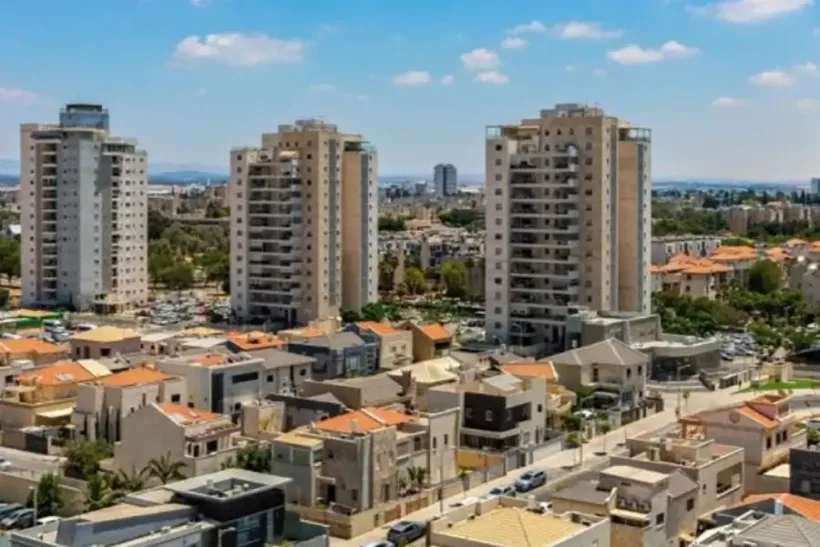
The number of unsold apartments in Israel's new-build housing market continues to rise. By the end of August 2026, the total had reached 85,682, Nadlan Center reports, citing figures from the Central Bureau of Statistics (CBS). At the current sales pace, the inventory would last nearly 27 months. Stronger summer sales have yet to reduce the stock.
Unsold New-Build Housing in Israel
Supply Volume and Trends
Developers' inventory has been growing for several years. According to Israel's Central Bureau of Statistics (CBS), the number of unsold new apartments increased by an average of 1.2% per month from April 2022. Even periods of stronger transaction activity have not yet led to a sustained reduction in supply.
The figures cover completed apartments as well as properties at various stages of construction. Some units have not yet been delivered, so the total should not be interpreted as the number of vacant homes. The time needed to sell an individual development can vary considerably.
Some developers are moving unsold apartments in Israel into long-term rental use to generate income before selling them. Donna has decided to rent out around 20 units in Modi'in for two years, while approximately 78 apartments in the Panorama North complex in Bat Yam have been earmarked for the same purpose. This approach generates rental income while delaying the recovery of capital from sales.
Distribution by Region and City
More than half of all unsold new apartments are concentrated in two districts. The Tel Aviv District accounts for 26,330 units, or 30.7% of the national stock, while the Central District has 21,190, or 24.7%. Together, they represent 55.4% of the total supply.
Jerusalem and Tel Aviv have the largest stocks of unsold new-build apartments in Israel. Inventories also run into the thousands in Lod and Kiryat Gat. The table below shows the figures for individual cities.
Unsold New-Build Apartments by City, August 2026
|
City |
Unsold apartments |
|
Jerusalem |
10,249 |
|
Tel Aviv |
9,820 |
|
Bat Yam |
4,992 |
|
Haifa |
3,974 |
|
Ramat Gan |
3,729 |
|
Ashdod |
3,335 |
|
Netanya |
3,319 |
|
Petah Tikva |
3,248 |
|
Lod |
3,010 |
|
Kiryat Gat |
2,930 |
|
Yehud-Monosson |
1,670 |
|
Be'er Ya'akov |
1,510 |
|
Ramat HaSharon |
1,490 |
|
Ra'anana |
1,440 |
Home Sales in Israel
Overall Trends
In June–August 2026, around 24,200 housing transactions were recorded in Israel, up 11.1% from March–May and 8.1% compared with summer 2025. After seasonal adjustment, the changes were −2.9% and +8.5%, respectively.
About 7,366 apartments were purchased in August, approximately 5% fewer than in July. Globes reports that market activity was one-third below its mid-2021 peak. New-build apartments and resale properties showed different demand trends.
Apartment Sales by Segment, June–August 2026 (vs. Summer 2025)
|
Segment |
Apartments sold |
Market share |
Annual change |
|
New builds |
10,110 |
41.8% |
+24.9% |
|
Resale market |
14,090 |
58.2% |
−1.4% |
|
Total |
24,200 |
100% |
+8.1% |
New-Build Apartments
A total of 10,110 units were sold by developers during the summer, representing 41.8% of all transactions. This was 24.9% more than in June–August 2025 and 11.6% above the March–May 2026 figure. Seasonally adjusted sales in this segment fell by 5.5%; approximately 3,320 new units were sold in August.
Government housing programmes offering reduced purchase prices accounted for 3,618 apartments, or 35.8% of the segment's sales. Excluding subsidised transactions, 6,498 units were sold on the open market, compared with 5,754 during the same period of 2025. Commercial sales therefore increased by 12.9%, almost half the overall growth rate for new builds.
The strong annual increase also reflects a low comparison base: new-build apartment sales in Israel fell in June 2025 during the military conflict with Iran. According to Calcalist, about 2,000 new apartments were sold that month, one of the lowest monthly totals in several years.
Kiryat Gat ranked first for new-build transactions, with 1,044 units sold. It was followed by Tel Aviv (878), Haifa (445), Petah Tikva (424) and Jerusalem (400). Kiryat Gat's lead partly reflects sales under an affordable-housing programme.
Resale Market
In June–August, 14,090 previously owned apartments were sold, accounting for 58.2% of all housing transactions. Demand in this segment fell by 1.4% over the year. Buyers purchased 4,050 resale properties in August.
Jerusalem led with 898 transactions, followed by Haifa (847), Beersheba (701) and Tel Aviv (533). Unlike the new-build market, where Kiryat Gat ranked first, resale activity was concentrated in established urban housing markets.
The split between the two segments also varies from city to city. Resale properties were purchased more frequently than new builds in Jerusalem and Haifa, while developer sales predominated in Tel Aviv. This matters when assessing local demand: the national resale share does not represent the transaction mix in every city.
Market Outlook and Investment Risks
Analysts at International Investment note that growing unsold inventories are shifting the balance of negotiating power towards buyers, particularly in areas with many similar projects. Developers that need to recover invested capital and service loans more quickly may offer individual discounts or more flexible payment terms. A large nationwide supply, however, does not necessarily mean that the price of every property will fall.
Investors should distinguish between transaction growth driven by subsidised programmes and a genuine recovery in commercial demand. With a significant share of new homes sold with government assistance, aggregate statistics may overstate activity in the open market. A more convincing sign of improvement would be a decline in unsold inventory specifically at developments marketed without this support.
The release of unsold apartments onto the long-term rental market could increase competition for private landlords. If a developer offers dozens of units in one complex at the same time, it could restrain rents and lengthen the search for tenants. Investors may face lower expected yields even if average property prices across a city remain stable.