







 Covivio Hotels Revenue Grows 4.7% as European Markets Split
 Lithuanian Apartment Prices Accelerate Across Major Cities
 Georgia's Tourism Revenue Hits Record High
 Norway's Sovereign Fund Commits €1.5bn to European Warehouses
 Market Rout of October 2026: Can Branded Hotels Protect Capital?
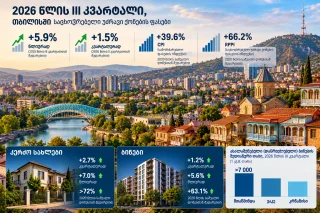 Residential Property Prices in Tbilisi Rise by 5.9% Year-on-Year
Apartment Prices in Israel Fell 1.8% Over the Year
Unsplash
Housing prices in Israel fell by 1.8% over 12 months, the Central Bureau of Statistics (CBS) reports. In September, the consumer price index declined by 0.5%, while annual inflation rose to 1.6%. Rental rates continue to increase.
Inflation in Israel: What Became Cheaper in September
Culture and leisure prices in Israel fell by 2.7%, and transportation costs by 2.5%. Clothing and footwear became 0.9% cheaper, and food prices declined by 0.4%. Furniture and household goods showed a similar change. Seasonal services made a significant contribution to the monthly index.
The cost of overseas travel and domestic flights fell by 7.3%, hotel and guesthouse accommodation by 14.2%, and fuel and vehicle charging by 2.2%. Tourism services had the greatest impact on the overall index.
Fresh vegetables rose by 6.6%, and fruit by 0.9%. Tomatoes (+19.1%), zucchini (+14.6%) and peppers (+10.2%) recorded the largest increases. Education services became 0.8% more expensive. The overall decline did not extend to all everyday purchases.
Over the past 12 months, inflation accelerated from 1.5% in August to 1.6%. This reflects a base effect: the consumer price index fell by 0.6% in September 2025, compared with a 0.5% decline this September. The cumulative increase since the beginning of 2026 was also 1.6%.
Changes in Consumer Prices in Israel, September 2026
|
Category |
September 2026 |
|
Hotels and guesthouses |
−14.2% |
|
Travel and flights |
−7.3% |
|
Culture and leisure |
−2.7% |
|
Transportation |
−2.5% |
|
Clothing and footwear |
−0.9% |
|
Food |
−0.4% |
|
Fresh vegetables |
+6.6% |
|
Education services |
+0.8% |
|
Housing rents |
+0.4% |
Apartment Prices and Housing Rents in Israel
In July–August 2026, apartment prices in Israel declined by 0.6% compared with June–July. The report compares partially overlapping periods, rather than a cumulative decrease over two full months. Compared with the same period in 2025, property prices fell by 1.8%. This indicator is calculated separately from consumer inflation.
Prices declined in five of the six districts. The largest falls were recorded in the Northern District (−1.5%) and the Tel Aviv District (−0.9%). Only Haifa registered an increase, of 0.4%.
Changes in Apartment Prices by Israeli District, July–August 2026
|
District |
Change |
|
Northern |
−1.5% |
|
Tel Aviv |
−0.9% |
|
Central |
−0.7% |
|
Jerusalem |
−0.3% |
|
Southern |
−0.1% |
|
Haifa |
+0.4% |
The annual figure fell by 2.7% in the Central District, by 1.9% in Tel Aviv and by 0.2% in Jerusalem. Prices of apartments in new buildings dropped by 0.4%, or 0.8% when subsidized transactions are excluded. The share of purchases under government programs increased from 40% to 45.8%. Over five years, the overall housing price index rose by 26.8%, and the new-build segment by 24.3%.
Apartment rents in Israel increased by 0.4%. Tenants renewing their leases faced an average increase of 2.4%, compared with 5.3% when new tenants moved in. The CBS notes that these figures approximately reflect annual changes for the two groups, not increases during September alone. The difference is 2.9 percentage points. Landlords are more likely to revise terms when tenants change. Under existing contracts, payments generally remain unchanged until the lease expires.
Property Sales and Market Outlook
From June to August 2026, around 24,200 transactions were recorded in Israel's property market: 10,110 involving new-build apartments (41.8%) and 14,090 involving existing homes. Sales increased by 11.1% compared with March–May before seasonal adjustment, but declined by 2.9% after adjustment.
At the end of August, Israel had 85,680 unsold apartments in new developments. At the prevailing pace of sales, this inventory would last 26.7 months. The Tel Aviv District accounted for 26,330 units and the Central District for 21,190. The concentration of available homes intensifies competition among developers.
Israel's key interest rate has stood at 3.25% since September 1, following a cut of 0.25 percentage points. Inflation remains within the central bank's target range of 1–3%. Lower mortgage costs could bring some buyers back to the market, according to International Investment analysts. Developer discounts and installment plans could offer an additional incentive. However, large inventories of unsold homes are holding back a price recovery in the coming months. The strongest pressure is expected in districts with the greatest concentrations of new developments.