







 Dubai Home Prices Fall for the First Time in Several Years
 Five Danish Hotels With 928 Rooms Change Hands
 Prague and Warsaw Lead CEE Office Recovery
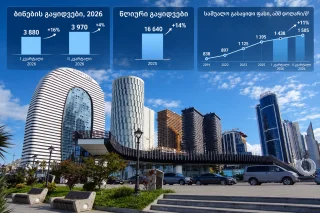 Apartment Sales in Batumi Rose by 16% in Q1 and 4% in Q2
 Bali Villa Rental Yields: What Lies Behind Promises of 10–15% a Year
 Ireland Development Land Deals Reach €543m in 2026
One in Three Renters in Spain Lives Below the Poverty Line
Oxfam Intermon
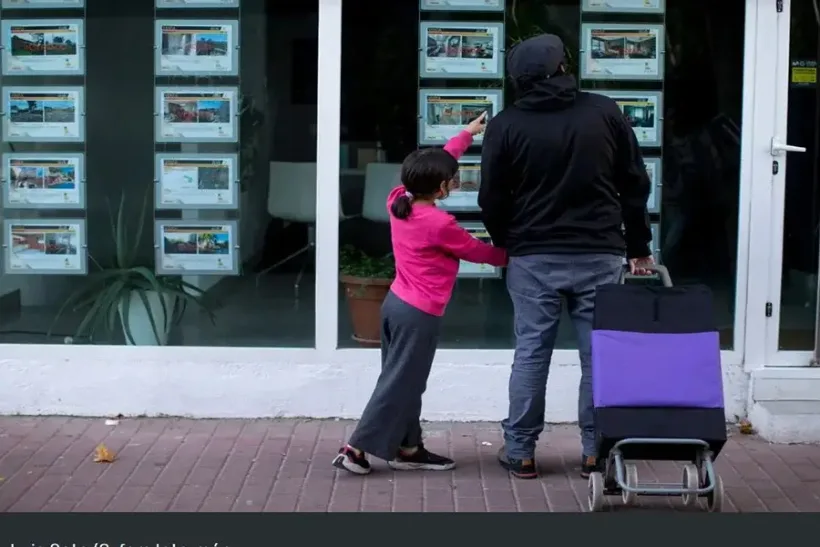
One in three working renters in Spain lives below the poverty line after paying rent. Across the country, nearly 3 million employed people fall below the poverty threshold once housing costs are taken into account. For 770,000 of them, these expenses were the decisive factor, according to Oxfam Intermón.
Renting Increases the Risk of Poverty
In 2024, approximately 2.2 million employed people in Spain (11.48%) lived below the poverty line. Once housing costs, including rent, mortgage payments and property taxes, were taken into account, the figure reached 15.49%, according to Oxfam Intermón's analysis based on data from Spain's National Statistics Institute (INE).
For a single person, the poverty threshold was 12,220 euros per year, compared with €25,663 for a family of two adults and two children. Economic growth did little to improve the situation: Spain's GDP increased by more than 6% between 2022 and 2024, while the share of employed people living in poverty declined only slightly, from 11.64% to 11.48%.
The situation was particularly difficult for workers renting properties at market rates. Before housing payments, 19.35% of this group lived in poverty, compared with 34.08% after these expenses were deducted. The proportion was significantly lower among homeowners, including those still paying off a mortgage.
|
Housing status |
Poverty rate after housing costs |
|
Renting at market rates |
34.08% |
|
Homeowners with a mortgage |
10.22% |
|
Homeowners without a mortgage |
7.95% |
In Spain, 17.35% of employed people rent properties at market rates, while another 3.45% benefit from reduced prices. High monthly payments make it difficult for many to save for a down payment when buying property. Oxfam Intermón describes this situation as a “rental trap”.
Madrid and Catalonia: The Impact of Housing Costs
Madrid records the greatest impact of housing expenses on poverty among employed residents. In Catalonia, the difference between the two calculations is almost as large, although the initial poverty rate is lower. In Murcia, financial difficulties are more widespread even before these payments are deducted.
|
Region |
Before housing costs |
After housing costs |
|
Madrid |
7.29% |
12.73% |
|
Catalonia |
7.90% |
12.86% |
|
Murcia |
15.37% |
20.23% |
Andalusia has the highest proportion of working people living in poverty before housing expenses are deducted, at 17.65%. It is followed by the Valencian Community (16.95%) and Extremadura (16.54%). In these regions, low incomes are particularly widespread even before households meet their accommodation costs.
Among employed renters, the situation is especially difficult in Castile and León, where 50.68% fall below the poverty line after paying rent. The corresponding figure reaches 48.69% in Castilla-La Mancha and 31.07% in the Basque Country. The high cost of rental accommodation therefore places a substantial financial burden on households beyond Spain's largest cities.
Self-Employed Workers, Migrants and Families with Children
Low wages make expensive accommodation even harder to afford. Before housing costs are deducted, the poverty rate among self-employed workers stands at 21.69%, compared with 10.26% among employees. For those working part-time, the figure reaches 20.62%, versus 10.38% for full-time workers.
The highest rates are recorded in domestic services and care (27.48%), agriculture and fishing (26.24%), and hospitality and food services (21.17%). Among workers who are citizens of countries outside the European Union, 31.42% live below the poverty line, compared with 8.71% of Spanish nationals. Researchers link these differences to earnings and employment conditions.
Families with children also face considerable financial pressure. In households with two adults and three or more children under 18, the in-work poverty rate reaches 39.5%, compared with 29.6% among single-parent families. Even a regular income is not always sufficient to cover essential expenses.
Affordable Housing and Higher Wages
Oxfam Intermón recommends combining labour market measures with housing policies. In particular, the organisation calls for legislation ensuring regular increases in the minimum wage in line with living costs, stronger protection for workers in insecure employment and expanded support for the long-term unemployed.
Another priority is the construction of social housing and an increase in the supply of affordable rental properties. Experts also propose automatic extensions of tenancy agreements to reduce the risk of forced moves and provide greater stability for families.
International Investment analysts note that the findings highlight the limits of further rent increases: a significant share of tenants' earnings is already absorbed by housing payments. When assessing investment properties, it is essential to consider the purchasing power of local residents, the availability of affordable alternatives and potential changes to rental regulations.